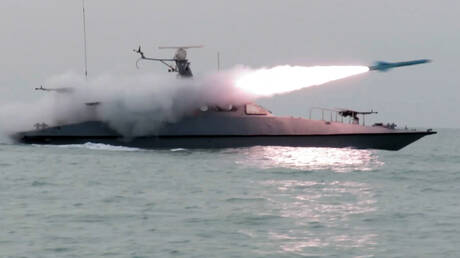
A recent report by the American Hudson Institute highlights that Iran is still capable of posing a maritime threat, despite losing most of its military capabilities at sea. The report emphasizes the challenges Iran faces in maintaining its maritime influence and notes that Tehran considers these allegations mere fabrications.
The report underscores that Iran, despite the decline in its naval power, still possesses the ability to influence vital maritime routes, raising concerns among neighboring countries and the international community. It suggests that Tehran may resort to new strategies to enhance its maritime presence, including the development of unconventional weapons.
Details of the Findings
The report is based on a comprehensive analysis of Iran's military capabilities, assessing the Iranian naval fleet, which has suffered several blows in recent years. Nevertheless, Iran remains capable of utilizing new technologies such as drones and fast boats to bolster its presence in regional waters.
It also indicates that Iran might exploit chaos in certain areas to strengthen its influence, increasing the likelihood of new maritime conflicts. These dynamics make it challenging to predict the future of maritime security in the region.
Background & Context
Historically, Iran has been regarded as a major naval power in the Arabian Gulf, playing a pivotal role in securing shipping lanes. However, international sanctions and the decline of the Iranian economy have significantly impacted its military capabilities.
In recent years, Iran has undergone strategic changes in its maritime policy, seeking to enhance its capabilities through collaboration with other countries. These transformations come at a sensitive time, as tensions in the region escalate.
Impact & Consequences
The report highlights the implications of these dynamics for regional security. If Iran continues to bolster its maritime presence, it could escalate tensions with neighboring countries, particularly with the United States and its allies.
There are also concerns that any escalation could affect global trade, especially in the Strait of Hormuz, which is considered one of the world's most important maritime passages. This could have negative repercussions for the global economy.
Regional Significance
For Arab countries, the Iranian maritime threat poses a significant challenge. Many Gulf states rely on secure navigation in the Gulf, and any escalation could impact the stability of the region.
It is crucial for Arab nations to cooperate in addressing this threat by enhancing their naval military capabilities and developing joint strategies to tackle security challenges.
In conclusion, the Iranian maritime threat remains a complex issue that requires ongoing international attention, as developments in the region could significantly affect regional security and stability.