US President Donald Trump announced on Tuesday that Tehran has informed Washington it is in a 'state of collapse' and is requesting the lifting of the maritime blockade and the opening of the Strait of Hormuz. Reports suggest that Trump is leaning towards rejecting Iran's proposal for a partial agreement aimed at opening the strait while postponing discussions on nuclear issues.
In a post on his 'Truth Social' platform, Trump wrote: 'Iran just informed us that they are in a state of collapse, and they want us to open the Strait of Hormuz as soon as possible while they try to arrange their leadership situation, and I believe they will be able to do that.'
Details of the Event
Despite apparent disagreements and gaps between the two parties, CNN reported sources confirming that Washington and Tehran's positions are not as far apart as they seem. Reports have indicated that discussions are underway regarding the possibility of opening the Strait of Hormuz first and postponing the nuclear file discussions.
For its part, the Iranian military announced that it does not consider the war to be over, adding that the target bank and equipment for the armed forces have been updated. A military spokesperson confirmed that the situation is still classified as a state of war, while the Revolutionary Guard reiterated that the Strait of Hormuz will remain under Iran's management forever.
Background & Context
Earlier, US officials announced that Trump is dissatisfied with the new Iranian proposal recently presented to stop the war. Officials ruled out that Trump would accept Tehran's latest proposal to end the conflict, which includes postponing discussions on the nuclear program until after the war and resolving disputes related to maritime shipping from the Strait of Hormuz.
CNN reported officials stating that lifting the US maritime blockade on Iranian ports and reopening the strait without resolving questions related to Iranian uranium enrichment or uranium stocks close to military use levels could deprive the United States of a key leverage point in negotiations.
Impact & Consequences
Informed sources pointed out that a return of the US to war and withdrawal from negotiations is not out of the question, despite confirming that mediation between the US and Iran is currently ongoing, indicating that a resolution will be reached in a few days. The sources clarified that the US side requires the opening of the Strait of Hormuz without restrictions or fees.
Simultaneously, a senior Iranian official predicted a limited return to fighting followed by a transition to negotiations. Two informed sources revealed that Trump expressed his rejection of the Iranian proposal during a meeting held on Monday with senior national security officials, during which the Iranian file was discussed.
Regional Significance
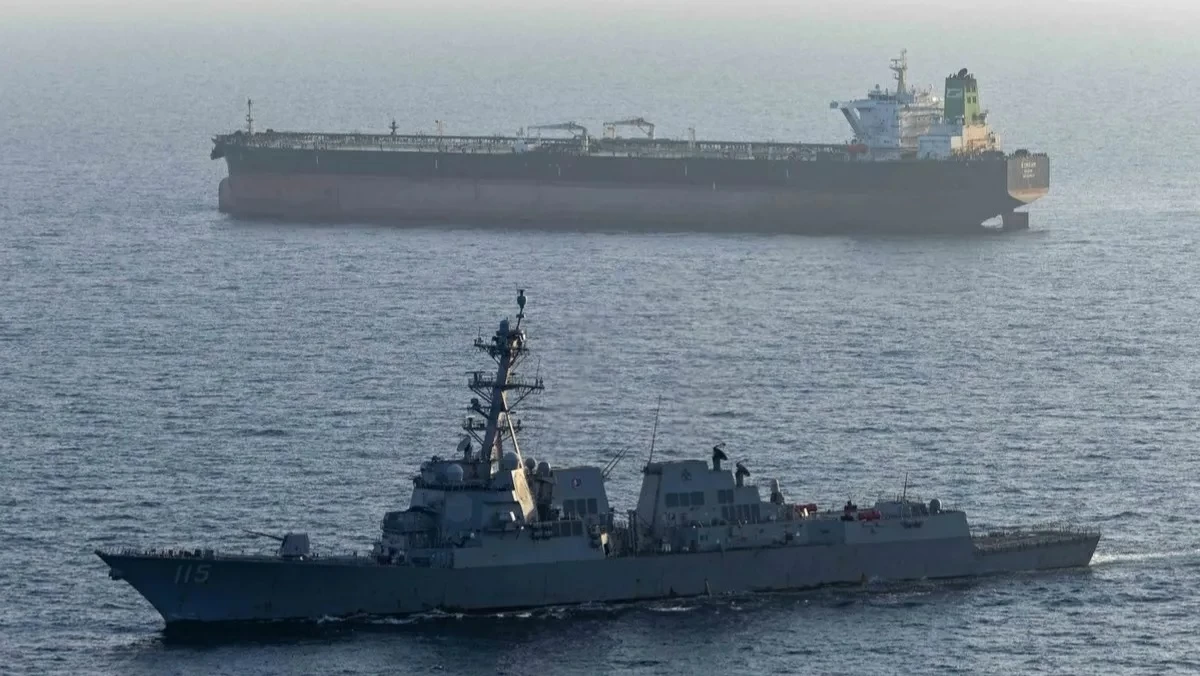
Concerns are rising over escalating tensions in the region, where any miscalculated step could lead to a new military escalation. The opening of the Strait of Hormuz has a significant impact on maritime shipping, being one of the vital corridors for global oil trade. Therefore, any US decision regarding this strait will directly affect oil prices and the stability of global markets.
In conclusion, the situation in the region remains precarious between military tensions and diplomatic efforts, necessitating close monitoring from all concerned parties.