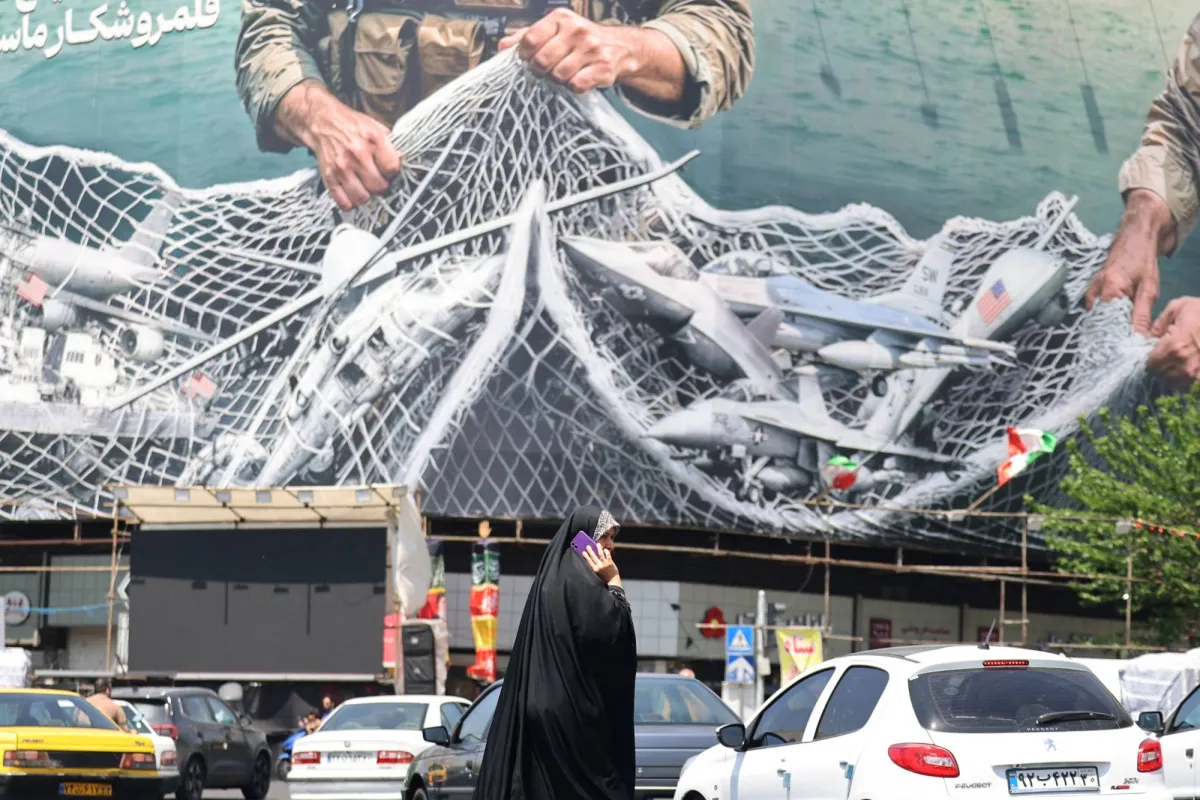
Iran is seeking to redefine the power dynamics in negotiations with the United States by proposing new conditions related to the Strait of Hormuz, all while facing increasing military and economic pressures.
The spokesperson for the Iranian Ministry of Defense, Reza Talaei Nik, stated that Washington "is no longer in a position to impose its policies," reflecting Tehran's aim to redefine the negotiation balance rather than focusing solely on military power.
Details of the Proposal
Iran, which has faced severe pressures due to military threats and a maritime blockade on its exports, cannot claim to have achieved a military victory. However, Tehran bets that the United States is no longer able to translate its military superiority into a final settlement. In this context, Iran has proposed to open the Strait of Hormuz and lift the American blockade, postponing the nuclear file to a later stage.
This Iranian offer is not aimed at ending the conflict but rather at shifting its focus from the nuclear issue to control over the Strait of Hormuz, thereby enhancing Iran's ability to disrupt the global economy. President Donald Trump discussed this proposal with his national security team, but the White House confirmed that its red lines remain linked to keeping Hormuz open and preventing Iran from acquiring nuclear weapons.
Background & Context
Tehran seeks to shift the priorities in negotiations, wanting to start the settlement with the maritime question: who controls the passage of ships in Hormuz? And who lifts the blockade first? This dynamic reflects Iran's awareness of the leverage it possesses in this context.
Farzin Nadimi, a researcher at the Washington Institute, asserts that the United States "has never been in a position to dictate its policies to Iran," noting that the Iranian offer goes beyond the core nuclear issue. He believes that Tehran thinks that pressure on the Strait of Hormuz gives it leverage to balance the American pressure on its nuclear program.
Impact & Consequences
Trump faces three main options, each costly. The first option is to maintain the blockade and refuse a ceasefire, which could lead to a resumption of fighting with varying objectives. The second option is to combine the blockade with a ceasefire, potentially resulting in a frozen conflict. The third option is to accept a narrow deal: "Hormuz for the blockade," which could appear as an implicit acknowledgment of the Iranian Revolutionary Guard's ability to control a vital international passage.
Some analyses warn that accepting the Iranian offer could mean rewarding the use of Hormuz as a strategic leverage tool, potentially leading to negative repercussions for the American position in the region.
Regional Significance
Iran speaks of a potential "limited return to escalation followed by a return to negotiations," reflecting a negotiating logic aimed at relieving pressure on Washington. However, this game could be dangerous, as Trump may resort to a new strike if Iran pushes too hard.
At the same time, Arab countries continue to closely monitor these developments, as any escalation in the region could directly affect the stability of energy markets and regional security. The situation in the Strait of Hormuz, a vital artery for the global economy, requires a diplomatic solution that ensures freedom of navigation and prevents military escalation.