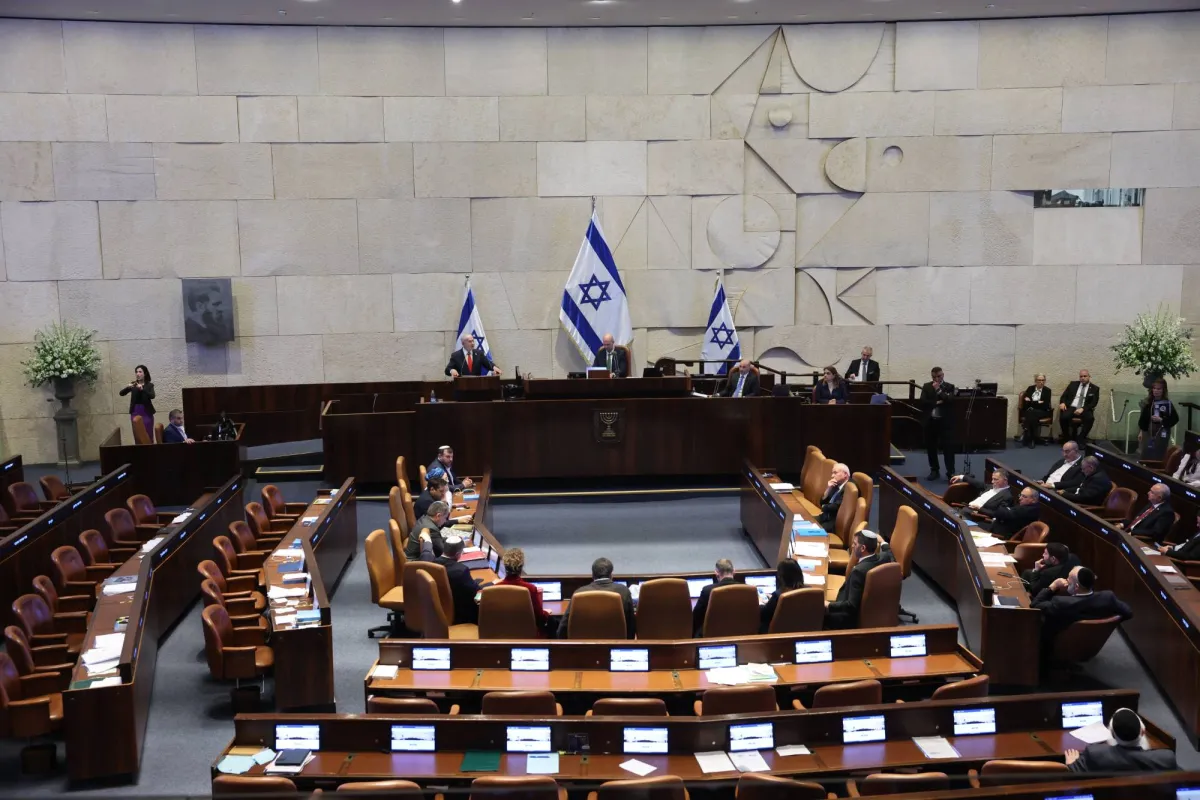
Political sources have disclosed that a secret meeting took place on Tuesday morning between the Attorney General and the defense attorney for Israeli Prime Minister Benjamin Netanyahu, attended by the judges overseeing his corruption trial. This meeting is part of negotiations for a plea deal that could lead to a reduced sentence, allowing him to retire from politics with dignity, avoiding imprisonment.
The newspaper Maariv reported that a proposal has been prepared for discussion by several intermediaries, but Netanyahu represents an obstacle to the progress of these negotiations as he seeks to evade any conviction. His legal advisors are urging him to accept the deal as a final opportunity before the official election campaign begins at the end of next month.
Details of the Meeting
As pressures mount on Netanyahu, right-wing Israeli newspapers oppose the deal and prefer to escalate the public battle to exert further pressure on the judicial system and the President of Israel, Isaac Herzog, to call for a pardon. Former U.S. President Donald Trump has expressed his discontent over the lack of a pardon thus far.
Polls indicate a sharp decline in Netanyahu's strength, with expectations for his seats in the Knesset dropping from 68 to between 49 and 52 seats. An academic survey conducted by the Hebrew University revealed that 66% of Israelis are dissatisfied with the performance of Netanyahu's government, and the percentage of those who believe he is the most suitable candidate for the position of Prime Minister has decreased from 40% to 28% within a month.
Background & Context
These developments occur within a complex political context, as Netanyahu has called coalition party leaders to a consultative meeting in an attempt to instill a spirit of optimism among them, noting that he has faced similar challenges in the past. He also addressed the merger of his rival parties, Naftali Bennett and Yair Lapid, into a single party named Together, considering that this merger could mark the beginning of the opposition's collapse if the election campaign is managed cohesively.
Despite this, polls suggest that this union between Bennett and Lapid may not serve their goal of increasing their electoral strength, but could instead result in a loss of several seats. According to new polls, if elections were held today, the newly merged party Together would secure fewer seats than what each party would have obtained separately.
Impact & Consequences
Poll results indicate that Netanyahu's camp may face significant challenges in the upcoming elections, with projections suggesting that Netanyahu's governing bloc could secure 52 seats, while the opposition bloc led by Bennett could obtain 58 seats. This means that Netanyahu could remain Prime Minister until the next elections, complicating the political situation in the country.
Concerns are rising within Netanyahu's camp regarding the current political developments, as they feel the pressure from his declining popularity. 31% of Israelis have expressed interest in emigrating due to a loss of security, while 70% are worried about Israel's declining status in the world.
Regional Significance
These developments in the Israeli political arena pose a significant challenge for the Arab region, reflecting the political instability in Israel and its direct effects on relations with Arab countries. Netanyahu's declining popularity could open the door for changes in Israeli policies regarding Arab issues.
In conclusion, the political situation in Israel remains complex, and Netanyahu's future depends on the outcomes of ongoing negotiations and polls indicating his declining popularity. These developments will continue to impact the political landscape in the region.