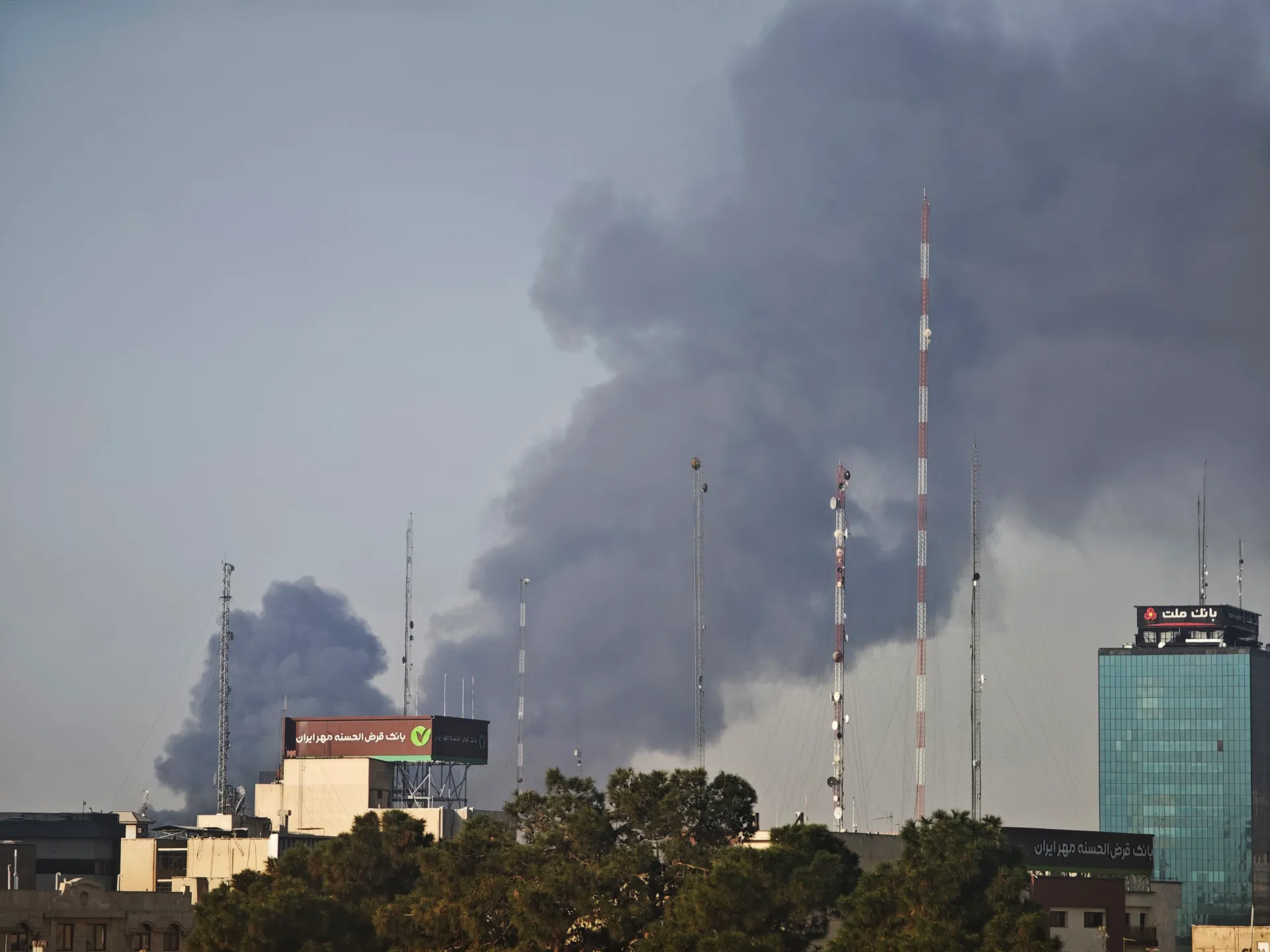
Iran targeted a chemical plant near the city of Beersheba today, in a move that reflects an escalating confrontation between Tehran and Tel Aviv. The attack resulted in at least one injury and comes in response to Israeli airstrikes on Iranian nuclear facilities, highlighting the increasing tensions between the two sides.
Brigadier General Hassan Jouni, a military and strategic expert, confirmed that this targeting represents "mutual messages on the brink of danger," noting that the escalation occurs at a time when the region is witnessing diplomatic efforts to halt the war. He explained that Iran responds to every threat with a corresponding threat, indicating that it remains a significant player in this confrontation.
Details of the Incident
The targeted plant in Beersheba contains hazardous materials, and the Israeli Broadcasting Authority reported that the attack followed a series of focused strikes in southern Israel. Sirens sounded in areas near the Israeli nuclear reactor in Dimona, underscoring the security situation's severity in the region.
At the same time, Iran targeted other sites in northern Israel, including the port of Haifa, which is a vital hub for fuel and oil. These strikes are part of a mutual response between Iran and Israel, following recent American-Israeli strikes on sensitive industrial facilities in Iran, which have heightened tensions.
Background & Context
Historically, relations between Iran and Israel have seen repeated escalations, particularly concerning the Iranian nuclear program, which Tel Aviv considers an existential threat. The Iranian Revolutionary Guard has threatened to retaliate against Israeli attacks, indicating that Iran will impose a heavy price for what it describes as "Israeli crimes."
Iranian Foreign Minister Abbas Araqchi stated that Tehran will not hesitate to respond to any aggression, reflecting Iran's determination to protect its interests in the region. This comes at a time when international pressures on Iran regarding its nuclear program are increasing, complicating the security landscape in the Middle East.
Impact & Consequences
This mutual escalation between Iran and Israel could lead to serious repercussions for regional security. With the increase in targeted strikes, matters may escalate further, threatening the stability of the region. Any military escalation could affect navigation in the Red Sea and intensify tensions among major powers in the area.
Moreover, the continuation of this escalation could impact peace efforts in the region, as some countries seek to mediate between Iran and Israel. If the escalation persists, matters may become more complicated, increasing the likelihood of a large-scale conflict.
Regional Significance
This escalation between Iran and Israel has direct implications for Arab countries, potentially increasing tensions in neighboring states such as Lebanon and Syria. Any military escalation could adversely affect the national security of Arab states, necessitating precautionary measures.
Ultimately, the situation in the region remains influenced by rapid developments, requiring Arab countries to coordinate among themselves to address the increasing security challenges.