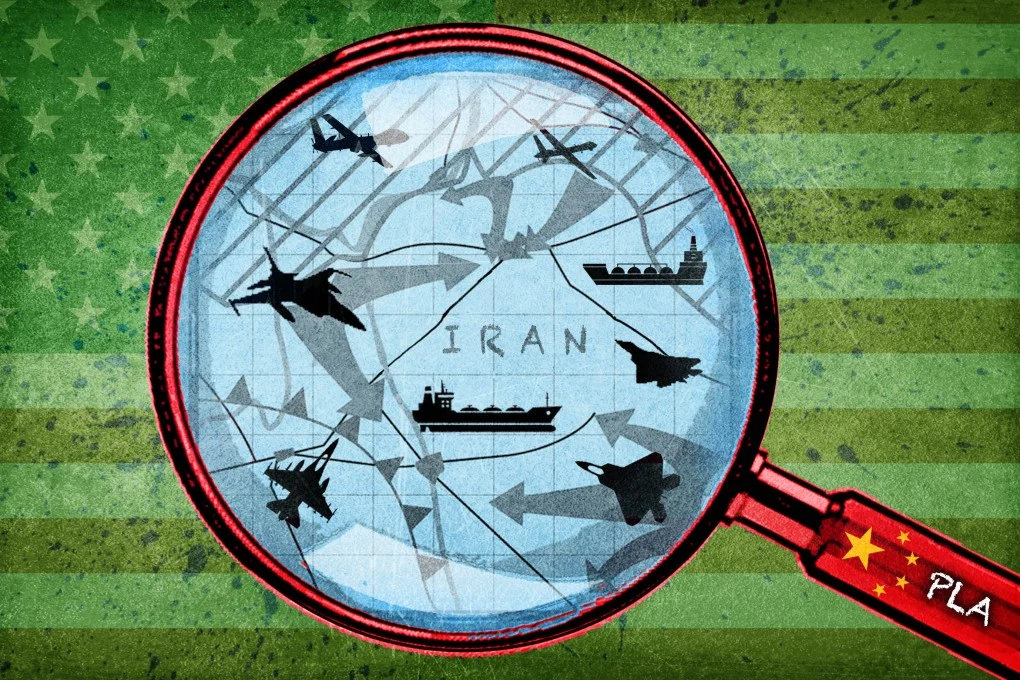
The focus is shifting towards the repercussions of the U.S.-Israeli war on Iran, which may continue for an extended period, leaving profound impacts across various domains such as warfare, geopolitical dynamics, energy security, and global perceptions of American power. In this context, attention is drawn to how this war could influence China's calculations regarding the potential conflict over Taiwan.
Reports suggest that the war in Iran may reshape Beijing's military strategies, as China will seek to assess how to utilize asymmetric warfare in any future conflict. Moreover, this war could bolster the United States' position as a primary adversary of China, complicating the relations between the two superpowers.
Event Details
The United States is considered one of the strongest militaries in the world, boasting advanced military capabilities and high-level organization. However, the war in Iran may expose vulnerabilities in the American strategy, prompting China to reconsider its military plans regarding Taiwan. It is anticipated that Beijing will closely monitor the developments of the conflict in Iran and the U.S. response.
Concerns are growing that the war could escalate tensions in the Asia-Pacific region, with Taiwan being a potential flashpoint. Should the conflict persist for a long duration, China may find itself in a position to increase pressure on Taiwan, taking advantage of U.S. distractions in other conflicts.
Background & Context
Historically, relations between China and Taiwan have been tense, with Beijing considering Taiwan part of its territory. For decades, there have been multiple attempts by China to reunify Taiwan, but these efforts have often been met with strong opposition from the Taiwanese government. In recent years, tensions have escalated, particularly with the rising American support for Taiwan.
The current Iranian war serves as a test of American power in the Middle East and could significantly impact Beijing's strategies. If the United States succeeds in achieving its objectives in Iran, it may enhance its position against China. However, if it fails, this could embolden Chinese actions towards Taiwan.
Impact & Consequences
Many analyses predict that the war in Iran will lead to radical changes in the global balance of power. If the United States continues to engage in external conflicts, China may find an opportunity to enhance its influence in Asia. This could lead to heightened tensions in the region, threatening regional stability.
Furthermore, these dynamics may affect global energy prices, as any escalation in the conflict could lead to an increase in oil and gas prices. This, in turn, could impact the global economy and increase pressures on countries reliant on imported energy.
Regional Significance
The Arab region is directly affected by these dynamics, as any escalation in the conflict in the Middle East could influence oil prices, which are vital for many Arab economies. Additionally, tensions between China and the United States may lead to a reshaping of alliances in the region, affecting Arab interests.
In conclusion, the Iranian war could be a turning point in international relations, reshaping the strategies of major powers, including China and the United States. It is crucial to monitor the developments of this conflict and its impact on security and stability in the region.