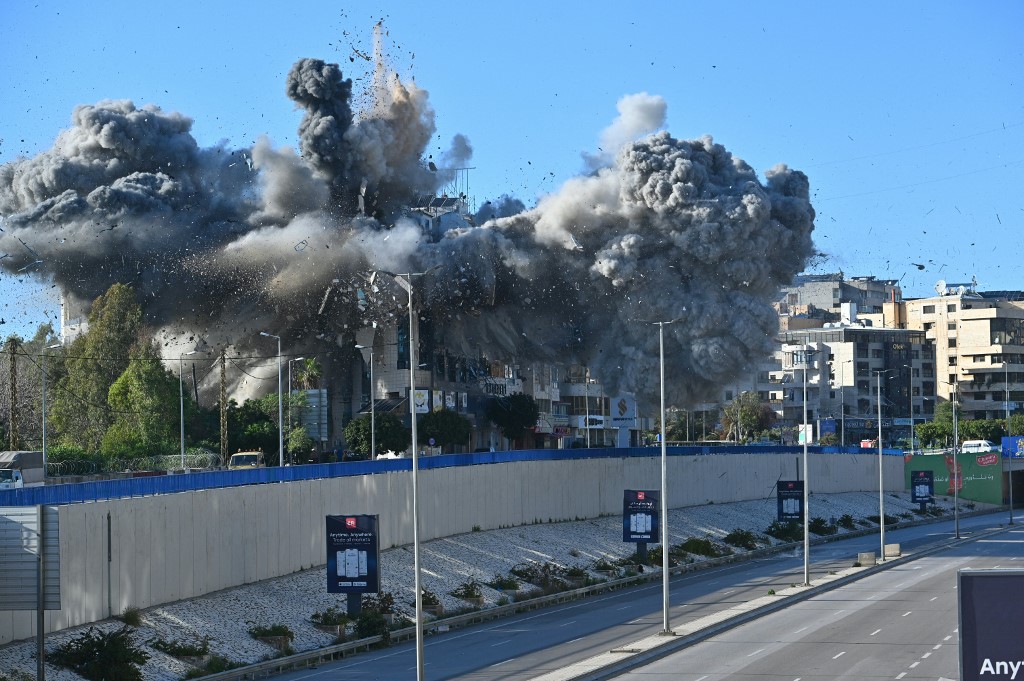
Iran's Army Chief, General Amir Hatami, has issued strict directives to military leaders to closely monitor the movements of American and Israeli forces, reflecting the escalating tensions in the region. Hatami warned that any attempt by the enemy to conduct ground operations must be met with firmness, stating, "If the enemy attempts ground operations, no one will survive."
These remarks were made during a meeting with senior military leaders, where footage of the meeting was broadcasted by the official Iranian news agency (IRNA). Hatami emphasized the importance of meticulously tracking enemy movements moment by moment and implementing necessary plans to counter potential attack methods.
Details of the Event
These statements come at a time when the Middle East is witnessing heightened tensions between Iran on one side and the United States and Israel on the other. Concerns have grown over the possibility of military escalation in the region, especially following a series of military exercises conducted by American and Israeli forces recently. These military maneuvers raise alarms in Tehran, which views them as a direct threat to its national security.
Through these steps, Iran seeks to bolster its military readiness, emphasizing the importance of coordination among various branches of the armed forces to address any potential threats. It has also called for enhancing both defensive and offensive capabilities of the armed forces, reflecting Tehran's strategy to maintain a balance of power in the region.
Background & Context
Historically, relations between Iran and the United States have seen increasing tensions since the Islamic Revolution in 1979. The economic and political sanctions imposed on Iran have exacerbated the situation, prompting it to enhance its military capabilities as a means of defending its sovereignty. Additionally, military alliances between the United States and Israel heighten Iran's fears, as it perceives these alliances as a threat to its existence.
In recent years, the region has experienced an escalation in military operations, including attacks targeting Iranian oil facilities, prompting Tehran to take precautionary measures. Iran has demonstrated its ability to respond to these attacks by developing its military capabilities, including ballistic missiles and drones.
Impact & Consequences
The repercussions of these tensions extend beyond Iran, affecting regional stability as a whole. In the event of military escalation, neighboring countries could be directly impacted, increasing the likelihood of new conflicts erupting in the region. Furthermore, any potential invasion could lead to a flow of refugees and heightened humanitarian crises, placing additional pressure on neighboring states.
Moreover, military escalation could impact global oil markets, as the Arabian Gulf region is one of the most critical oil-producing areas. Any threat to security in this region could lead to rising oil prices, affecting the global economy.
Regional Significance
Arab countries neighboring Iran, such as Iraq, Syria, and Lebanon, find themselves in a precarious position due to these tensions. Ongoing conflicts in these countries make them vulnerable to the negative impacts of any military escalation. Additionally, military alliances between Iran and certain armed factions in the region may complicate the situation, necessitating clear positions from Arab nations to protect their interests.
In conclusion, the escalation of tensions between Iran, the United States, and Israel indicates a new phase of instability in the region, requiring Arab countries to strengthen cooperation among themselves to address the security and economic challenges that may arise from any potential escalation.