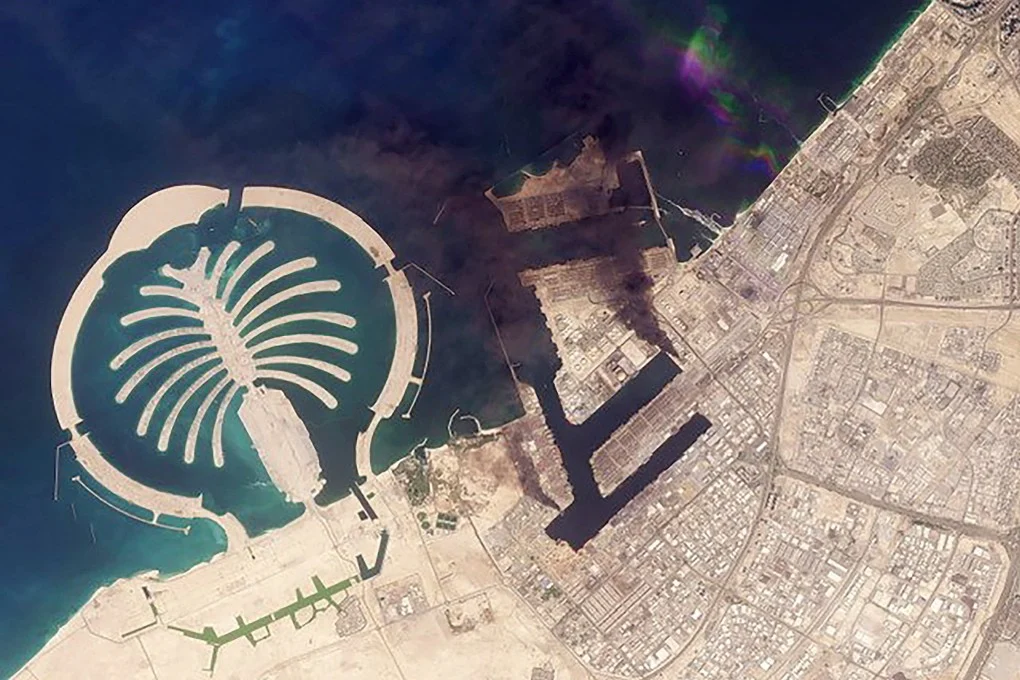
On Sunday, Gulf countries, including the United Arab Emirates, Bahrain, and Kuwait, faced drone and missile attacks from Iran, resulting in damage to critical civilian facilities. These attacks occur amidst a rising military escalation in the Gulf, where Iran has targeted energy infrastructure and other industries in these oil-rich nations.
These assaults coincide with increased military pressures from the United States and Israel, which began at the end of February. Reports indicate that Iran accuses its neighbors of allowing American forces to launch attacks from their territories, further heightening tensions in the region.
Details of the Incident
In recent days, several vital facilities in the Gulf have been subjected to repeated attacks, with Iran particularly targeting oil and energy installations. Reports have indicated that the recent attacks caused significant damage to infrastructure, raising concerns about the region's stability and security. These attacks are also seen as Iran's reactions to American and Israeli military operations targeting its interests.
These assaults are part of Iran's strategy to exert pressure on its neighbors, aiming to demonstrate its military strength and capability to conduct cross-border offensive operations. Military sources have confirmed that the attacks were well-coordinated, reflecting a high level of planning and coordination among Iranian forces.
Background & Context
Historically, the Gulf region has experienced ongoing tensions between Iran and its neighbors, especially following the United States' withdrawal from the Iranian nuclear deal in 2018. Since then, tensions have escalated, with Iran taking provocative steps, including advancing its military programs and increasing its activities in the region. The presence of American forces in Gulf countries exacerbates these tensions, as Iran views this presence as a threat to its national security.
In recent years, the region has also seen a rise in attacks on oil facilities, impacting global oil markets. These attacks have led to increased oil prices, negatively affecting the global economy and contributing to instability in the region.
Impact & Consequences
These attacks serve as a warning to Gulf countries about the increasing security threats they face. The damage to infrastructure may affect local economies and raise reconstruction costs. Additionally, escalating tensions could lead to greater military interventions by the United States and its allies in the region.
Analysts predict that these events will result in increased military investments by Gulf countries as they seek to bolster their defensive capabilities against potential threats. Furthermore, these tensions may complicate relations between Gulf states and Iran, adding layers of complexity to the political landscape in the region.
Regional Significance
These events directly impact security and stability across the Arab region. The tensions between Iran and Gulf states could escalate conflicts in other areas, such as Iraq and Syria, where Iran-backed groups are present. Additionally, these events may affect relations between Arab countries and Iran, deepening divisions within the region.
In conclusion, the events in the Gulf remain under scrutiny, with growing fears of a larger escalation that could impact regional and international security. The international community must take urgent steps to de-escalate tensions and work towards diplomatic solutions to avoid further escalation.