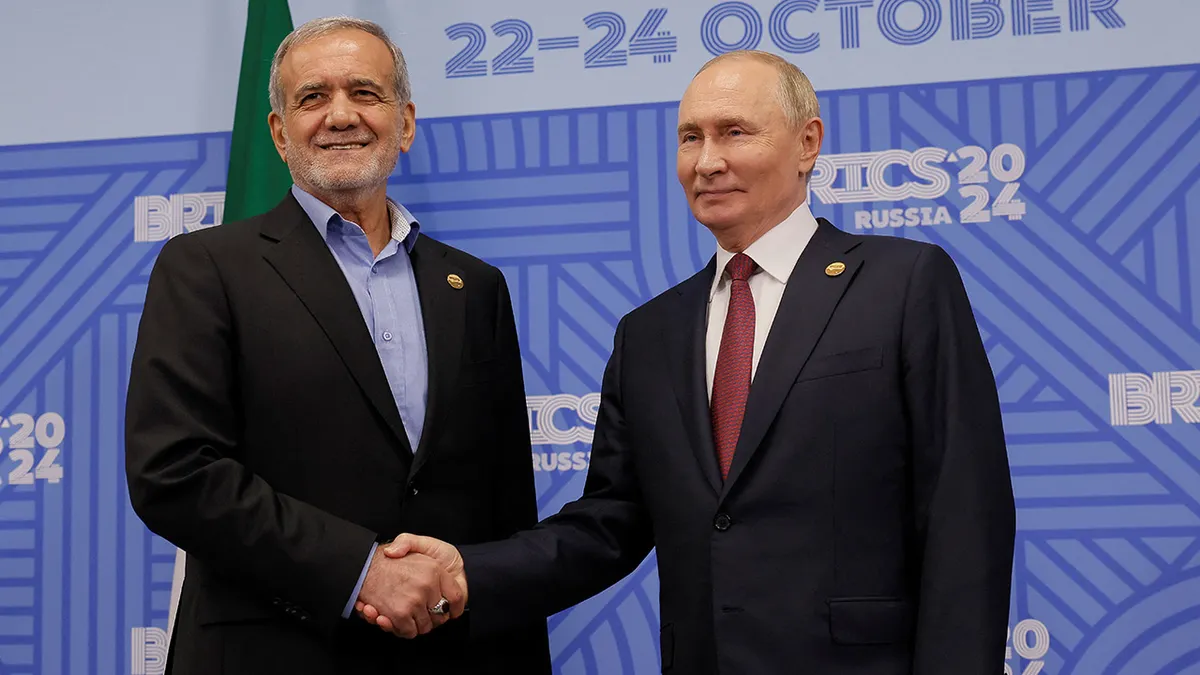
The Iranian Ambassador to Russia has announced that Iranian Foreign Minister Abbas Araghchi will visit St. Petersburg for a meeting with President Vladimir Putin. While the ambassador confirmed the visit, Moscow has yet to provide details about the meeting. This visit occurs during a time of escalating tensions in the Middle East, particularly following recent Israeli airstrikes in southern Lebanon.
In related news, the Lebanese National News Agency reported that Israeli airstrikes on Sunday resulted in the deaths of 14 people, further intensifying tensions in the region. These events unfold at a critical moment, as fears grow over a potential escalation in the conflict between Israel and Hezbollah, which could impact regional stability.
Details of the Meeting
Araghchi's visit to Russia is part of Iran's efforts to strengthen its ties with Moscow amid changing geopolitical conditions. The relationship between Iran and Russia has seen significant rapprochement in recent years, especially given the challenges both countries face from the West. The two sides are expected to discuss regional and international issues, including the situation in Syria and energy security.
On the other hand, the Israeli airstrikes on Lebanon reflect an escalation in Israeli military operations against targets linked to Hezbollah. These strikes are part of an Israeli strategy aimed at undermining Hezbollah's capacity to carry out operations against it. Such events have raised international concerns about the possibility of a broader conflict erupting in the region.
Background & Context
Historically, the relationship between Iran and Russia has been volatile, but it has strengthened in recent years, particularly following Russia's intervention in Syria to support Bashar al-Assad's regime. This military and political cooperation reflects shared interests between the two countries in facing Western pressures. Iran views Russia as a strategic partner in countering Israeli and American threats.
Conversely, Israeli airstrikes on Lebanon are not new, but they come at a sensitive time as tensions in the region escalate. Israel considers Hezbollah an existential threat and seeks to undermine its military capabilities. These military operations reflect a long-term Israeli strategy aimed at maintaining its military superiority in the region.
Impact & Consequences
Araghchi's anticipated visit to Russia could enhance cooperation between the two countries, potentially altering the balance of power in the region. Should new agreements be reached, they may directly affect ongoing conflicts in the Middle East, including the Syrian conflict and the stance towards Hezbollah.
On the other hand, the escalation in Lebanon may provoke reactions from the international community, as major powers seek to de-escalate the situation. Any military escalation could lead to severe humanitarian consequences, especially given Lebanon's deteriorating economic situation.
Regional Significance
These events hold significant importance for Arab countries, as any escalation in Lebanon could impact regional security overall. Arab nations, particularly those neighboring Lebanon, are closely monitoring the situation, as any escalation could lead to an influx of refugees and increased internal tensions.
Ultimately, the situation in the Middle East remains complex, with overlapping regional and international interests. Araghchi's visit to Russia may serve as a turning point in Iran-Russia relations, while the Israeli airstrikes on Lebanon highlight the ongoing challenges facing the region.