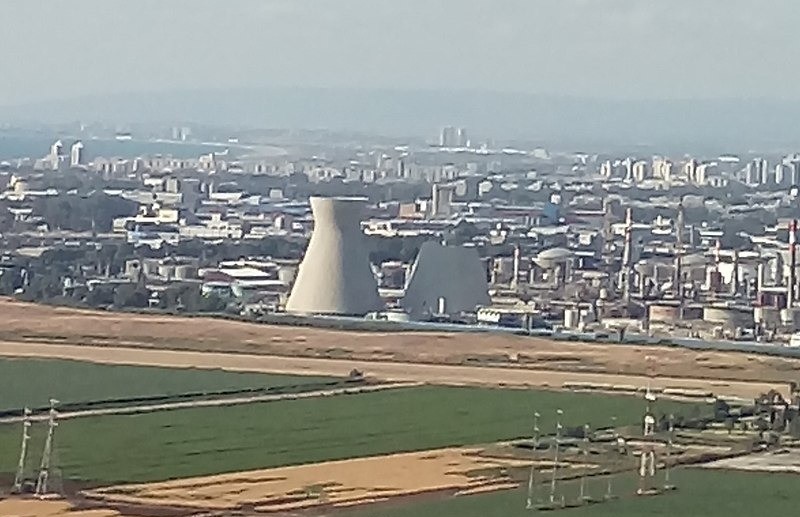
An Israeli oil refinery operated by Bazan in Haifa Bay was subjected to a missile attack from Iran and Hezbollah on Monday, resulting in a fire in one of the fuel tanks. The attack, which targeted northern and central Israel, comes amid rising regional tensions, with missile debris reported in several areas.
According to the Israeli Fire Authority, an industrial building and a fuel tanker at the refinery were damaged due to debris from an intercepted missile, with no injuries reported. Meanwhile, the Israeli army radio reported a 2.5% drop in the stock of the Bazan Group following the attack, reflecting growing concerns in the financial markets.
Details of the Incident
The fire broke out near the Israeli oil refinery in Haifa, with videos circulating on social media showing flames rising from the fuel tank. The Israeli Broadcasting Authority confirmed that the damages included an industrial building and a residential one, but Israeli Energy Minister Israel Katz stated that no damage was inflicted on the production facilities at the refinery, indicating that fuel supplies would not be affected.
This attack is not the first of its kind, as Iran previously targeted the Haifa oil refinery with a missile barrage on March 19, resulting in significant damage, according to the Israeli Ministry of Energy. Channel 12 reported that missile debris fell on the city of Shafa Amr, causing damage to buildings, with seven sites of debris fall recorded in northern Israel.
Background & Context
These attacks occur amid escalating tensions between Iran and Israel, with both countries exchanging accusations of mutual targeting. Iran, which supports Hezbollah, views attacks on its territory or on its allies in the region as part of a broader struggle against Israeli influence. Conversely, Israel seeks to bolster its defenses against missile threats, particularly from northern fronts.
Historically, the region has witnessed numerous reciprocal attacks, with Iran asserting its right to respond to what it describes as Israeli aggressions. Meanwhile, Israel continues to carry out military operations against what it perceives as threats to its national security.
Impact & Consequences
The recent attack may have negative implications for the Israeli economy, as the stock of Bazan has declined, reflecting increasing anxiety in the markets. Additionally, the recurrence of such attacks could lead to heightened security tensions in the region, impacting investments and tourism.
Moreover, an escalation of attacks may provoke military responses from Israel, increasing the likelihood of conflict escalation in the area. This situation could adversely affect humanitarian conditions in the impacted regions, especially amid deteriorating economic and social circumstances.
Regional Significance
These events signal a rise in tensions in the region, potentially affecting neighboring Arab countries. Amid the economic and political crises faced by some nations, escalating conflict between Iran and Israel could exacerbate security and economic conditions.
Furthermore, these developments may influence relations between Arab states and Iran, with some countries potentially adopting more cautious stances towards Tehran, complicating the regional landscape. At the same time, some nations may seek to enhance security cooperation to address shared threats.
In conclusion, the situation in the region remains tense, with growing fears of military escalation that could impact security and stability in the Middle East.