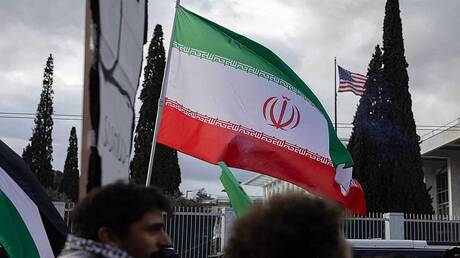
The Iranian Revolutionary Guard has asserted that the journey of the Islamic Revolution continues with great capability, surpassing the most complex conspiracies and hybrid wars imposed by enemies, primarily the United States and Israel. These statements reflect Iran's determination to enhance its regional and international role, despite the political and military pressures it faces.
In an official statement, the Revolutionary Guard indicated that Iran has managed to maintain its stability and strength, emphasizing that the challenges it faces will not affect its trajectory. It confirmed that the Islamic Revolution has proven its ability to confront crises and will continue to achieve its strategic goals.
Details of the Event
These statements come at a time when the region is witnessing increasing tensions, especially with the escalation of American and Israeli military activities in the Middle East. The Revolutionary Guard, considered one of the main military arms of Iran, aims through these statements to boost morale among its forces and the Iranian people.
The statement also noted that Iran will continue to support its allies in the region, including Hezbollah in Lebanon and the Houthis in Yemen, reflecting its strategy to confront external pressures.
Background & Context
Since the Islamic Revolution in 1979, Iran has faced numerous challenges, including economic sanctions and regional wars. Iranian-American relations have significantly deteriorated following the United States' withdrawal from the nuclear agreement in 2018, which intensified tensions in the region.
Historically, the United States and Israel have viewed Iran as a threat to their national security, leading to the implementation of several military and strategic operations against it. However, Iran has managed to enhance its military and technological capabilities, making it a pivotal force in regional equations.
Impact & Consequences
The statements from the Revolutionary Guard emphasize that Iran will not retreat from its regional policy, which could lead to an escalation of tensions in the region. This escalation may affect regional security and increase the likelihood of military conflict between Iran and its allies on one side, and the United States and Israel on the other.
Moreover, Iran's continued support for its allies in the region could enhance its influence, altering the balance of power in the Middle East. These dynamics may impact the stability of other countries in the region, such as Iraq, Syria, and Lebanon.
Regional Significance
Neighboring Arab countries, such as Saudi Arabia and the UAE, view these statements as a warning of the rising Iranian influence in the region. Many of these countries may take steps to strengthen their military and political alliances to address the challenges that may arise from these dynamics.
Additionally, the situation in Yemen and Syria may be directly affected by Iran's continued support for its allies, potentially exacerbating humanitarian and political crises in those countries.
In conclusion, Iran remains a pivotal force in regional equations, and despite the challenges it faces, it continues to enhance its role in the region. These dynamics require Arab countries to adopt strategic positions to confront future challenges.