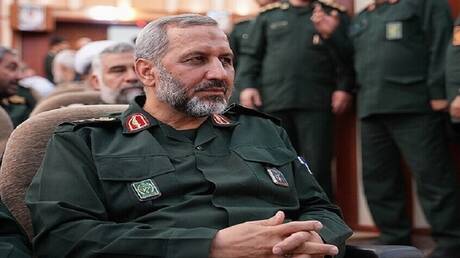
Brigadier General Majid Mousavi, commander of the aerospace force of the Iranian Revolutionary Guard, announced the continuation of military operations targeting American logistical systems in the region. Mousavi confirmed that the list of targets will soon expand, indicating a potential escalation in Iranian military activities against US presence in the Middle East.
These statements come at a time of increasing tension in the region, as Iran seeks to enhance its military capabilities in response to what it perceives as threats from the United States and its allies. Mousavi pointed out that the operations specifically target American radar and warning networks, which Tehran considers essential for securing its interests and national security.
Details of the Operations
In remarks made during a press conference, Brigadier General Mousavi clarified that the Iranian Revolutionary Guard has prepared a new list of targets that includes American military and logistical facilities in the region. He emphasized that these operations are not new but are part of a long-term strategy aimed at undermining American influence in the Middle East.
Mousavi also noted that the Revolutionary Guard has achieved notable successes in executing previous operations, which strengthens Iran's position in the face of military and political pressures. These statements are part of Iran's policy to bolster its military strength amid rising tensions with the United States and its allies.
Background & Context
The roots of tensions between Iran and the United States date back decades, with relations between the two countries escalating significantly after Washington's withdrawal from the Iranian nuclear deal in 2018. Since then, the United States has imposed strict economic sanctions on Iran, exacerbating the economic and political situation in the country.
In recent years, Iran has increased its military activities in the region, including its support for armed groups in Iraq, Syria, and Lebanon. These activities are considered part of Iran's strategy to enhance its regional influence, which contradicts the interests of the United States and its allies in the area.
Impact & Consequences
Brigadier General Mousavi's statements indicate a potential military escalation in the region, which could worsen security conditions. If Iran continues to target American systems, the United States may respond with military operations or new sanctions, further intensifying tensions.
Additionally, these statements may affect relations between Iran and neighboring countries, as some nations may feel concerned about the escalation of Iranian military activities. At the same time, these operations could strengthen Iran's position domestically, as they may be viewed as a response to external pressures.
Regional Significance
Iranian military activities in the region are a major concern for Arab countries, especially those sharing borders with Iran or affected by its influence. Recent statements may lead to increased tensions between Iran and Arab nations, which could negatively impact security and stability in the region.
In light of these circumstances, Arab countries must take proactive steps to address the security challenges posed by Iranian activities, including enhancing security cooperation among themselves and developing effective strategies to counter potential threats.