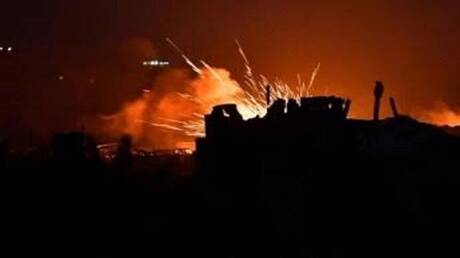
The Iranian Revolutionary Guard has announced the execution of wave 91 of Operation 'True Promise 4', employing a significant number of ballistic missiles and 'Qadir' cruise missiles, along with attack drones. This operation comes amid escalating military tensions in the region, raising concerns about security conditions in the Gulf.
This operation is part of the Revolutionary Guard's strategy to enhance its military capabilities and respond to what it perceives as threats from Western countries, particularly the United States. A spokesperson for the Revolutionary Guard indicated that this operation aims to bolster Iranian national security in light of what he described as increasing military and political pressures.
Details of the Operation
Reports indicate that the Revolutionary Guard utilized advanced ballistic missiles and 'Qadir' cruise missiles, known for their high precision in hitting targets. Attack drones were also deployed, reflecting the advancement of Iranian military capabilities in the field of unmanned aerial vehicles. The operation targeted several military sites in Gulf countries, including the American aircraft carrier 'USS Abraham Lincoln', which was present in the region at the time.
This move follows a series of tensions between Iran and the United States, as the 'USS Abraham Lincoln' had been deployed to the Gulf as part of the American deterrence strategy against Iran. The Revolutionary Guard considered this targeting a clear message to the United States and its allies in the region.
Background & Context
Historically, the Gulf region has witnessed increasing tensions between Iran and Western countries, especially after the United States withdrew from the Iranian nuclear agreement in 2018. Since then, military actions and provocations between the two sides have escalated, intensifying the conflict in the region. The Iranian Revolutionary Guard is one of the main military arms of the Iranian regime, working to enhance its influence in the region by supporting armed groups in Iraq, Syria, and Lebanon.
Iran is also seeking to develop its military capabilities to counter what it perceives as threats from the United States and its allies, making these military operations a part of its defensive strategy. In recent years, there has been an increase in the number of military maneuvers conducted by the Revolutionary Guard, reflecting its interest in strengthening its military capabilities.
Impact & Consequences
This operation represents a new escalation in tensions between Iran and the United States, and it may provoke military responses from the American side. The United States may view this targeting as a direct threat to its national security, potentially necessitating military or political actions against Iran.
Furthermore, these events could impact the stability of the region, as they may lead to escalated military conflicts in the Gulf, adversely affecting the economic and political conditions in the countries of the region. Gulf states may feel alarmed by the rising tensions, prompting them to enhance their military capabilities and cooperate with the United States to counter Iranian threats.
Regional Significance
These developments directly affect the security and stability of the Arab region, as any military escalation could destabilize Gulf countries. Arab nations in the region may find themselves in a difficult position, needing to navigate the increasing tensions between Iran and the United States.
Moreover, these events could influence the relationships between Arab countries and Iran, as escalation may widen the gap between the two sides. At the same time, some Arab nations may seek to strengthen cooperation with the United States to confront Iranian threats, complicating the political landscape in the region.
In conclusion, the situation in the Gulf remains tense, as the military escalation by the Iranian Revolutionary Guard reflects the security challenges facing the region. It is crucial to monitor upcoming developments, as any escalation could lead to serious repercussions for security and stability in the area.