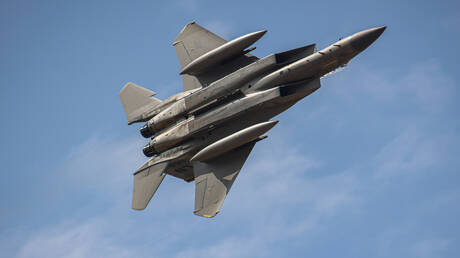
On Saturday, the Iranian Revolutionary Guard announced the execution of operations targeting heavy industries belonging to the United States and Israel, as part of wave 85 of Operation 'True Promise 4'. The Iranian forces confirmed that they managed to down a drone, in addition to injuring an American F-16 fighter jet, highlighting the rising military tensions in the region.
These developments come at a time when relations between Iran and the United States are increasingly strained, especially following Washington's withdrawal from the nuclear agreement in 2018. Iran has repeatedly expressed its readiness to respond to any threats, reflecting its defensive strategy that relies on enhancing its military capabilities.
Details of the Incident
In a statement issued by the Revolutionary Guard, it was confirmed that the military operations directly target heavy industries that Iran considers part of the military infrastructure of the US and Israel. The statement indicated that these operations are a response to what Iran describes as ongoing threats from these two countries.
The Revolutionary Guard also reported that an American drone was shot down, reflecting Iran's ability to carry out complex military operations in the air. Additionally, the injury of an F-16 fighter jet was noted, marking an unprecedented development in the military conflict between Iran and the United States.
Background & Context
Historically, relations between Iran and the United States have been characterized by ongoing escalation since the Islamic Revolution in 1979. Tensions have intensified following Washington's withdrawal from the nuclear agreement, which led to severe economic sanctions on Iran. In this context, the military operations conducted by the Revolutionary Guard are seen as part of Iran's strategy to defend its sovereignty and enhance its military capabilities.
Moreover, the Iranian military operations come at a sensitive time, as Iran seeks to bolster its regional position in the face of American pressures. Iran has demonstrated its ability to execute complex military operations, further complicating the security landscape in the region.
Impact & Consequences
These developments indicate a rise in military tensions in the region, which may lead to reactions from the United States and its allies. These operations are likely to increase military pressures on Iran, which could reflect on the overall stability of the region.
Furthermore, the military escalation may impact global oil markets, as Iran is one of the major oil-producing countries. Any escalation in the conflict could lead to rising oil prices, affecting the global economy.
Regional Significance
These events are of significant importance to the Arab region, as the rising tensions between Iran and the United States may affect regional security. Neighboring Arab countries, especially those with relations with the United States, may feel concerned about the military escalation.
Additionally, these events could impact peace efforts in the region, as many Arab countries strive for political and economic stability. Any escalation could hinder these efforts and increase instability in the region.
The military operations conducted by the Iranian Revolutionary Guard reflect an escalation in tensions between Iran and the United States, which may lead to widespread implications for regional security and the global economy. The region remains on alert for the outcomes of these developments.