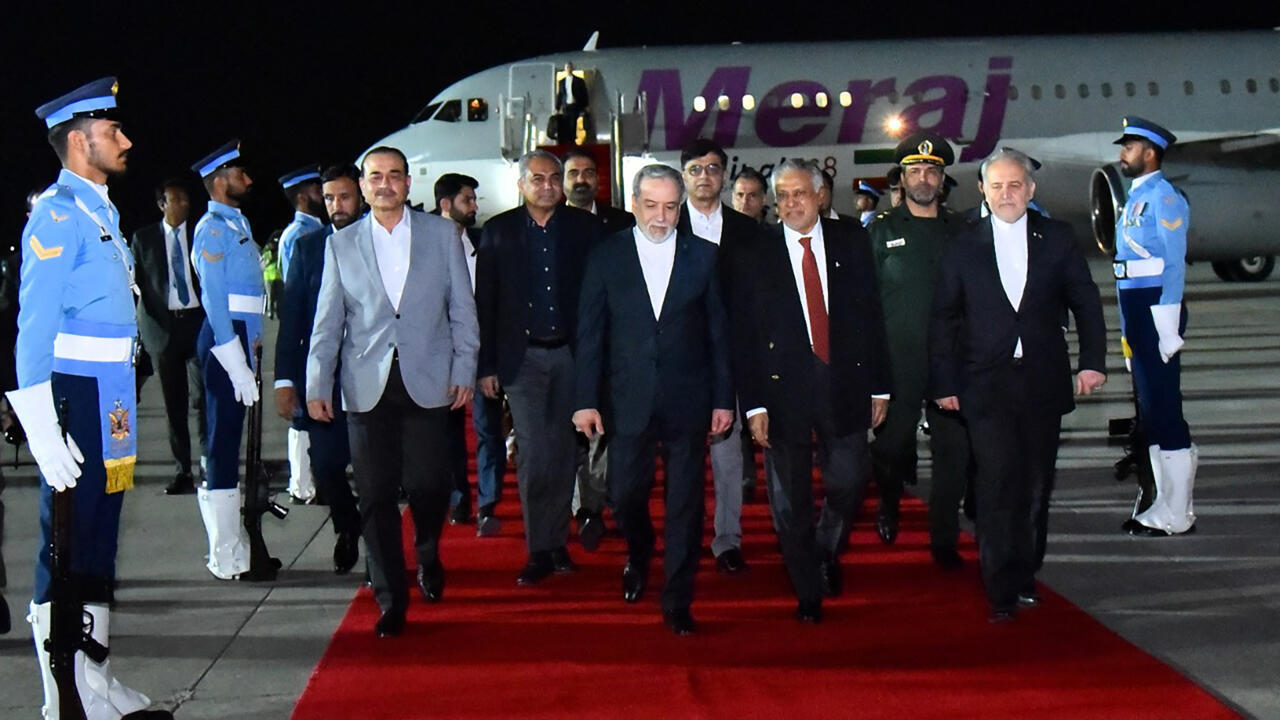
Iranian Foreign Minister Abbas Araghchi departed from the Pakistani capital Islamabad on Sunday, heading to Moscow, amid stalled peace negotiations between Tehran and Washington. His visit coincided with increasing internal pressures on U.S. President Donald Trump and rising tensions in Lebanon between Hezbollah and Israel.
Araghchi concluded his visit to Pakistan, a key mediator in efforts to revive talks, after discussions with Pakistani officials regarding the latest developments in relations with the United States. This trip included a stop in Oman, where Araghchi shared updates on communications with the American side.
Details of the Event
Araghchi's return to Islamabad followed the cancellation of a planned visit by Trump's envoys, Steve Mnuchin and Jared Kushner, amid faltering efforts to resolve the conflict that erupted after the U.S.-Israeli attack on Tehran on February 28. The Fars news agency reported that Tehran delivered written messages to Washington via Pakistan, outlining some of the Islamic Republic's red lines, including nuclear issues and the Strait of Hormuz. However, the agency emphasized that these messages do not represent formal negotiations.
The ceasefire declared since April 8 continues amid global economic repercussions from the war, with the United States imposing a blockade on Iranian ports, while Tehran refuses to negotiate under such pressure. Islamabad hosted the first round of direct talks between the two sides under the ceasefire, but no agreement was reached to end the conflict.
Context and Background
Trump announced that the cancellation of the envoys' visit does not mean a resumption of war, noting that the Iranians submitted a document that should have been better. He confirmed that they have all the necessary papers and that Iranians can contact them at any time. These statements come as internal pressures on Trump escalate, particularly with rising gasoline prices in the United States and the upcoming midterm elections.
In Pakistan, Araghchi met with Prime Minister Shahbaz Sharif, Foreign Minister Ishaq Dar, and Army Chief Asim Munir, who plays a pivotal role in mediation. He then left for Russia to hold talks with senior officials, where the Iranian ambassador in Moscow confirmed that Araghchi would meet with President Vladimir Putin to discuss the latest developments in negotiations and the ceasefire.
Implications and Effects
The Iranian crisis overlaps with field tensions in Lebanon, where the ceasefire between Hezbollah and Israel is precarious. Despite Trump's announcement of a three-week extension of the ceasefire, Israeli Prime Minister Benjamin Netanyahu accused Hezbollah of violating the agreement, while the party asserts that Israel is the one breaching the truce.
The Lebanese Ministry of Health reports 14 fatalities, including two children and two women, and 37 others injured in Israeli airstrikes on southern Lebanon. The National News Agency reported that the Israeli army issued warnings to evacuate residents of seven villages north of the Litani River, further complicating the security situation in the region.
Impact on the Arab Region
Concerns are growing over escalating tensions in the region, as any escalation in the conflict between Iran and the United States could directly affect security and stability in neighboring Arab countries. The ongoing conflict in Lebanon may also lead to negative repercussions on the regional situation, necessitating intensive international efforts to achieve peace.
In conclusion, the situation in the region remains tense, with ongoing talks between the involved parties, requiring close monitoring by the international community to achieve lasting stability.