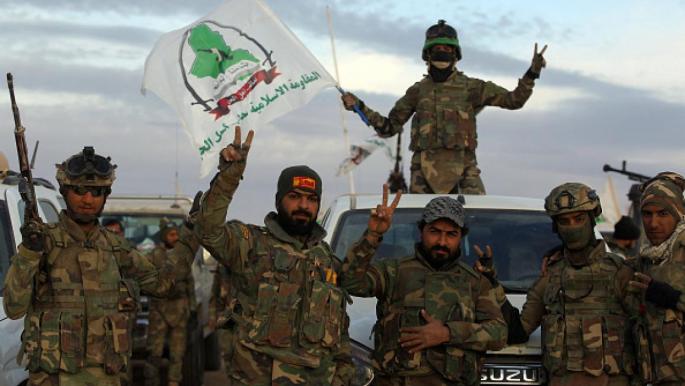
An Iraqi civil initiative comprising dozens of journalists, academics, and activists has issued a formal call urging the Iraqi government to present a "comprehensive action plan with clear benchmarks" aimed at consolidating all weapons under exclusive state control. This move seeks to significantly increase transparency surrounding one of the nation's most critical unresolved security and political dossiers that has long impeded stabilization efforts.
This urgent demand emerges against the backdrop of the persistent phenomenon of unregulated weapons circulating beyond official state institutions, a situation that constitutes a direct and ongoing threat to social cohesion and community stability while simultaneously obstructing comprehensive efforts to reconstruct the Iraqi state upon civil foundations that genuinely uphold the rule of law and constitutional order.
Initiative Details and Demands
The newly launched initiative, which officially kicked off its media and advocacy campaign in recent days, brings together a distinguished elite of Iraqi writers, researchers, and prominent media professionals. Their collective objective centers on generating sustained popular pressure and legal advocacy designed to compel the executive branch to publicly disclose specific operational mechanisms, detailed implementation strategies, and binding timelines for the collection and registration of all uncontrolled weapons currently circulating throughout the country.
In official statements, the initiative has placed particular emphasis on the absolute necessity for any proposed plan to incorporate quantifiable and measurable objectives, robust civilian oversight mechanisms independent of political interference, and ironclad guarantees preventing the selective application of disarmament for partisan political gain. They stress unequivocally that the process of weapons consolidation must encompass all armed actors uniformly, without granting exceptions or engaging in discriminatory practices that could undermine public trust.
Background & Context
Iraq has grappled for decades with the destabilizing phenomenon of weapons proliferation operating outside the legitimate state framework. The deep roots of this crisis extend back to the radical sociopolitical transformations that followed the year 2003, which triggered the catastrophic collapse of national security institutions and simultaneously facilitated the emergence of diverse armed formations operating independently of central government authority.
Throughout recent years, this chronic security dilemma has intensified dramatically with the expanding armed influence of various paramilitary factions and militia groups maintaining allegiance to competing political parties. Compounding these challenges, weapons have proliferated extensively throughout tribal territories and rural regions, creating an environment where sporadic armed clashes, targeted political assassinations, and sophisticated organized criminal activities have become increasingly commonplace.
Impact & Consequences
Any serious initiative aimed at weapons consolidation confronts substantial structural obstacles, chief among them the intricate and often opaque overlap between politically-motivated armed groups and traditional tribal weapons systems. Further complicating matters, numerous armed factions maintain significant representation within parliamentary bodies and government ministries, rendering formal disarmament operations extraordinarily sensitive from a political standpoint and vulnerable to indefinite postponement or tactical delay.
Civil society representatives have raised pressing questions regarding the current administration's actual capacity to confront these entrenched challenges without triggering dangerous security backlash or exacerbating existing social divisions. This skepticism proves particularly acute given documented weaknesses within security institutions across several governorates, combined with pervasive administrative corruption that frequently facilitates the leakage of military-grade weaponry from supposedly secure official arsenals back into unauthorized circulation.
Regional Significance
Analysts increasingly view the Iraqi weapons file as a crucial case study offering valuable insights for other Arab nations confronting comparable challenges regarding state authority and arms control, including Libya, Yemen, and Lebanon. Baghdad's evolving experience in this domain could potentially yield practical lessons concerning effective negotiation mechanisms with non-state armed actors and viable frameworks for the systematic integration of former combatants into legitimate state security structures.
Initiative organizers emphasize that successful implementation of comprehensive weapons control in Iraq would transmit a powerful positive signal across the Middle East, demonstrating that governments can effectively restore sovereign prestige and monopolize legitimate force through sustained civil dialogue and rigorous legal procedures, rather than relying exclusively upon military confrontation. Such an outcome could substantially enhance regional stability prospects within an increasingly volatile geopolitical environment.