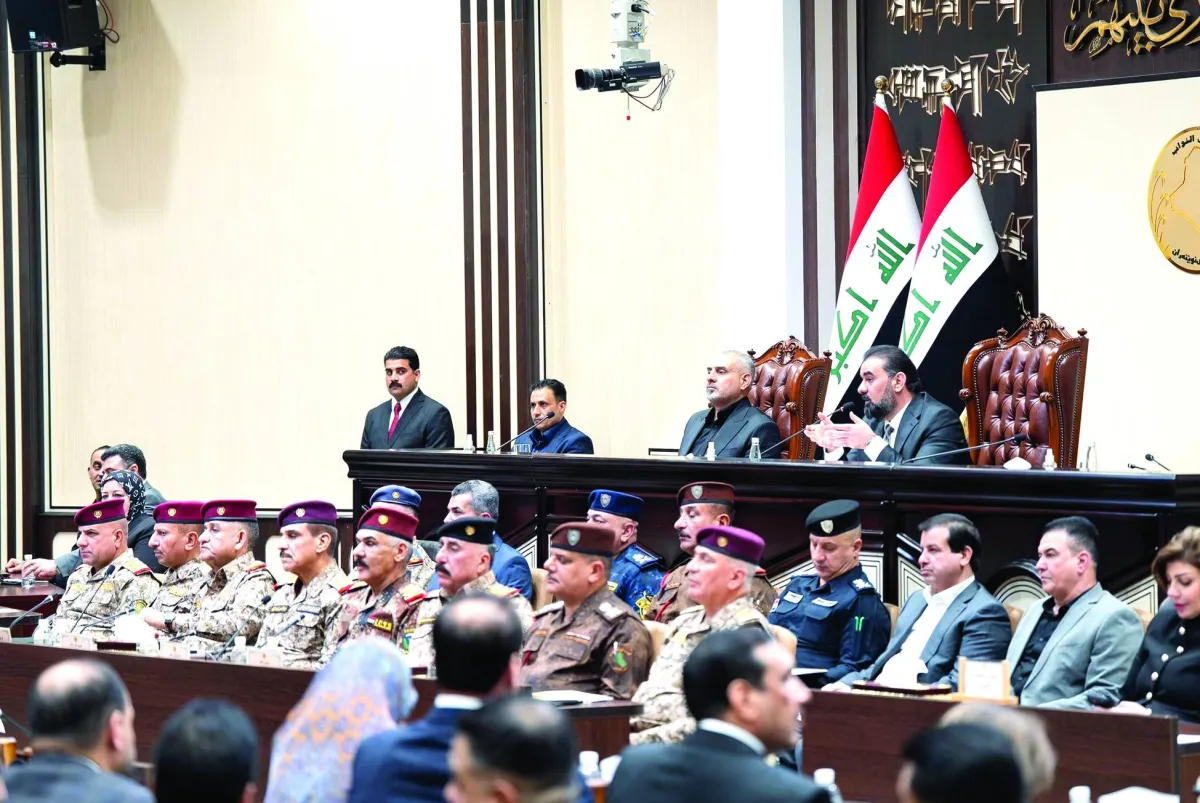
Concerns are growing over the potential dissolution of the Iraqi Parliament due to the lack of consensus among political forces, as the deadline set by the Parliament Presidency for holding a special session to elect the President and appoint the Prime Minister nears its end. Despite the response of the "Coordination Framework" to the request of Kurdish leader Masoud Barzani, the remaining time is now very limited.
The Parliament had previously decided to hold a session on March 27, but it was forced to postpone the date to April 11. This postponement came after Barzani requested the Shiite forces to grant the Kurds more time to reach an agreement on their candidate for the presidency.
Details of the Event
In an unprecedented move, about 220 deputies from various political blocs opened the scheduled session to elect the President, based on Federal Court Decision No. 16 of 2022, which interprets Article 70 of the Constitution. However, the bold attempts to break the political norm based on consensus among political leaders did not receive sufficient support, as political forces fear losing control over the deputies.
Since 2003, the political system in Iraq has followed a norm of sharing high sovereign positions among components, with the presidency allocated to the Kurds, the presidency of the Parliament to Sunni Arabs, and the premiership to the Shiites. Despite previous attempts to change this system, such as the youth protest movement in 2019, political consensus remains dominant.
Background & Context
The Presidency of the Parliament has received about 15 requests for the position of President, with the most prominent candidates being Fouad Hussein, the current Foreign Minister from the "Kurdistan Democratic Party", and Nizar Amidi, a prominent leader in the "Patriotic Union of Kurdistan". In contrast, the "Coordination Framework" leadership has received similar requests for the position of Prime Minister, with Nouri al-Maliki, Haider al-Abadi, and Mohammed Shia' al-Sudani competing for this position, along with several other candidates.
Electing the President requires a two-thirds vote from the members of Parliament, making the obstructive third a significant obstacle to any attempt to elect outside the framework of consensus. Meanwhile, the position of Prime Minister requires internal consensus among the "Coordination Framework" forces, which has not yet been achieved.
Impact & Consequences
As disputes continue among Kurdish forces over the Kurdish candidate and among Shiite factions regarding the Prime Minister position, fears are increasing about the possibility of dissolving Parliament and calling for early elections. Barzani's request for additional time raises questions about the Kurds' ability to reach an agreed-upon candidate, while Shiites face challenges in selecting their nominees.
Pressure is mounting on the Iraqi government, as some believe that the chances of the current Prime Minister, Mohammed Shia' al-Sudani, have diminished following criticism from the U.S. Embassy regarding the government's inability to confront Iran-aligned armed factions. This situation reflects a state of political instability that could affect Iraq's future.
Regional Significance
These developments in Iraq are of great importance to the Arab region, reflecting a state of political instability that could impact regional security. Amid existing tensions, the absence of consensus may escalate political crises, adversely affecting relations between Arab countries.
In conclusion, the future of the Iraqi Parliament hangs in the balance, dependent on the ability of political forces to overcome their differences and reach a consensus that ensures the stability of the political process in the country.