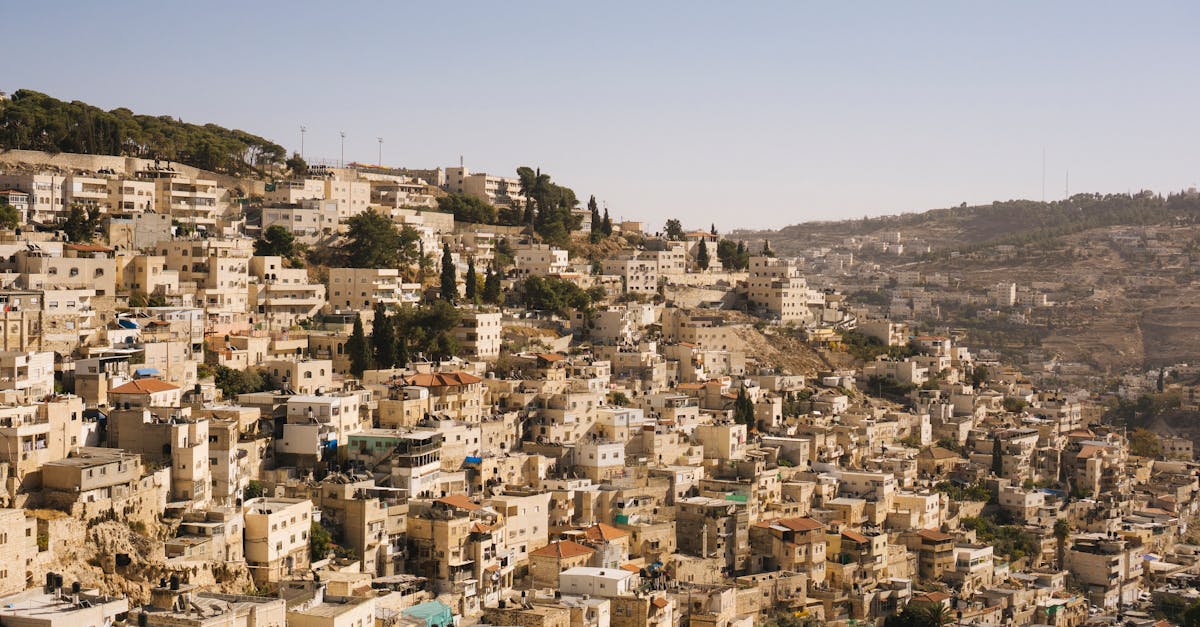
Jerusalem is considered one of the most complex cities in the world, having undergone radical transformations since the Nakba in 1948. The occupation of the western part of the city that year was not merely a political change but resulted in fundamental shifts in its geography, demographics, and identity.
The Nakba led to the loss of dozens of villages and neighborhoods for Jerusalemites, separating families from their properties and splitting the city into two parts. With Jordan managing East Jerusalem, the city began to develop as a Palestinian urban center, but the Israeli occupation in 1967 reshaped the scene once again.
Event Details
In 1949, Jerusalem was divided under a UN-mediated armistice agreement, establishing a new reality for the city. After the occupation of the western part, only 20% of Jerusalem's area before 1948 remained under Jordanian administration. Over time, displaced Palestinians from the western side began to settle in the eastern part, as seen in the Sheikh Jarrah neighborhood.
To separate the two parts, the Mandelbaum Gate was established, becoming a border point between Jordan and Israel. Palestinians referred to it as the 'Gate of Tears,' where refugees would meet their relatives from both sides, making it a symbol of the city's fragmentation.
Background & Context
During the Jordanian administration, East Jerusalem witnessed significant urban development, with new schools and institutions being built. However, after the Israeli occupation, policies aimed at erasing the Green Line began to emerge, leading to substantial demographic changes.
Since 1967, Israel has taken numerous steps to erase the traces of the Green Line, implementing measures aimed at annexing the eastern part of the city. Academic Mansour Al-Nassasra described this period as pivotal, where the occupation was forcibly entrenched.
Impact & Consequences
Israel seeks to reduce the Palestinian population in the eastern part, where some Palestinian institutions and homes remain resilient despite pressures. For instance, the Abdullah bin Al-Hussein School still stands in Sheikh Jarrah amid attempts by the occupation to demolish it.
These policies illustrate how the occupation aims to alter the demographic composition of the city, complicating the Israeli-Palestinian conflict further. Nevertheless, the dividing line remains present in Palestinian memory, as the homes and properties lost by Palestinians cannot be forgotten.
Regional Significance
The issue of Jerusalem is central to the Arab-Israeli conflict, representing a symbol of Palestinian identity. Israel's attempts to erase the divide between the two sides of the city reflect a colonial policy aimed at negating Palestinian existence.
These policies affect relations between Arabs and Israel, raising concerns in Arab countries and emphasizing the need to support the Palestinian cause. The collective memory of Jerusalemites remains alive, reflecting the ongoing challenges faced by Palestinians in preserving their identity and existence in the city.