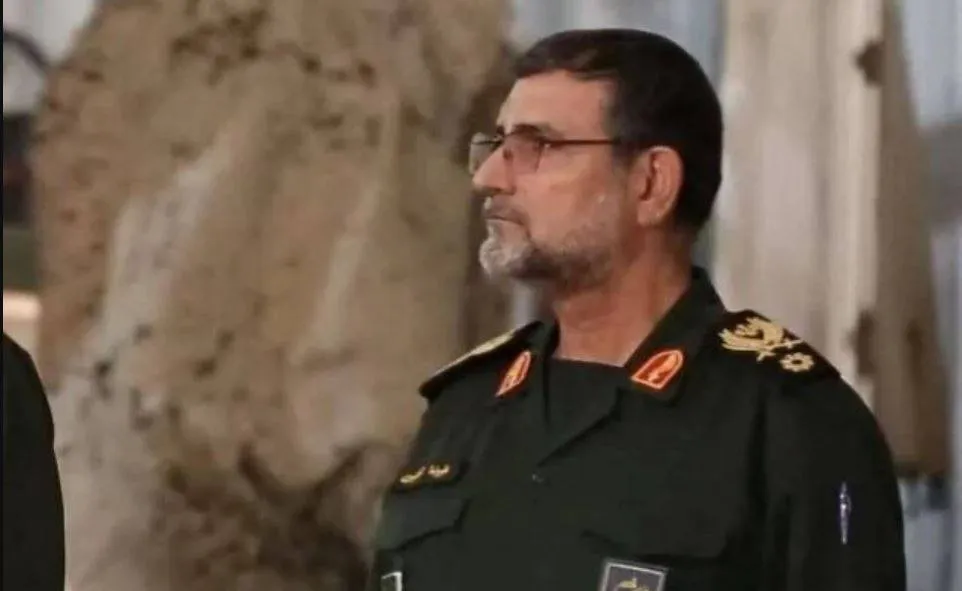
Israel announced today (Thursday) that it has carried out an airstrike resulting in the assassination of Iranian Revolutionary Guard naval commander Ali Reza Tangsiri. Israeli Defense Minister Israel Katz confirmed in a video statement that the operation was executed with pinpoint accuracy, targeting Tangsiri along with several senior officers in the naval command.
According to Israeli media reports, the airstrike targeted Tangsiri while he was in Bandar Abbas, a location considered a strategic hub for the Iranian navy. An Israeli official stated that Tangsiri played a prominent role in managing operations related to closing the Strait of Hormuz, reflecting the significance of his position within the Revolutionary Guard.
Details of the Operation
In his statements, Katz said: "Last night, in a precise and decisive strike, the Israeli army eliminated the commander of the Revolutionary Guard navy, Tangsiri, along with senior officers in the naval command." This statement reflects a clear Israeli strategy targeting Iranian military leadership as part of the ongoing conflict between the two countries.
This airstrike comes at a sensitive time, as the region is witnessing an escalation in military tensions, particularly between Israel and Hezbollah in Lebanon. The Israeli army announced the death of one of its soldiers during clashes with Hezbollah, raising the number of Israeli soldiers killed in the area to three.
Background & Context
Historically, relations between Israel and Iran have been tense, with Israel viewing Iran as an existential threat. Recent years have seen an escalation in mutual attacks, including targeting Iranian military sites in Syria and assassination operations aimed at Iranian military leaders.
The Strait of Hormuz, through which approximately 20% of global oil supplies pass, is a major point of tension between Iran and Western countries, including the United States and Israel. Iran has repeatedly attempted to use the Strait of Hormuz as a means to pressure its adversaries, increasing Tangsiri's importance as a naval commander.
Impact & Consequences
This operation is expected to provoke strong reactions from the Iranian side, as no official comment has been issued so far. However, history indicates that Iran may respond to such operations by escalating its military activities or through its proxies in the region.
Furthermore, this airstrike could lead to increased tensions in the region, especially given the volatile security situation in Lebanon and Syria. These events may affect the stability of the entire region, necessitating close monitoring by the international community.
Regional Significance
These developments are particularly significant for Arab countries, as they reflect the ongoing tensions between Iran and its allies on one side, and Israel and Western countries on the other. These events could lead to a reassessment of security and defense strategies in many Arab nations, especially those close to conflict zones.
In conclusion, the situation in the region remains complex, with political and military interests overlapping, requiring Arab nations to take cautious steps to address the increasing security challenges.