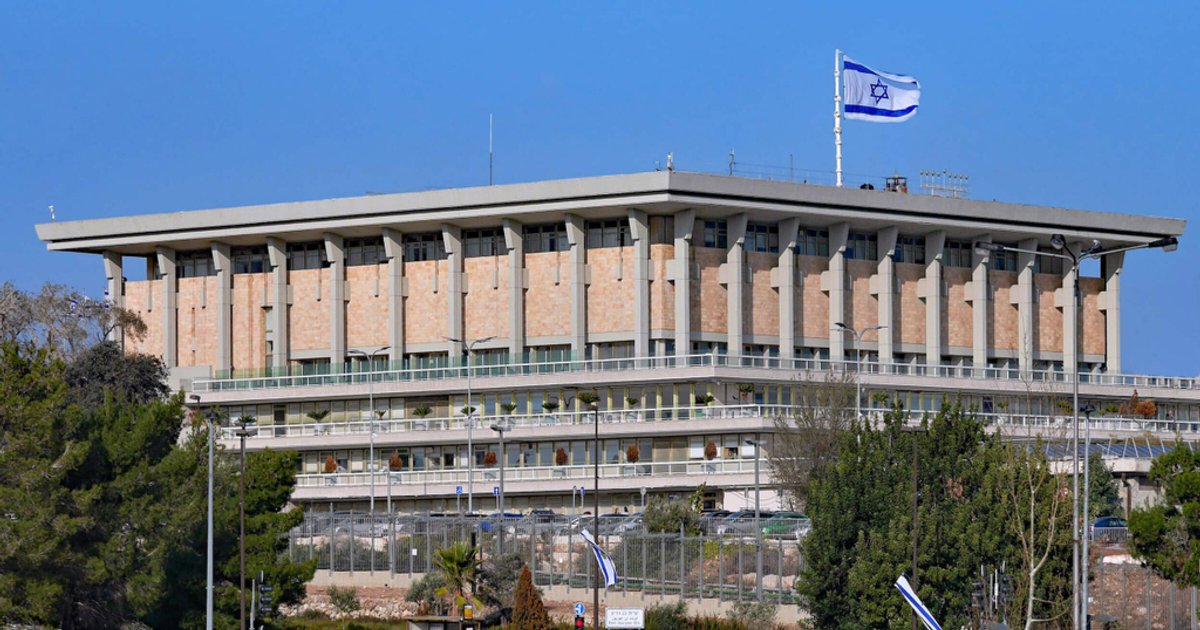
The Israeli parliament, known as the Knesset, has approved a new law allowing the death penalty to be imposed as a potential punishment for Palestinians convicted of deadly terrorist attacks. This law was passed on Monday with a majority of 62 votes to 48, with Israeli Prime Minister Benjamin Netanyahu voting in favor. The legislation is part of efforts by the far-right elements within the Israeli government, led by National Security Minister Itamar Ben Gvir.
The law stipulates that Palestinians convicted in Israeli military courts of carrying out attacks deemed "terrorist acts" will face execution by hanging within 90 days, with the possibility of delaying the execution for up to 180 days. Although the law allows for its application to Jewish Israelis, this is considered unlikely in practice, as it requires that the attack must have targeted the "existence of the State of Israel."
Details of the Legislation
After the vote, Itamar Ben Gvir expressed his joy on social media, stating: "We made history!!! We kept our promise and achieved what we promised." Some political figures, such as Limor Son-Har-Melech, who survived a Palestinian attack that killed her husband, justified the necessity of this law, noting that one of the killers was released and later participated in the attacks on October 7, 2023.
In contrast, the leader of the opposition Democratic Party, Yair Golan, criticized the legislation, stating that it would not contribute to enhancing Israeli security and could lead to international sanctions against Israel. He affirmed that "the death penalty for extremists is unnecessary legislation."
Background & Context
Historically, Israel has carried out only two executions, one of which was against Adolf Eichmann, the notorious Nazi official. This law comes amid rising tensions between Israelis and Palestinians, particularly following a series of bloody attacks that have occurred in the country in recent months.
It is noteworthy that several European countries, including the United Kingdom, France, Germany, and Italy, have expressed deep concern regarding this law, warning that it could undermine Israel's "democratic commitments."
Impact & Consequences
This law may exacerbate the situation in the Palestinian territories, as the Palestinian Authority views this legislation as an attempt to legitimize extrajudicial killings under a legislative guise. The Hamas movement warned that this law "threatens the lives" of Palestinian prisoners in Israeli jails, calling on the international community to "ensure the protection of our prisoners."
On the other hand, the Israeli Human Rights Association has filed a petition to the Supreme Court against this law, arguing that it is unconstitutional and designed in a discriminatory manner, and that it was enacted without legal authority concerning Palestinians in the West Bank.
Regional Significance
This law is part of Israeli policies that raise significant concern in the Arab world, as it contributes to deepening the divide between Palestinians and Israelis. The escalation of violence and discrimination may provoke strong reactions from Arab countries, threatening stability in the region.
In conclusion, this law represents a controversial step in the context of the Israeli-Palestinian conflict, raising questions about human rights and justice amid rising tensions. The international and local reactions will determine the future of this legislation and its impact on relations between Palestinians and Israelis.