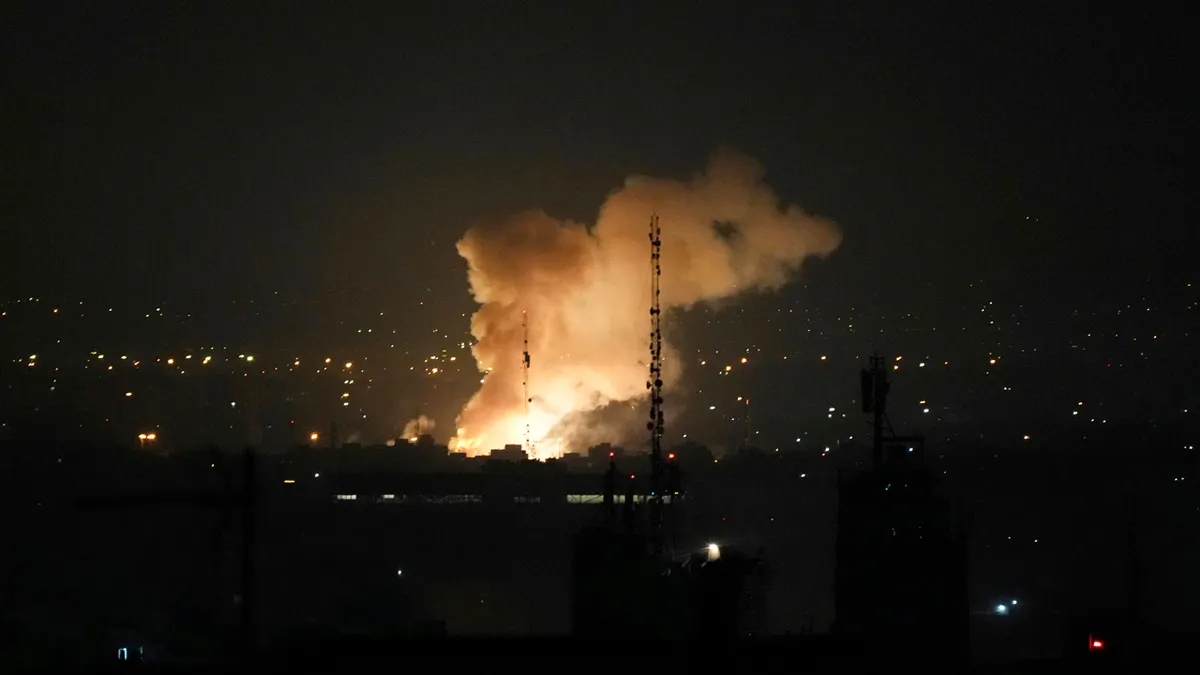
Israel has conducted a series of airstrikes on the Lebanese capital, Beirut, targeting strategic sites, while simultaneously attacking steel factories in Iran. These military operations come amid rising regional tensions, as fears grow of a larger escalation in the conflict between Israel and its allies on one side, and Iran and its allies on the other.
According to local sources, the Israeli airstrikes in Beirut targeted several locations, causing significant material damage, with no reports of human casualties so far. Reports also indicate that the attacks on Iran targeted steel factories, which are considered part of Iran's military infrastructure, complicating the security landscape in the region.
Details of the Event
These airstrikes occur at a sensitive time, as tensions between Israel and Iran have escalated in recent months, particularly following statements from Iranian officials regarding the development of their nuclear program. Israel has repeatedly asserted that it will not allow Iran to acquire nuclear weapons, prompting it to take preemptive military actions.
The attacks on Beirut and Iran follow a series of military skirmishes between Israeli forces and Palestinian factions in Gaza, where the region has witnessed a notable escalation in violence. Observers have noted that these airstrikes may be part of a broader Israeli strategy aimed at undermining the military capabilities of Iran and its allies in the region.
Background & Context
Historically, relations between Israel and Iran have been tense since the Islamic Revolution in 1979, with Iran considering Israel a major enemy. In recent years, tensions have escalated, particularly with Iran's involvement in regional conflicts and its support for armed factions in Lebanon and Syria.
In recent years, Israel has taken preemptive military steps against Iranian sites in Syria, where it is believed that Iran uses these locations to supply its allies with weapons. Additionally, Iranian support for Hezbollah in Lebanon is considered one of the main factors affecting Israeli security, making Beirut a potential target for any military operations.
Impact & Consequences
The recent Israeli military operations could lead to a greater escalation in the conflict, as Iran and its allies are expected to respond to these attacks. Analysts have warned that this escalation could lead to a full-scale war in the region, threatening the security and stability of neighboring countries.
Moreover, these airstrikes could affect international relations, as major powers like the United States and Russia may intervene in an attempt to calm the situation. Such interventions could lead to shifts in the balance of power in the region, further complicating the security landscape.
Regional Significance
These developments are of significant importance to Arab countries, as they could impact regional security and increase instability. Many Arab nations, particularly those located near Lebanon and Iran, may feel concerned about the rising military tensions.
Furthermore, these events could affect peace efforts in the region, as they may complicate negotiations between the various parties. Under these circumstances, Arab countries must be cautious in dealing with these developments and seek diplomatic solutions to avoid military escalation.