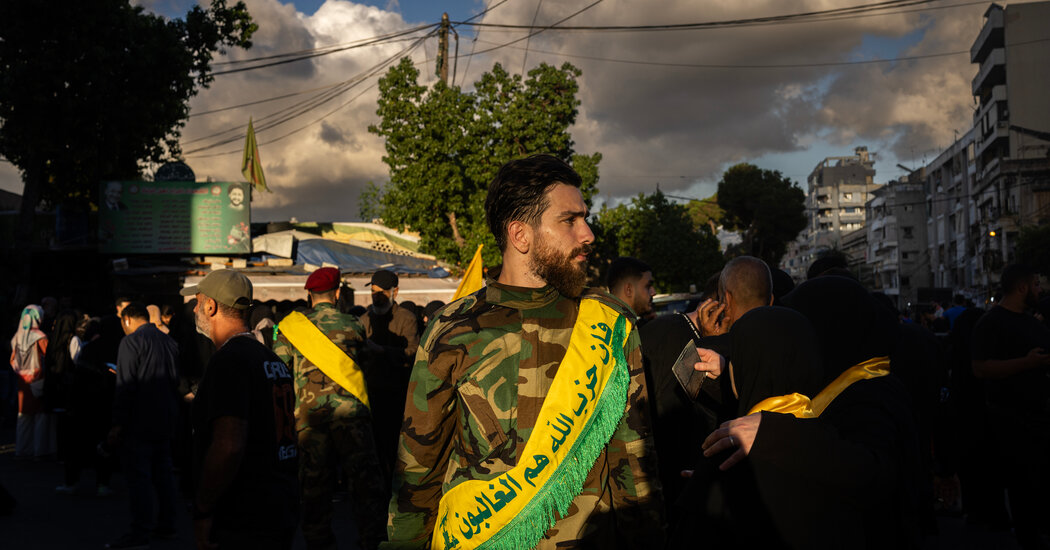
Eyes are turning to Lebanon as Israel reverts to its historical pattern of invasion in a renewed confrontation with Hezbollah. This time, the military escalation in the region evokes memories of the Israeli occupation of southern Lebanon from 1982 to 2000, which ended with a swift withdrawal after 18 years of attrition.
In an article published by the Spanish newspaper "El País," authors Juan Cabasés Vega and Antonio Pita confirmed that Israel is repeating the same rhetoric it used in the past, where promises of "decisive security" against the PLO were accompanied by military escalation, mirroring the current situation with Hezbollah, which emerged from that invasion.
Details of the Event
The Israeli military operations are expanding in southern Lebanon, where the Israeli army has surpassed its five established positions, violating the ceasefire declared in 2024. This escalation has resulted in the deaths of 1,189 individuals, including 51 paramedics and 124 children, according to the Lebanese Ministry of Health.
Israeli Defense Minister Israel Katz also mentioned plans to occupy 10% of the Lebanese border territory, which is equivalent to twice the area of the Gaza Strip, under the pretext of removing Hezbollah fighters. At the same time, Maha Yahya, director of the Carnegie Middle East Center, warns that this invasion could lead to the militarization of the region and increased misery, thereby reinforcing Hezbollah's justification for its existence.
Background & Context
Historically, Israel invaded Lebanon in 1982 with the aim of ending the presence of the PLO, but it ended up creating a more formidable enemy in Hezbollah after its withdrawal in 2000. Today, Israel is using the same justifications that it employed to justify the siege of Beirut and the massacres of Sabra and Shatila.
It is worth noting that Hezbollah has turned the idea of a "quagmire" into a symbol in its museum, showcasing the wreckage of Israeli vehicles, reflecting the collective memory of past events. Intelligence estimates indicate that Hezbollah still retains about 20% of its missile capabilities, demonstrating its readiness to confront any escalation.
Impact & Consequences
Analyses predict that this escalation could lead to a long and arduous war, with no guarantees for disarming Hezbollah. While some analysts believe that the group has been weakened, there are warnings against Israeli "complacency," as Hezbollah remains capable of inflicting losses on the Israeli army.
Concerns are growing that this escalation may lead to further violence and instability in the region, threatening regional security and bolstering Hezbollah's position as a resistance force. There are also official and popular Lebanese calls for disarmament and for the decision of war to be confined to the state, but these calls face significant challenges.
Regional Significance
This situation reflects a growing concern in the Arab world, where Lebanese people feel that Israel has an expansionist agenda that extends beyond Gaza to include Lebanon and Syria. This enhances Hezbollah's rationale for retaining its weapons and suggests that the Gaza model could serve as a warning for what might happen in Lebanon if resistance is abandoned.
In conclusion, the situation in Lebanon remains tense, with citizens living under continuous threats, evoking painful memories of past occupations. The continuation of this conflict could have serious repercussions for security and stability in the region.