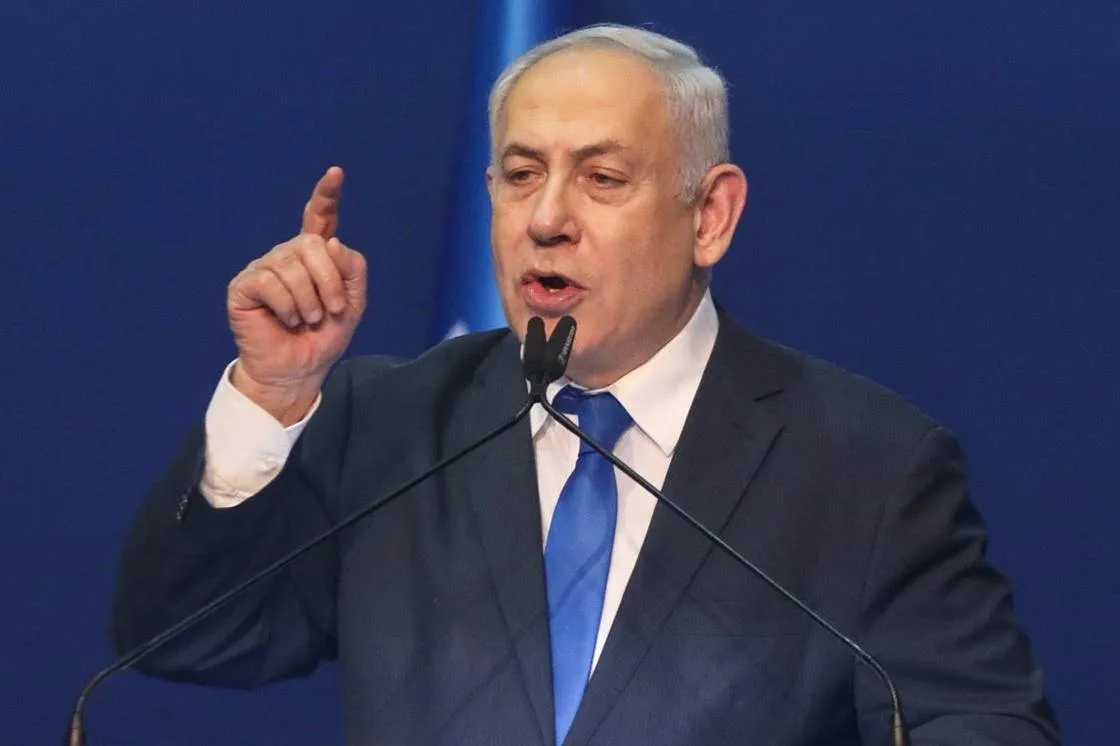
Israeli Prime Minister Benjamin Netanyahu announced on Saturday that Israeli forces targeted Iranian petrochemical plants and steel facilities used in the production of essential materials for weapons. These statements come at a time when tensions between Israel and Iran are escalating, amid reports of intensive airstrikes on Iranian territory.
Iranian media reported that U.S. and Israeli warplanes launched strikes on multiple targets in Iran, including a petrochemical facility in the Mahshahr area of Khuzestan Province. Reports indicated that at least five people were killed as a result of these attacks.
Details of the Event
In a video released by his office, Netanyahu confirmed that Israel would continue to carry out joint attacks with the United States against Iranian infrastructure, stating, "With our American friends, we will continue to strike the terrorist regime in Iran. We are eliminating leaders, bombing bridges, and targeting infrastructure." These remarks came after the U.S. military targeted a major bridge near Tehran.
Netanyahu added that the Israeli Air Force has destroyed 70% of Iran's steel production capacity in recent days, noting that the Mobarakeh steel plant, the largest in the country, has ceased operations following the recent airstrikes.
Background & Context
The steel industry is considered a vital sector in Iran, playing a crucial role in the production of automobiles and the defense sector. Military pressures on Iran have significantly increased in recent weeks, leading to an escalation of Israeli and American military operations against Tehran.
In this context, an Israeli defense official reported that Israel is preparing to attack Iranian energy facilities but is awaiting the green light from the United States. This comes at a time when U.S. President Donald Trump warned Tehran that time is running out before the deadline he set for reaching an agreement to end the conflict.
Impact & Consequences
Analyses suggest that the military escalation could lead to serious repercussions for regional stability. Iran, facing economic and military pressures, may respond to these attacks increasingly, heightening the conflict in the region.
Targeting Iranian economic infrastructure could directly affect the lives of Iranian citizens, increasing discontent within the country. Israel has prepared a list of new targets to strike in the coming weeks, indicating that military operations will continue longer than expected.
Regional Significance
Concerns are growing that the military escalation between Israel and Iran could impact security and stability in the Arab region. Many Arab countries are closely monitoring the situation, as any escalation could have unforeseen repercussions on regional relations.
At the same time, armed groups in the region may exploit these circumstances to strengthen their position against Israel, complicating the security landscape in the Middle East. The continuation of military operations could open the door to further tensions and conflicts in the region.
In conclusion, it appears that the conflict between Israel and Iran has entered a new phase of escalation, raising concerns about the near future in the region.