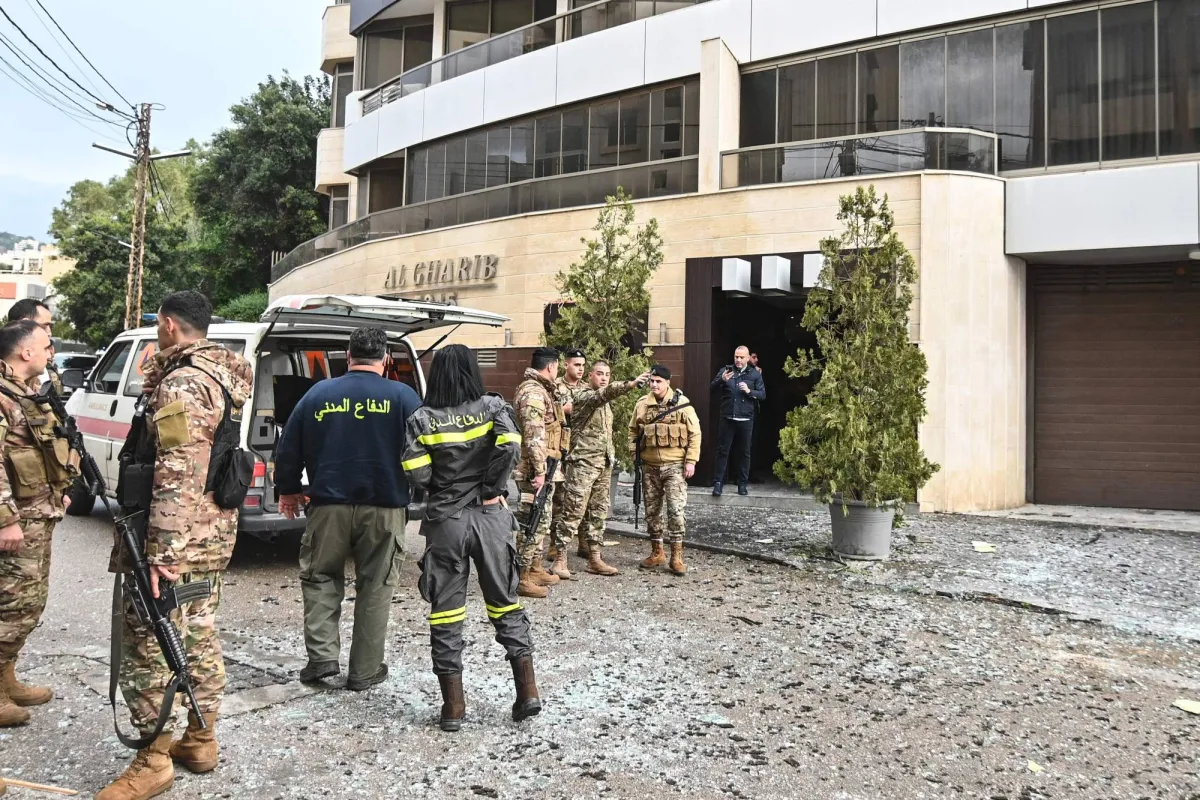
A new Israeli airstrike has resulted in the death of an individual in the Hazmieh area east of Beirut, while the southern front experiences ongoing escalation with Israeli forces advancing into several border towns and engaging in direct confrontations with Hezbollah. This escalation comes amid continued Israeli pressure on infrastructure in southern Lebanon, where bridges connecting southern Lebanon to the north have been targeted, increasing tensions and conflict in the region.
The Israeli airstrike targeted a residential apartment in Hazmieh, causing panic among residents and resulting in partial destruction of property. Security forces have cordoned off the area as investigations into the attack continue. In a statement, Israeli army spokesperson Avichai Adraee announced that "the army targeted a member of the Quds Force in Beirut," indicating that this was part of an assassination operation near the capital.
Details of the Incident
This attack coincided with renewed Israeli warnings for the southern suburbs of Beirut, marking a new phase of escalation in the military operation. The Lebanese Ministry of Health reported that the death toll since the beginning of the Israeli war on March 2 has reached 1,039 fatalities, while the number of injured has reached 2,876 individuals.
On the southern front, Israeli Finance Minister Bezalel Smotrich stated that his vision is for the Litani River to serve as the border between Lebanon and Israel. He added, "We will continue to carry out operations similar to what we are doing in Gaza in Lebanon." Meanwhile, Israeli military operations clearly aim to sever connections in southern Lebanon by targeting vital bridges.
Background & Context
The roots of the Israeli-Lebanese conflict extend over decades of political and military tensions, with current events escalating within the ongoing dispute between the Israeli occupation and Hezbollah. Current reports serve as an extension of previous military operations, as Israeli incursions into border areas in Lebanon occur nearly daily, allowing them to exploit any disturbances in the region. This operation also reflects broader regional dimensions, including the impacts of international events surrounding the conflict, such as U.S. pressures on Iran.
Hezbollah continues to respond to attacks, with the party claiming military operations targeting Israeli sites and confirming the continuation of rocket fire from Lebanese territory, further increasing tensions in the region.
Impact & Consequences
The ongoing operations from both sides could lead to greater escalation, exacerbating the humanitarian and political situation in Lebanon. The continued military pressure on infrastructure by Israel poses a direct threat to civilian security and livelihoods in southern areas. Military experts have noted that this military approach aims to disrupt Hezbollah's operations and cut off its supply lines.
This military hardening also reflects a strategy aimed at enhancing Israeli control over the Litani River and beyond, with growing concerns about the implications of war on civilians and the potential for it to escalate into a comprehensive war that could involve other countries in the region. Comments from military analysts suggest that if the situation is not contained, the conflict could evolve into a broader confrontation.
Regional Significance
Events in Lebanon reflect concerns in the relevant Arab countries, as the conflicts in Lebanon are part of broader regional dynamics. Countries such as Syria and Iraq are closely monitoring the events, with Tehran playing a pivotal role in supporting Hezbollah. Any escalation could threaten regional stability and push neighboring countries to become more involved in the conflict.
These developments coincide with discussions about a potential deal between Iran and the United States, which could radically reshape regional dynamics and have far-reaching effects on the Lebanese conflict.
In conclusion, amid ongoing military and political escalation, the Lebanese scene remains tense. Current events represent a dangerous step that could lead to greater escalation, necessitating international efforts for mediation to avoid catastrophic developments in the region.