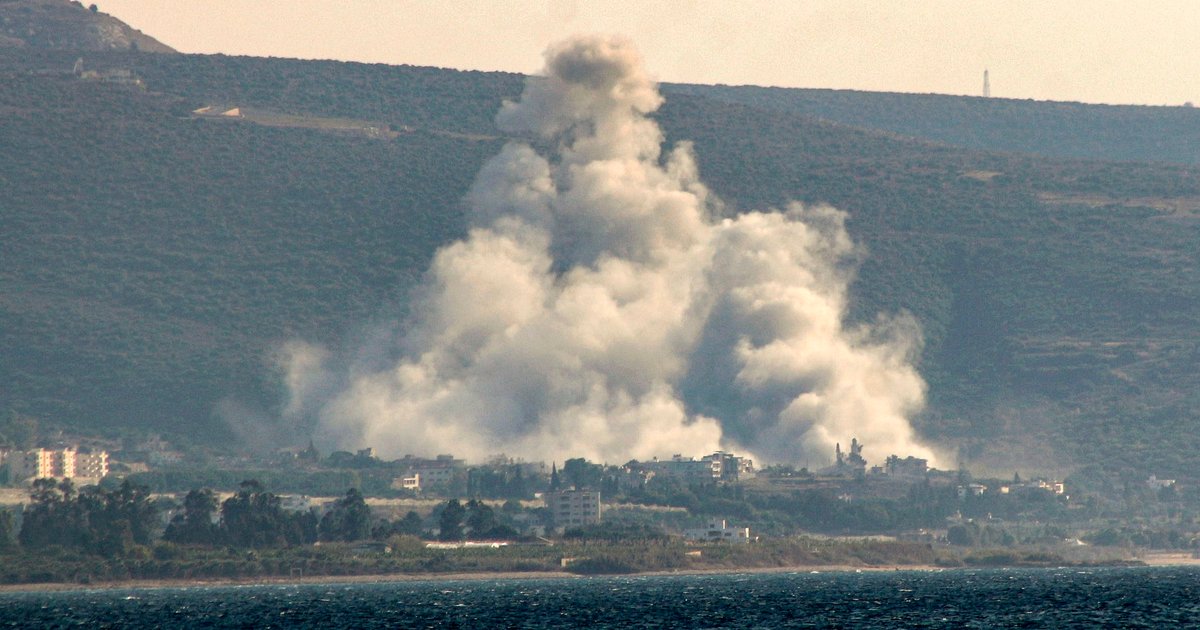
Israeli warplanes launched an airstrike on Haboush in the Nabatieh district of southern Lebanon, causing significant material damage. This strike comes at a sensitive time, as the region witnesses escalating tensions between Israel and Hezbollah, which controls large parts of Lebanon and is considered one of Israel's primary adversaries in the area.
The Israeli military operation is part of its ongoing strategy to counter potential threats from Hezbollah, which possesses an arsenal of advanced weaponry. Local sources reported that the airstrike targeted sites believed to be used for weapon storage, further intensifying tensions in the region.
Details of the Incident
According to security sources, the airstrike occurred late at night, targeting a number of sites in Haboush. The sound of explosions was heard throughout the town, causing panic among residents. Images from the scene showed severe damage to surrounding buildings.
The Israeli army has not issued an official statement regarding the airstrike, but military sources confirmed that the operation was part of Israel's ongoing efforts to address any threats from Hezbollah, especially amid rising tensions along the border.
Background & Context
Historically, the Lebanese-Israeli border has seen an escalation of military actions, particularly since 2006 when the Second Lebanon War broke out. Since then, Israel has continued to carry out airstrikes on targets in Lebanon, focusing on sites believed to be linked to Hezbollah.
In recent years, tensions have increased due to Hezbollah's military activities, including the development of precision missiles. Additionally, the situation in neighboring Syria, where Hezbollah is involved in the conflict, has added new complexities to the struggle in the region.
Impact & Consequences
The airstrike on Haboush represents a new escalation in the Israeli-Lebanese conflict and may provoke reactions from Hezbollah, which might feel compelled to respond to Israeli attacks. This escalation could threaten regional stability and increase the likelihood of a large-scale conflict.
Moreover, these events could impact relations between Lebanon and the international community, as the Lebanese government seeks to maintain stability amid economic and political pressures. Any escalation could also have negative repercussions for Syrian refugees in Lebanon, who are already facing difficult conditions.
Regional Significance
This airstrike is part of a broader context of tensions in the region, where fears of escalating armed conflicts in the Middle East are growing. Amid ongoing crises in Syria and Iraq, any escalation in Lebanon could affect regional security and complicate peace efforts.
These events also raise concerns among other Arab countries, which are striving for stability in the region. Attention remains focused on the reactions of the international community, particularly from major powers that play a role in the area.