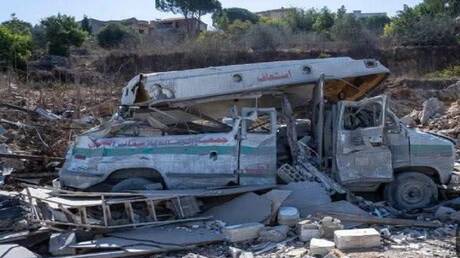
An Israeli airstrike on the town of Zawtar al-Gharbiyeh in southern Lebanon on Saturday resulted in the deaths of 5 paramedics from the Islamic Message Scouts, raising the total death toll to 15 individuals. This attack comes amid rising tensions between Lebanon and Israel and reflects the ongoing conflict in the region.
The Islamic Message Scouts are part of the Amal Movement, an organization known for providing emergency medical services and humanitarian assistance in Lebanon. The attack targeting these paramedics is a blatant violation of humanitarian relief efforts and raises questions about the safety of humanitarian workers in conflict zones.
Details of the Incident
The attack occurred early this morning when Israeli aircraft targeted a group of paramedics while they were performing their humanitarian duties in the town of Zawtar. Local sources confirmed that the airstrike resulted in the deaths of 5 paramedics, while others sustained serious injuries, increasing the total number of casualties to 15 in recent days.
This attack is part of a broader escalation of Israeli military operations in southern Lebanon, where airstrikes have increased recently. Many humanitarian organizations have condemned this attack, stating that it contradicts international laws that protect humanitarian workers.
Background & Context
Historically, southern Lebanon has witnessed numerous armed conflicts, with Israel having launched several wars against Lebanon, the most notable being in 2006. Since then, tensions between the two sides have persisted, with Israel increasing military strikes against targets in Lebanon, resulting in many civilian casualties.
The Amal Movement is one of the main political movements in Lebanon, playing a significant role in providing social and humanitarian services. However, the escalation of Israeli attacks threatens these efforts and exacerbates the suffering of civilians in the region.
Impact & Consequences
The recent attack highlights the dangers faced by humanitarian workers in conflict zones. It also reflects the rising violence in the region, which could worsen humanitarian conditions. Humanitarian organizations are expected to continue advocating for the protection of paramedics and providing a safe environment for them to carry out their duties.
Furthermore, this attack may provoke strong reactions from the Lebanese government and increase tensions between Lebanon and Israel. The Lebanese government is likely to take diplomatic steps to address these aggressions, which could impact regional relations.
Regional Significance
The events in Lebanon are part of the larger picture of the Arab-Israeli conflict, where the Palestinian issue and other regional disputes continue to affect the stability of the area. Israeli attacks on Lebanon raise concerns among Arab nations and call for a collective Arab response to protect the rights of civilians in conflict zones.
Moreover, the escalation of violence in Lebanon could affect regional security, potentially leading to an influx of refugees and increased tensions between neighboring countries. It is crucial for international efforts to resolve conflicts in the region and provide support to affected civilians.
The attack on the paramedics of the Islamic Message Scouts underscores the significant challenges faced by humanitarian organizations in conflict areas. The current situation requires urgent action from the international community to protect human rights and provide a safe environment for humanitarian workers.