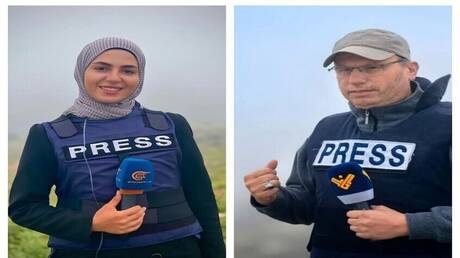
The head of RT, Margarita Simonyan, expressed her deep condolences to Al-Mayadeen and Al-Manar channels after the deaths of journalists Fatima Fatouni and Ali Shaib in an Israeli airstrike targeting southern Lebanon. This tragic incident reflects the tense situation in the region, where attacks on journalists covering ongoing events are on the rise.
Fatima Fatouni and Ali Shaib were working under difficult conditions to provide accurate information about events in Lebanon, and they lost their lives while performing their professional duty. This incident raises concerns about the safety of journalists in conflict areas and highlights the risks faced by media professionals in their pursuit of truth.
Details of the Incident
The incident occurred late yesterday evening when Israeli warplanes launched strikes on various areas in southern Lebanon. The airstrikes targeted sites believed to be affiliated with Hezbollah, but they also resulted in the deaths of journalists who were at the scene. Such attacks raise questions about the rules of engagement and the rights of journalists in conflict zones.
This incident is one of many attacks that journalists in the region have faced, with similar cases recorded in recent years. Targeting journalists is a blatant violation of human rights, and these incidents must be investigated, with those responsible held accountable.
Background & Context
Historically, the Middle East has witnessed numerous armed conflicts that have led to the loss of many lives, including those of journalists. In recent years, tensions between Israel and Hezbollah have intensified, putting journalists at constant risk while covering events.
Al-Mayadeen and Al-Manar channels are among the prominent media outlets covering events in Lebanon and Palestine, and both have faced multiple attacks on their crews. The killing of these journalists underscores the challenges faced by media in providing information in hazardous environments.
Impact & Consequences
This incident raises alarm among journalists and media organizations worldwide, highlighting the urgent need to protect journalists in conflict zones. Targeting journalists can lead to a decline in press freedom and make it more difficult to obtain accurate information.
Furthermore, this incident could escalate tensions between Lebanon and Israel, potentially affecting stability in the region. It is crucial for international bodies to take action to protect journalists and ensure their safety while performing their duties.
Regional Significance
This incident serves as a stark reminder of the dangers faced by journalists in the Arab world, where many are subjected to assaults and threats while covering events. The loss of journalists like Fatima and Ali impacts the media's ability to provide accurate and reliable information.
In light of escalating conflicts in the region, the international community must unite to protect journalists and ensure their rights. Supporting press freedom is vital for maintaining democracy and human rights in the Arab world.