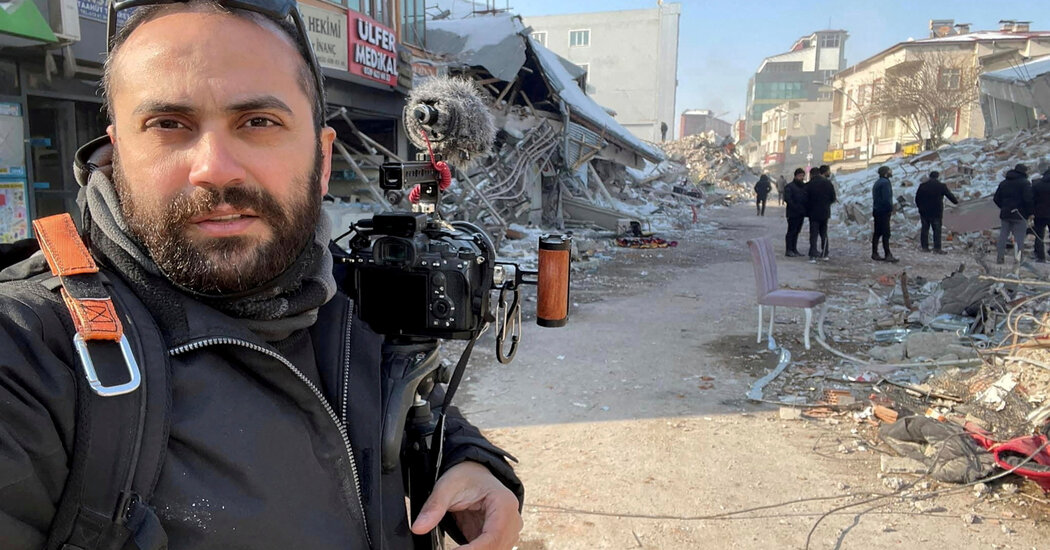
Two journalists from the Lebanese channel Al-Manar, Ali Shaib and Fatima Fattouni, were killed in an Israeli airstrike that targeted a region in Lebanon. The incident occurred at a time when tensions between Israel and Hezbollah are escalating, raising fears of a larger confrontation in the region.
This airstrike comes at a sensitive time, as the Lebanese-Israeli border is witnessing increasing tensions, and this incident could represent a turning point in the ongoing conflict. Reports indicate that the strike targeted an area near the border, leading to the deaths of the journalists while they were covering the ongoing events.
Details of the Incident
According to local sources, the Israeli airstrike targeted a site in southern Lebanon, where the journalists were covering clashes between Israeli occupation forces and Hezbollah fighters. Sources within Hezbollah confirmed the deaths of the journalists, provoking angry reactions from Lebanese media.
This attack follows a series of intermittent clashes between the two sides, with Israel recently increasing its airstrikes on Hezbollah-affiliated sites, further escalating tensions in the region.
Background & Context
Historically, the Lebanese-Israeli border has seen numerous armed conflicts, with Hezbollah being one of the most prominent armed factions in Lebanon. The group has fought several wars against Israel, the most notable being in 2006. Since then, both sides have maintained a state of ongoing tension, marked by exchanges of attacks and threats.
In recent years, Israel has intensified its military operations against Hezbollah, claiming that these operations aim to prevent the group from enhancing its military capabilities. In contrast, Hezbollah seeks to strengthen its presence on the ground, creating a tense environment along the border.
Impact & Consequences
The deaths of the journalists may provoke strong reactions from both Lebanese and international media, potentially leading to heightened tensions between Lebanon and Israel. This incident could also affect the coverage of events in the region, as media outlets may feel threatened while reporting on the unfolding events.
Moreover, this incident may increase pressure on the Lebanese government, which will face criticism regarding its ability to protect journalists and correspondents in the country. There are also concerns that this escalation could lead to a full-scale war in the region.
Regional Significance
This incident is part of the broader conflict in the Middle East, where regional and international interests intersect. The deaths of the journalists may highlight the dangers faced by reporters in conflict zones, raising issues of human rights and the protection of journalists.
Additionally, the escalation in Lebanon may affect relations between Arab countries and Israel, as pressures may mount on Arab governments to intervene or take a stand against Israeli aggressions. Ultimately, these events could exacerbate the humanitarian situation in the region.
The deaths of the journalists serve as a tragic reminder of the risks faced by reporters in conflict areas and reflect the ongoing tensions in Lebanon. It is crucial that international efforts are intensified to protect journalists and ensure their safety while performing their duties.