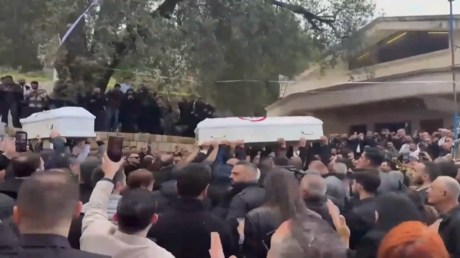
On Tuesday, the bodies of Pierre Amine Maouad, a Lebanese Forces official and head of the Yahchouch center, and his wife were buried after they were killed in an Israeli airstrike that targeted a residential building in the Ain Saadeh area, located east of Beirut. The incident has triggered a wave of anger and condemnation within Lebanese political and public circles.
This airstrike is part of a series of Israeli attacks targeting various regions in Lebanon, raising concerns about escalating tensions in the area. Local sources confirmed that the airstrike resulted in significant destruction of the targeted building, leading to the couple's death and injuries to several civilians.
Details of the Incident
According to reports, the Israeli airstrike targeted the residential building late at night while the couple was at home. The bodies were transferred to a nearby hospital, where they were identified by family members. This incident is not the first of its kind, as Lebanon has witnessed an escalation in Israeli attacks in recent years, particularly in border areas.
The Lebanese authorities condemned the attack, deeming it a blatant violation of Lebanese sovereignty. They also called on the international community to intervene to halt these repeated aggressions.
Background & Context
Historically, Lebanon has experienced multiple conflicts with Israel, with several wars and armed confrontations over the decades. The Lebanese Forces party, to which Pierre Maouad belongs, is one of the main political parties in Lebanon and plays a significant role in Lebanese political life. Israeli airstrikes often occur in the context of regional tensions, especially with the escalation of conflict in other areas such as Gaza.
The Israeli presence in Lebanon dates back to the Lebanese Civil War, during which Israeli forces occupied parts of southern Lebanon until 2000. Since then, relations between the two countries have remained tense, with ongoing disputes over borders and contested areas.
Impact & Consequences
This airstrike represents a new escalation in the Israeli-Lebanese conflict and may provoke strong reactions from Lebanese political parties. Pressure is expected to mount on the Lebanese government to take stringent measures against Israeli aggressions, potentially leading to military escalation.
The incident may also affect Lebanon's relations with the international community, as the Lebanese government may seek greater support from major powers to confront Israeli threats. At the same time, these events could increase political polarization in Lebanon, with some political forces exploiting the incident to bolster their positions.
Regional Significance
Israeli airstrikes in Lebanon are part of a broader policy aimed at strengthening Israeli control in the region. This escalation could impact relations between Arab countries and Israel, especially amid current crises in the region. Additionally, events in Lebanon may cast shadows over the situation in Palestine, where tensions are rising in the West Bank and Gaza Strip.
Ultimately, the question remains as to how the international community will respond to these events and whether there will be concrete steps to prevent the escalation of violence in the region. The continuation of these airstrikes could lead to catastrophic humanitarian and political consequences in Lebanon and the broader region.