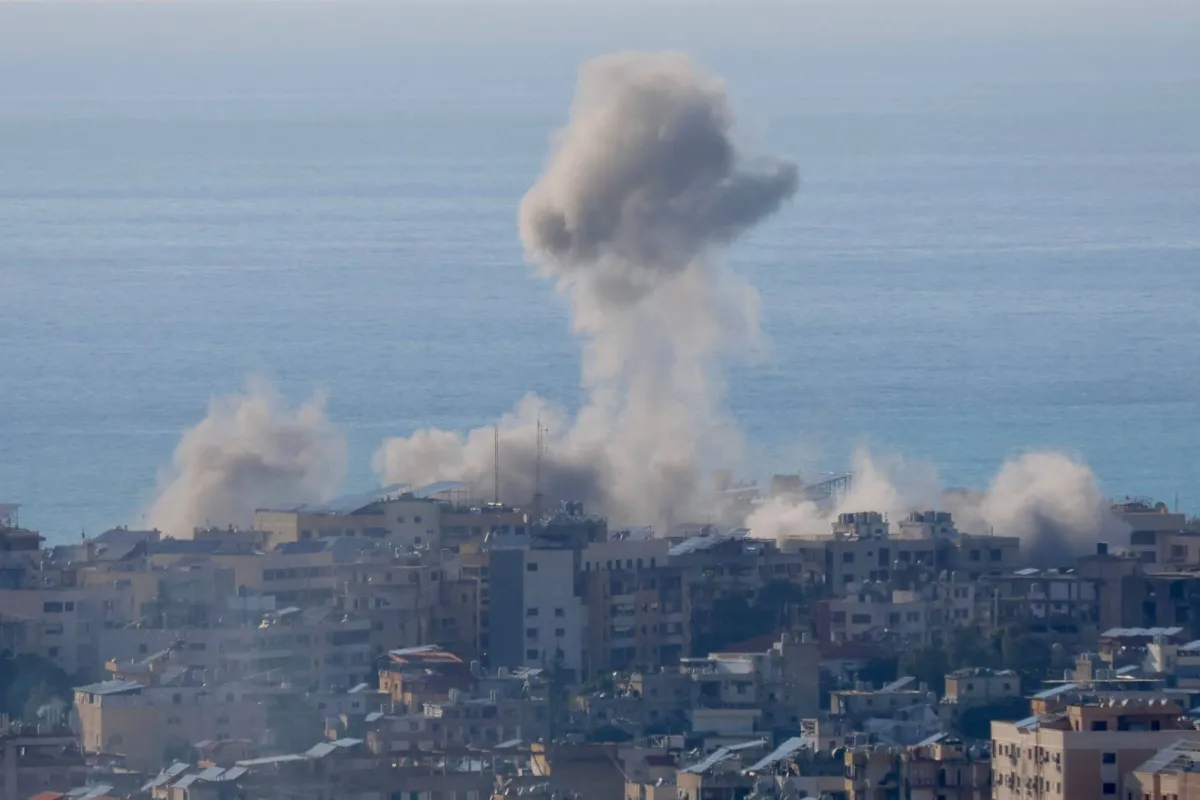
An Israeli airstrike on Tuesday targeted a building adjacent to the main road leading to Beirut International Airport, raising concerns among local residents. A live broadcast by the French Press Agency showed a massive cloud of smoke rising from the building after the strike, where a missile hit the upper floors, scattering debris onto the road that was blocked by security forces.
This airstrike marks the second on the same day in the southern suburbs of Beirut, which have witnessed significant displacement of residents since the onset of the war, amid increasing Israeli airstrikes and warnings.
Details of the Incident
As part of the Israeli military escalation in southern Lebanon, the Lebanese army decided to reposition its forces, withdrawing from several predominantly Christian villages in the far south, such as Rmeish, Dibb, and Ain Ebel. This step aims to avoid direct confrontation with the Israeli army, especially after the Lebanese army faced multiple assaults.
However, the withdrawal decision was met with resistance from the locals who insisted on staying in their lands, considering the absence of security forces a threat to their existence in this sensitive area. Residents gathered in the village squares demanding that the Lebanese army remain in their positions.
Context and Background
These developments come amid rising tensions in the region, as the southern suburbs of Beirut have recently experienced numerous Israeli airstrikes. The Israeli Defense Minister indicated the possibility of establishing a security zone within southern Lebanon, raising fears of a repeat of previous scenarios witnessed in areas like Rafah and Beit Hanoun in the Gaza Strip.
This escalation is seen as part of an Israeli policy aimed at enhancing military control over border areas, which could exacerbate the humanitarian situation in Lebanon, especially with the ongoing mass displacement of residents.
Impact and Consequences
Concerns are growing that these policies could lead to a deterioration of security and humanitarian conditions in Lebanon, where civilians are at risk due to ongoing military operations. Locals have warned that the withdrawal of the Lebanese army from border villages could open the door to greater escalation of Israeli attacks.
Moreover, these events may affect Lebanese-Israeli relations, as tensions between the two sides increase, potentially leading to greater military escalation in the future.
Regional Significance
These developments indicate the continuation of crises in the Arab region, where many countries are suffering from armed conflicts and political tensions. The escalation of violence in Lebanon could impact the stability of neighboring countries and heighten regional tensions.
In light of these conditions, hope remains pinned on international community efforts to find peaceful solutions to the crises in the region and to avoid further military escalation that could lead to new humanitarian disasters.