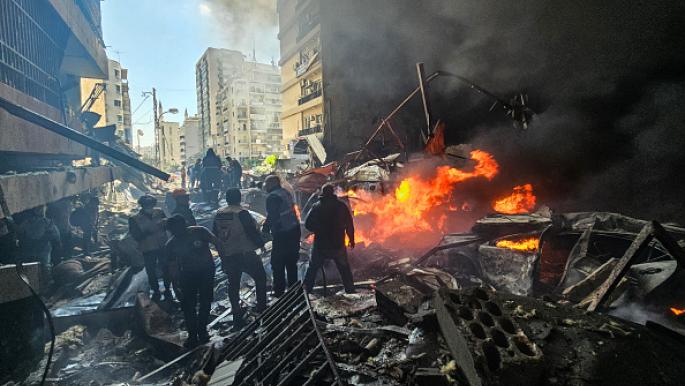
The Israeli military announced on Wednesday that it had carried out a wave of intensive airstrikes on Lebanon, targeting around 100 sites in just 10 minutes. The army described this attack as the broadest and most intense since October 7, leading to hundreds of casualties among civilians.
These airstrikes come at a time of escalating military tensions in Lebanon, with heightened confrontations between Israel and Hezbollah. Initial reports indicate that the airstrikes targeted residential areas and vital facilities, raising international concern about the humanitarian situation in the region.
Details of the Attack
In detailing the attack, a spokesperson for the Israeli military confirmed that the strikes targeted sites believed to be affiliated with Hezbollah, as well as infrastructure deemed critical for military operations. These airstrikes were executed following an increase in reciprocal attacks between the two sides, with Hezbollah launching rockets at Israeli positions in the preceding days.
Images and videos circulated on social media showed widespread destruction in the targeted areas, highlighting the severity of the assault. Eyewitnesses reported that the airstrikes caused panic among the population, with many rushing to shelters in search of safety.
Background & Context
Historically, the Lebanese-Israeli border has witnessed recurring tensions, especially since the outbreak of conflict between Hezbollah and Israel in 2006. Since then, there have been several rounds of escalation, but the recent attacks are considered the most violent in years. This escalation coincides with ongoing events in Gaza, where Israeli military operations continue.
Through these airstrikes, Israel aims to send a strong message to Hezbollah, indicating that any threat to Israeli security will not go unpunished. Conversely, Lebanon faces significant economic and humanitarian challenges, complicating the situation further.
Impact & Consequences
These airstrikes underscore the rising tensions in the region, which may provoke reactions from Hezbollah, threatening to ignite a new round of fighting. Additionally, the humanitarian conditions in Lebanon could deteriorate further, especially with the increasing number of displaced persons and casualties.
Moreover, these events may affect relations between Arab countries and Israel, as calls for a ceasefire and the necessity for dialogue have intensified. The airstrikes could elicit international reactions, particularly from countries seeking to achieve peace in the region.
Regional Significance
The recent events in Lebanon are part of a larger conflict in the region, where political and military interests intersect. These airstrikes may impact stability in neighboring countries such as Syria and Palestine, where tensions are also rising.
The continuation of escalation could lead to negative repercussions for regional security, necessitating urgent international intervention to curb the violence. Additionally, the deteriorating humanitarian conditions in Lebanon may require immediate support from the international community.
In conclusion, the recent Israeli airstrikes on Lebanon represent a serious escalation in the conflict, raising concerns about the humanitarian and political situations in the region. The current circumstances demand urgent action from all parties involved to prevent further escalation.