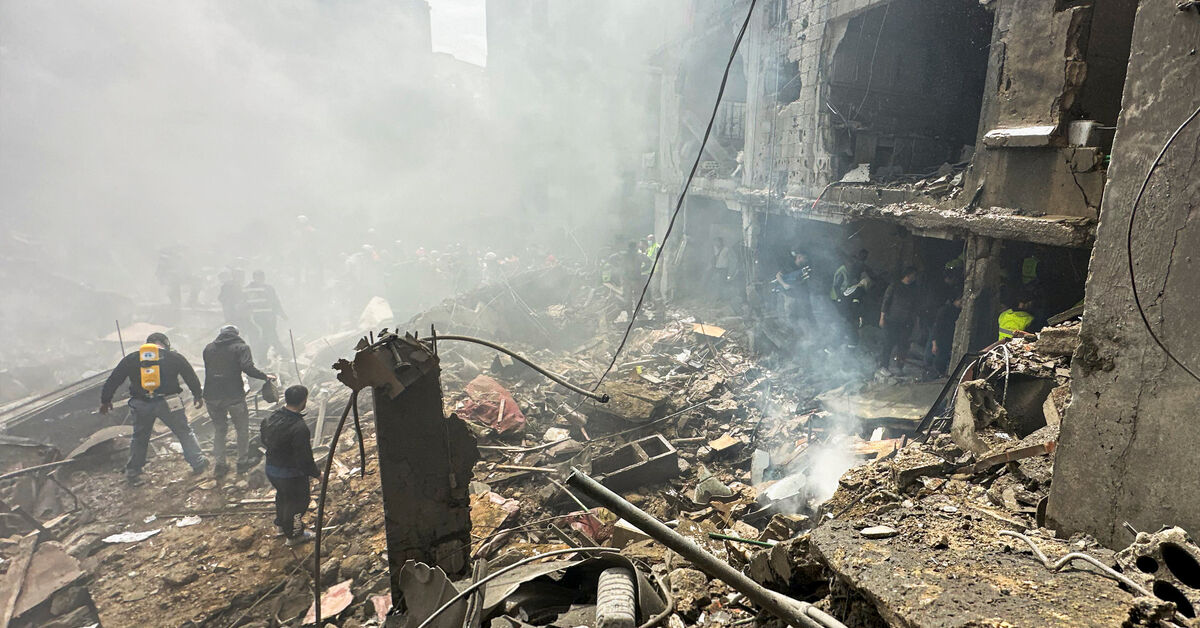
Israeli airstrikes on Sunday resulted in the deaths of 11 people in Lebanon, targeting the village of Kfar Hatta in the south and the Jnah neighborhood in the capital, Beirut. According to a statement from the Lebanese Ministry of Health, the strike on Kfar Hatta led to the deaths of seven individuals, including a young child, while the attack on Jnah resulted in four additional fatalities and injured 39 others.
These attacks come at a sensitive time, coinciding with Easter celebrations, which heightens tensions in the region. The Israeli forces issued evacuation orders for the residents of Kfar Hatta prior to the attack, raising questions about the intentions of the Israeli military and the reasons behind these airstrikes.
Details of the Incident
The Israeli strikes on Lebanon are part of an ongoing escalation in tensions between Israel and Hezbollah, with the region recently witnessing an increase in hostilities. The strike on Kfar Hatta, which occurred in the early morning hours, targeted a residential area, leading to civilian casualties, which raises international concerns regarding human rights violations.
Simultaneously, the strike on the Jnah neighborhood in Beirut, known for its densely populated areas, sparked angry reactions from local residents. Several citizens protested against the attacks, demanding international intervention to stop the Israeli aggressions.
Background & Context
Historically, Lebanon has experienced numerous armed conflicts with Israel, particularly during the Lebanese Civil War and various Israeli wars. Since 2006, when the July War erupted, the border between Lebanon and Israel has remained volatile, with exchanges of attacks between both sides. Hezbollah, regarded as a military and political force in Lebanon, adopts a resistance policy against Israel, complicating the security situation in the region.
In recent years, concerns have grown over the escalation of violence in Lebanon, especially as the country faces severe economic and political crises. The recent airstrikes occur at a critical time, as Lebanon grapples with a crippling economic crisis, exacerbating the suffering of the Lebanese people.
Impact & Consequences
Analysts suggest that these airstrikes may lead to a greater escalation in the conflict between Israel and Hezbollah, potentially dragging the region into further violence. Additionally, the civilian casualties may increase public resentment against Israel and bolster Hezbollah's position within Lebanon.
On the other hand, these events could prompt international calls to halt hostilities, as the international community is expected to intervene to pressure the concerned parties to de-escalate the situation. However, the international response may be slow, further complicating the situation in Lebanon.
Regional Significance
The events in Lebanon are part of a larger picture concerning security and stability in the Arab region. The escalation of violence in Lebanon could impact neighboring countries, such as Syria and Palestine, where security conditions may be directly affected. Furthermore, these events may reopen discussions about the role of regional and international powers in the area.
In conclusion, the recent Israeli airstrikes on Lebanon highlight the ongoing tensions in the region and underscore the urgent need for peaceful conflict resolution. The international community must act swiftly to halt these hostilities and protect civilians, especially given the dire humanitarian conditions faced by the Lebanese people.