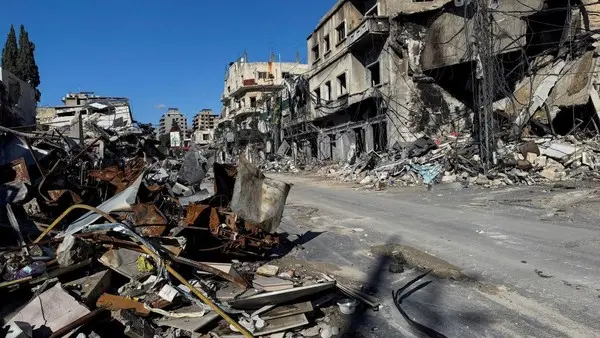
Local sources in Lebanon have reported that Israeli airstrikes targeted the Nabatieh region, leading to the deaths of 19 individuals and injuring 71 others. The attacks, which took place late last night, are part of an escalating military campaign in the area, raising fears of worsening humanitarian conditions.
Reports indicate that the airstrikes hit residential areas, causing extensive damage to infrastructure. Rescue teams rushed to the scene to assist the injured amid widespread panic among residents.
Details of the Incident
These airstrikes are part of a series of attacks carried out by Israeli forces on various regions in Lebanon, where the frequency of clashes has increased recently. Images captured from the incident site show significant destruction, with many residential buildings reduced to rubble.
At the same time, human rights organizations have expressed their concern over the rising violence in the region, calling for the protection of civilians. Several countries have issued statements condemning these attacks, demanding an immediate cessation of hostilities.
Background & Context
Historically, the Nabatieh region has witnessed numerous armed conflicts, serving as a battleground between Israeli forces and Lebanese groups. This recent escalation occurs amid increasing tensions between Israel and Hezbollah, complicating the security situation in Lebanon.
The humanitarian situation in Lebanon is also experiencing significant deterioration, with many residents living under difficult conditions due to economic and political crises. The Israeli airstrikes have exacerbated civilian suffering, necessitating urgent international intervention.
Impact & Consequences
Estimates suggest that these airstrikes may worsen the humanitarian conditions in Lebanon, where residents are already facing severe shortages of essential resources. Additionally, the military escalation could impact regional stability, threatening peace efforts in the area.
On the other hand, these events may increase tensions between Lebanon and Israel, potentially prompting international community intervention to mitigate the escalation. Furthermore, these airstrikes could affect relations between Arab countries and Israel, especially under the current circumstances.
Regional Significance
The events in Lebanon have significant implications for the Arab region, reflecting a state of instability affecting many countries. The rising violence in Lebanon may also impact relationships among Arab nations, further complicating political situations.
Ultimately, the current situation in Lebanon requires a concerted effort from both international and local actors to de-escalate tensions and protect civilians. The continuation of violence will only exacerbate humanitarian and political crises in the region.