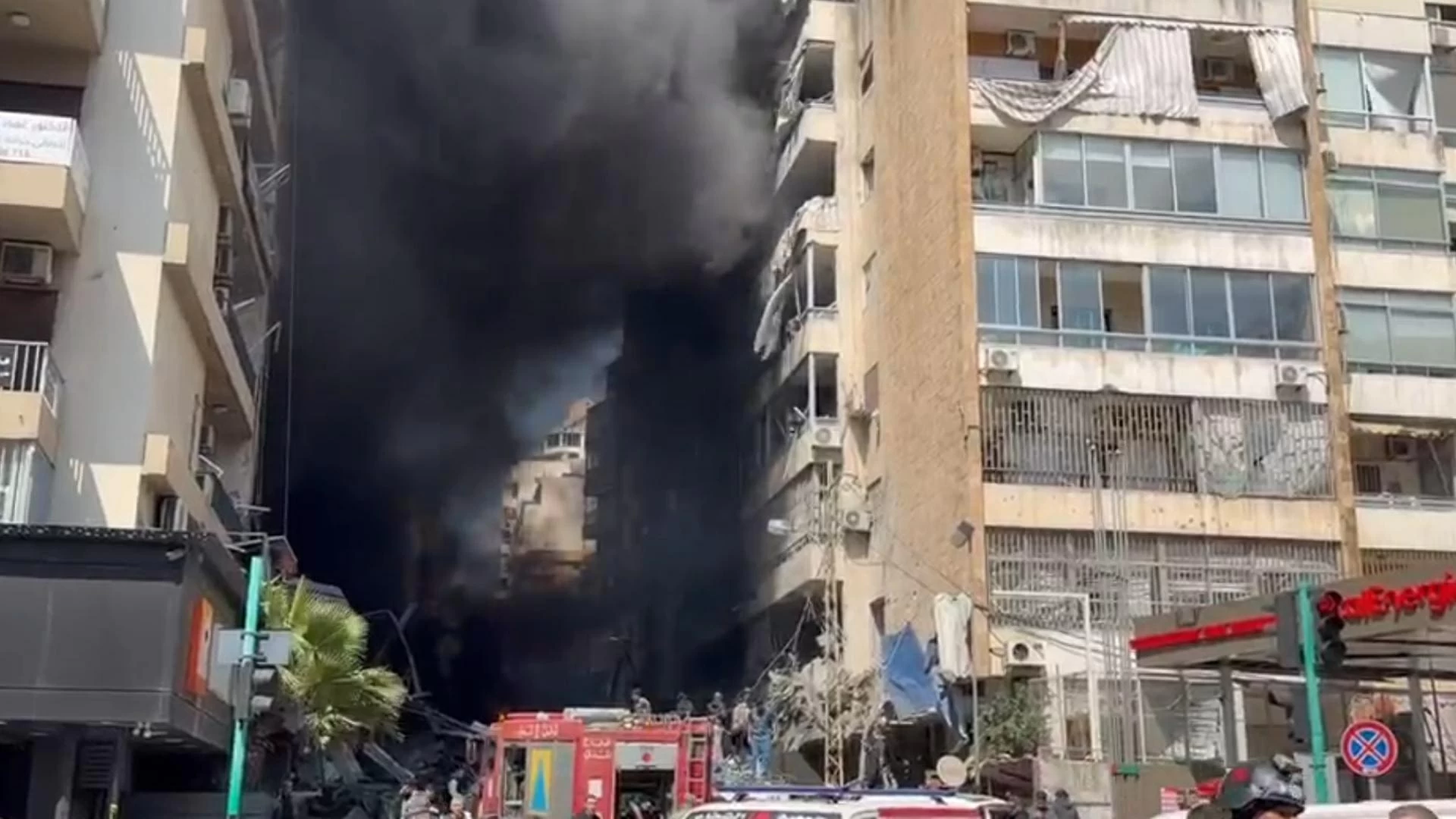
Israel has carried out a new massacre in Lebanon today, with airstrikes leading to the deaths of over 89 individuals and injuring 722 others. Lebanese Health Minister Rakan Nasr al-Din confirmed that the number of Israeli airstrikes exceeded 100, indicating a serious escalation in the security situation.
Nasr al-Din added that ambulances are still transporting victims to hospitals, emphasizing that the health situation in Lebanon requires urgent support from international organizations. He also urged the international community to provide necessary assistance to the Lebanese health sector, which is under significant pressure due to these repeated assaults.
Details of the Incident
In a related context, Lebanese President Joseph Aoun reaffirmed Lebanon's commitment to the negotiation initiative with Israel to halt military escalation, noting that Israel continues its assaults and refuses to respond to initiatives aimed at de-escalation. The Lebanese presidency condemned these assaults, describing them as barbaric and a violation of any international agreements or commitments.
The presidency further stated that these assaults represent a disregard for international laws and norms, pointing out that Israel has committed serious violations during the past 15 months since the ceasefire agreement. They confirmed that this new massacre adds to Israel's dark record of human rights violations.
Background & Context
These events come at a sensitive time, as Lebanon is suffering from multiple crises, including economic and political turmoil. The Israeli military escalation occurs amid rising tensions in the region, complicating the security situation in Lebanon further.
Over the past years, Lebanon has witnessed numerous Israeli assaults, resulting in significant human and material losses. The current situation necessitates urgent international action to put an end to these violations.
Impact & Consequences
The recent Israeli escalation carries serious implications for security and stability in Lebanon and the region as a whole. The continuation of these aggressive policies could exacerbate humanitarian conditions, leading to an increase in the number of displaced persons and casualties.
Moreover, these events may affect relations between Lebanon and neighboring countries, heightening tensions in the region, which calls for urgent international action to stop the assaults.
Regional Significance
This massacre is part of a series of Israeli assaults that threaten security and stability in the region. The international community is called upon to take responsibility for these violations and work to put an end to this aggressive approach.
Under these circumstances, Arab countries must take a unified stance to support Lebanon and enhance efforts aimed at achieving peace and stability in the region.