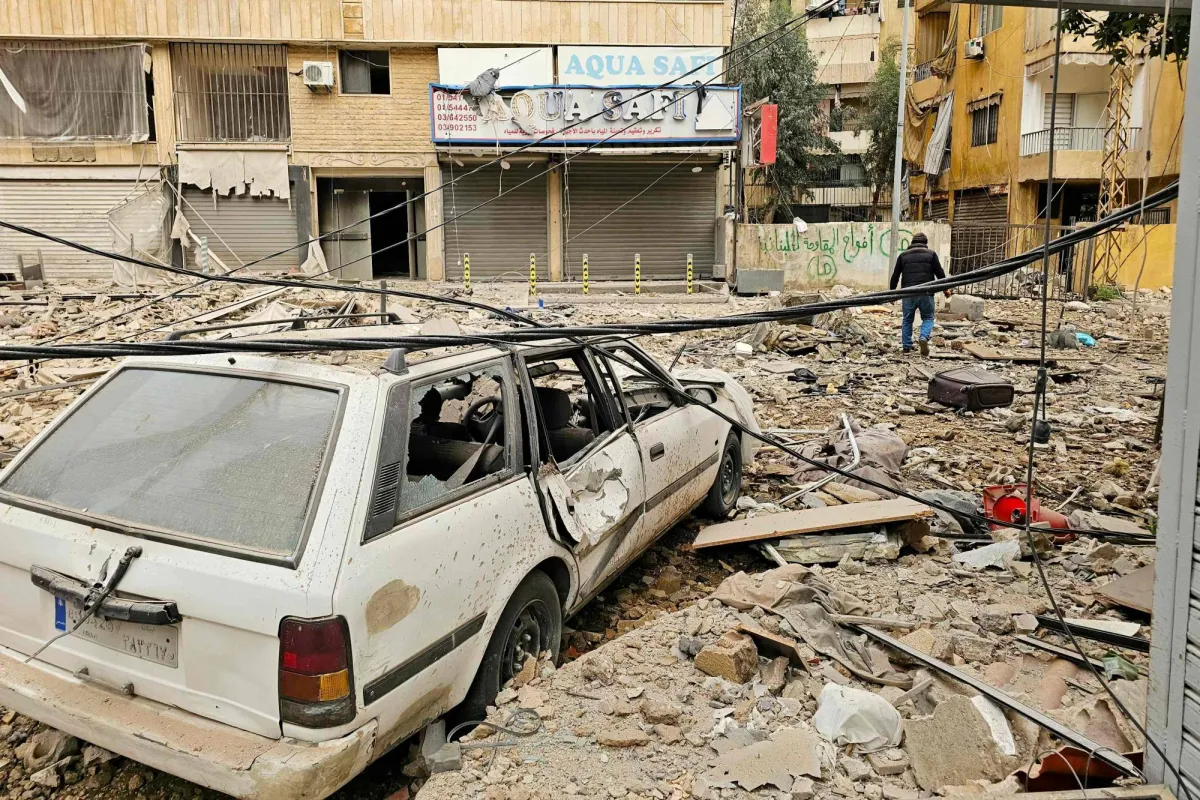
Israeli airstrikes have resulted in the deaths of 9 individuals in southern Lebanon, with 6 of them killed in the town of Adloun and a Palestinian refugee camp in the Sidon area, while 3 others were killed in the town of Haboush. The National News Agency confirmed that these strikes are part of escalating tensions between Israel and Hezbollah, as military pressures in the region increase.
According to the Lebanese Ministry of Health, 4 people were killed in a strike targeting the town of Adloun, while two others died in an airstrike on an apartment within the "Mieh Mieh" Palestinian refugee camp. Reports also indicated that an Israeli strike on the town of Haboush resulted in the deaths of 3 individuals and injuries to 18 others.
Details of the Incident
No immediate comment has been issued by the Israeli military regarding these strikes, but a previous statement from the army indicated that its ground forces in southern Lebanon destroyed a weapons cache, and that the Israeli Air Force managed to kill several "terrorists" who fled from the targeted site. The statement also mentioned the destruction of facilities belonging to Hezbollah, where large quantities of weapons were found, without specifying their locations.
In response, Hezbollah confirmed that its fighters launched several attacks against Israeli forces in southern Lebanon, with no reports of casualties among their ranks. Israeli army spokesperson Avichai Adraee issued a warning of an imminent attack on the southern suburbs of Beirut, the stronghold of Hezbollah, urging residents to evacuate the area.
Background & Context
These events come at a sensitive time, as Israel announced its intention to control a border area extending to the Litani River, which is about 30 kilometers from the border. Since the beginning of the war between Hezbollah and Israel on March 2, the Lebanese Ministry of Health reported at least 1072 deaths and 2966 injuries.
In northern Israel, a woman was killed by shrapnel from a rocket fired from Lebanon, further escalating tensions in the region. Iraq has also witnessed a similar escalation, with 7 of its forces killed in a strike targeting a position of the Popular Mobilization Forces, reflecting the rising regional conflicts.
Impact & Consequences
These airstrikes are part of an ongoing escalation in the conflict between Israel and Hezbollah, increasing fears of a full-scale war in the region. These events reflect the growing tensions among regional powers, as Israel continues to target Hezbollah positions in Lebanon.
Pressure is mounting on the Lebanese government amid these circumstances, as it faces both internal and external challenges. The military escalation could exacerbate the humanitarian situation in Lebanon, which is already suffering from economic and political crises.
Regional Significance
These events underscore the importance of the situation in Lebanon as part of the broader regional conflict. The tensions between Iran and Israel, along with the conflicts in Iraq and Syria, directly affect the stability of the region. Moreover, the escalation of violence could lead to serious repercussions for regional security.
In conclusion, the situation in Lebanon remains under close observation, as military and political pressures are expected to continue amid rising tensions. Recent events suggest that the region may be on the brink of a larger escalation, necessitating urgent international attention.