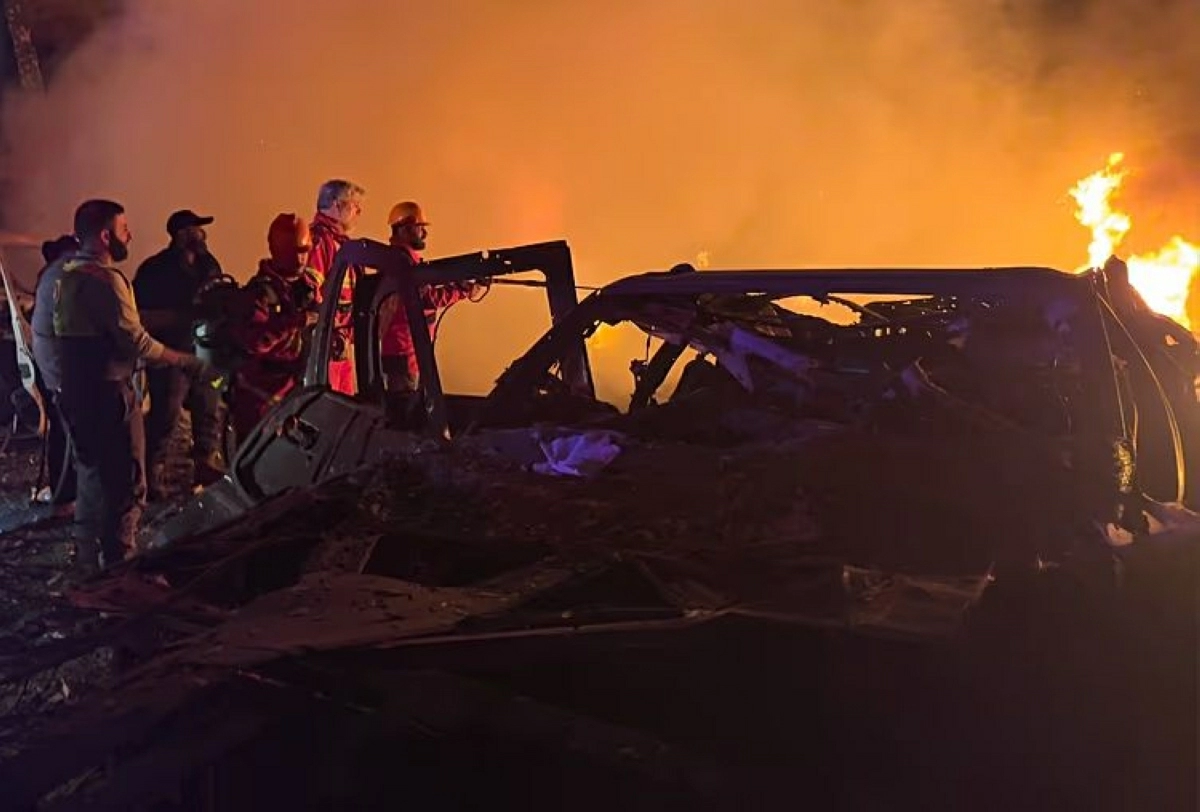
Israeli airstrikes on the Lebanese capital, Beirut, in the early hours of Wednesday resulted in the deaths of at least seven people, amid escalating military tensions in the region. The Lebanese Ministry of Health reported that a strike targeted the Jnah area in southern Beirut, killing five people and injuring 21 others, while another strike in the Khaldeh area, south of the capital, resulted in two deaths and three injuries.
The Israeli forces announced that they targeted a "high-ranking leader" from Hezbollah, along with another member of the group, without disclosing their identities or the exact locations of the strikes. Additionally, southern Lebanon witnessed further airstrikes as violent clashes continued with Hezbollah fighters, who announced the launch of rockets targeting a group of Israeli soldiers near the border.
Details of the Incident
In the south, the airstrikes resulted in the deaths of eight people, including a paramedic, and injured more than 30 others, according to the Ministry of Health. Israeli media reported that Hezbollah fired over 40 rockets in a series of attacks on northern Israel, reflecting the rising tensions in the area.
It is noteworthy that Lebanon has entered the cycle of conflict in the Middle East since March 2, when Hezbollah, backed by Tehran, launched attacks on Israel in response to the killing of an Iranian commander. In this context, Israeli Defense Minister Ehud Katz stated that his country intends to occupy large areas of southern Lebanon and destroy homes along the border to prevent the return of approximately 600,000 displaced Lebanese.
Background & Context
Historically, relations between Lebanon and Israel have been marked by ongoing tensions, especially since the 2006 war, which led to widespread destruction in Lebanon. Since then, Hezbollah has remained a security threat to Israel, while Israel continues to carry out military operations in Lebanon under the pretext of combating terrorism. Recent statements by the Israeli Defense Minister indicate clear intentions to impose a new occupation on Lebanese territory, raising concerns about the long-term forced displacement of the population.
Lebanese Defense Minister Michel Mounir condemned Katz's statements, considering them a clear reflection of the intent to impose a new occupation on Lebanese territory and destroy villages and towns in the south. Canada has also criticized these operations, with Canadian Prime Minister Mark Carney describing the deployment of Israeli forces against Hezbollah targets in Lebanon as an "illegal invasion" that violates Lebanon's sovereignty.
Impact & Consequences
Concerns are growing that these military operations could lead to a greater escalation in the conflict, potentially exacerbating the humanitarian situation in Lebanon. Reports indicate that the ongoing war has resulted in the deaths of over 1,200 people and the displacement of more than 1 million Lebanese, placing additional pressure on the Lebanese government, which is already grappling with economic and political crises.
The escalation of violence may also affect regional stability, potentially leading to new international or regional interventions. The international community, including the United Nations, considers the situation in Lebanon to require urgent attention, as investigations continue regarding the deaths of peacekeeping forces.
Regional Significance
The recent events in Lebanon are part of a broader conflict in the region, where regional and international interests intersect. The escalation of violence in Lebanon could impact neighboring countries, such as Syria and Jordan, complicating peace efforts in the region. Additionally, the deteriorating humanitarian situation in Lebanon may require an urgent response from Arab countries and the international community.
In conclusion, the situation in Lebanon remains tense, with ongoing Israeli airstrikes and clashes with Hezbollah, raising fears of a larger escalation that could lead to serious humanitarian and political repercussions.