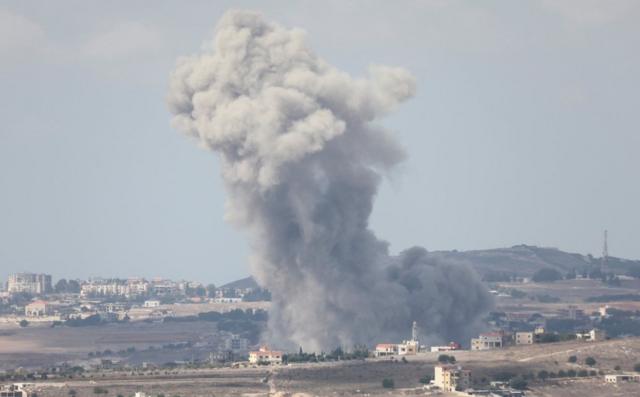
The Lebanese Ministry of Health reported on Thursday that there were 3 fatalities and 11 injuries resulting from two airstrikes conducted by Israeli aircraft on the districts of Marjayoun and Bint Jbeil. These events come at a time when Lebanon is experiencing heightened security tensions, raising concerns about their implications for security and stability in the region.
These airstrikes are part of a series of attacks recently executed by Israel, targeting various areas in Lebanon, reflecting the escalating tensions between the two sides. The Ministry of Health confirmed that the victims were civilians, highlighting the humanitarian impact of these military operations.
Details of the Incident
The Israeli airstrikes occurred late Wednesday evening, targeting residential areas in Marjayoun and Bint Jbeil, regions known for their proximity to the Lebanese-Israeli border. Images circulated on social media showed significant destruction to buildings and public facilities, exacerbating the suffering of local residents who live under difficult conditions.
These airstrikes come amid ongoing military escalation between Israel and Hezbollah, with both parties exchanging accusations of inciting violence. The Lebanese government condemned these attacks, reaffirming its right to defend its sovereignty and the security of its citizens.
Background & Context
Historically, the Lebanese-Israeli border has witnessed persistent tensions, especially since the 2006 war which left devastating effects on Lebanon. Since then, clashes and reciprocal attacks have continued, worsening the humanitarian situation in the region. Additionally, the political situation in Lebanon, which is grappling with economic and political crises, complicates the security landscape.
In recent years, Israel has intensified its military operations against what it perceives as threats from Hezbollah, which possesses an arsenal of weapons and is considered a terrorist organization by many Western countries. Conversely, Hezbollah insists that it is defending Lebanon and views any Israeli attack as an infringement on the state's sovereignty.
Impact & Consequences
These airstrikes underscore the rising tensions in the region, which could lead to further escalation in the conflict between Israel and Hezbollah. The civilian casualties reflect the tragic humanitarian impact of armed conflicts, prompting international calls for de-escalation and cessation of hostilities.
These events are likely to increase pressure on the Lebanese government, which faces significant challenges in managing economic and social crises. The international community may also intervene more actively, especially with growing fears of a new war erupting in the region.
Regional Significance
The events in Lebanon have significant implications for regional security, as they could destabilize neighboring countries such as Syria and Palestine. Additionally, the military escalation may open the door to external interventions, further complicating the situation in the region.
At the same time, Arab countries are closely monitoring the developments in Lebanon, as any escalation could affect relations between Arab nations and Israel, reopening the files of the Arab-Israeli conflict.
In conclusion, the Israeli airstrikes on Marjayoun and Bint Jbeil highlight the security challenges facing Lebanon and underscore the urgent need for peace and stability in the region. The current situation requires immediate action from the international community to ensure the protection of civilians and halt hostilities.