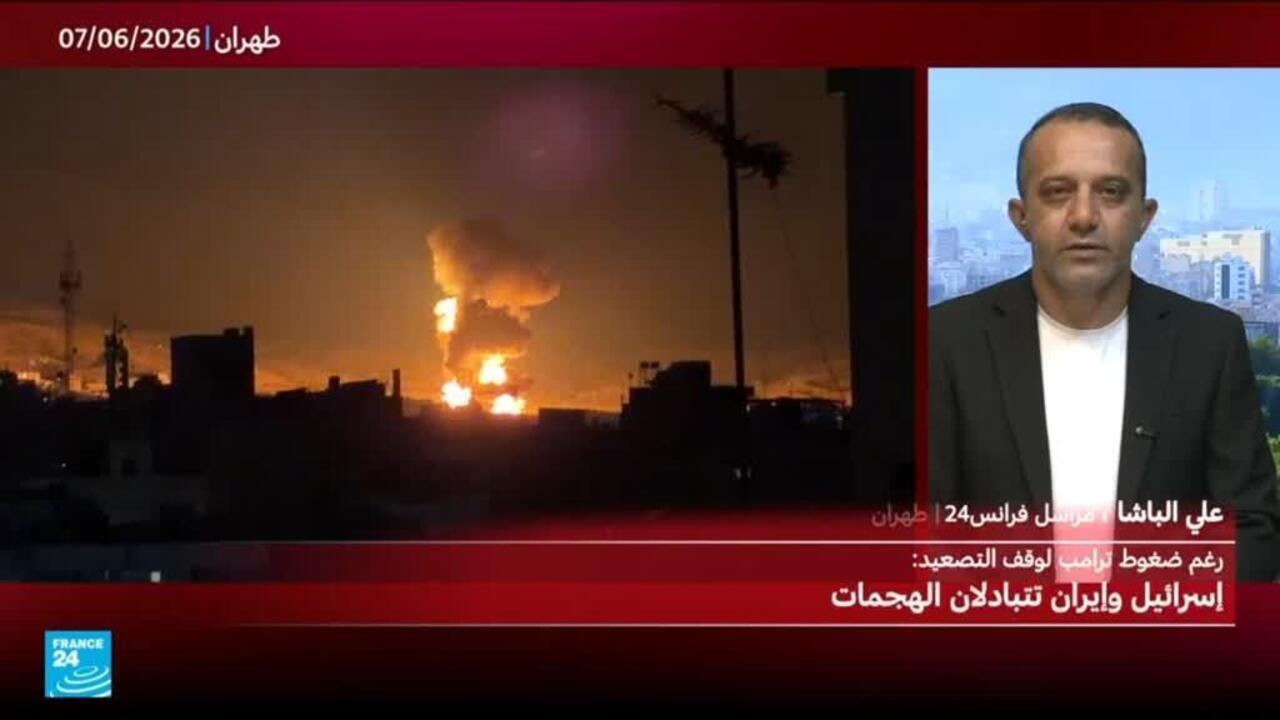
The Israeli army has announced that it is taking urgent actions to intercept a barrage of Iranian missiles that were launched towards its territory. These developments come after Israel conducted airstrikes on what it described as military targets in western and central Iran, marking a new escalation in tensions between the two sides.
The Israeli military operations were a response to Iran's missile launches towards the Jewish state, marking the first such incident since the ceasefire was declared in April. This escalation follows the bombing of the southern suburbs of Beirut, complicating the situation in the region further.
Details of the Incident
While the Israeli army confirmed its efforts to intercept the missiles, specific details regarding the targets hit in Iran have not been disclosed. However, Israeli military sources indicated that the airstrikes targeted military sites believed to be linked to Iran's missile program.
On the other hand, Iranian media confirmed that the Israeli attacks did not result in significant casualties but provoked angry reactions from Iranian officials who deemed it a violation of national sovereignty.
Background & Context
Historically, relations between Iran and Israel have been marked by increasing tensions, particularly regarding Iran's nuclear program, which Israel perceives as an existential threat. For years, Israel has conducted airstrikes on Iranian sites in Syria, but the current escalation represents a new phase in the regional conflict.
The temporary ceasefire announced in April was expected to help ease tensions, but recent events indicate that the situation remains fragile. Iran, which continues to develop its military capabilities, is increasingly responding to any Israeli attacks, raising the risk of further escalation.
Impact & Consequences
The recent escalation could exacerbate conditions in the region, raising fears of a new round of violence. This situation may also affect international relations, particularly with Western countries that are seeking to negotiate with Iran regarding its nuclear program.
Any military escalation could negatively impact regional security and heighten tensions among major powers in the Middle East, potentially leading to external interventions or new alliances.
Regional Significance
The recent events are particularly significant for Arab countries, which are closely monitoring the developments in the Iranian-Israeli conflict. Any escalation could impact stability in countries like Lebanon and Syria, where armed groups linked to Iran are present.
Moreover, the escalation may reopen discussions about regional security and cooperation among Arab states to address common challenges, especially in light of the increasing threats from Iran.