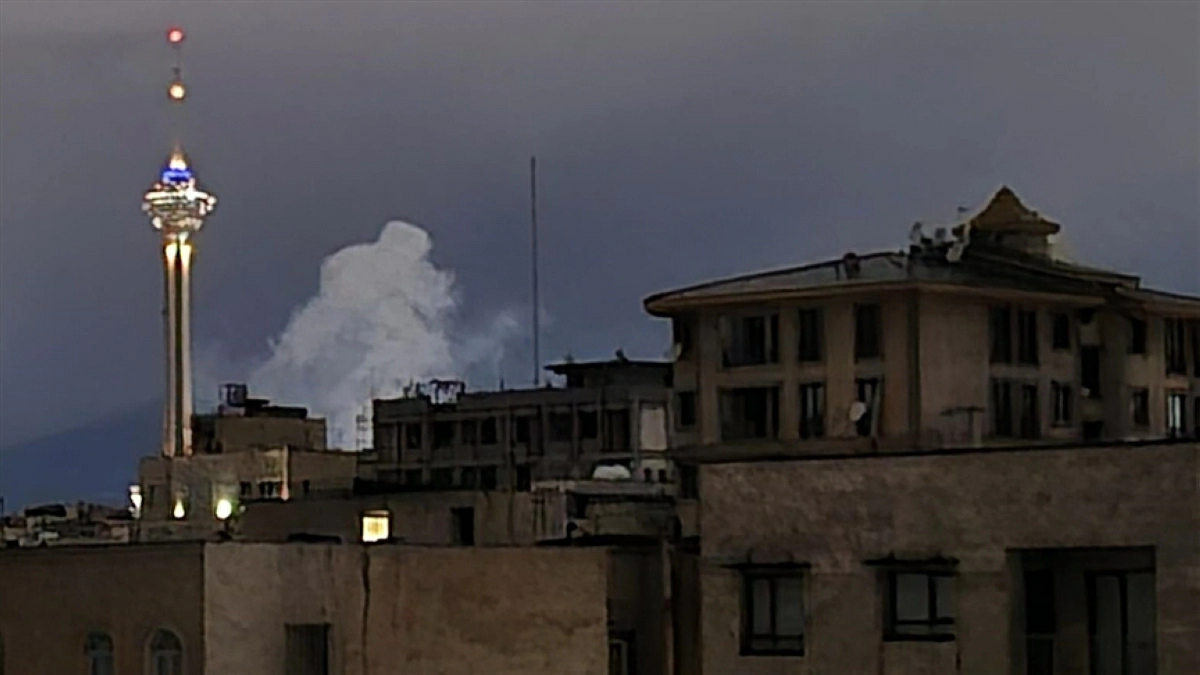
In a new escalation, the Israeli Air Force announced on Saturday the execution of coordinated airstrikes on sites associated with Iran's nuclear and military programs. According to a statement from the Israeli army, more than 50 fighter jets participated in these strikes, which targeted facilities in three different regions, including the cities of Arak and Yazd.
The airstrikes, which were carried out in three phases over several hours, targeted vital facilities, including the heavy water plant in Arak, which the army described as a key site for producing plutonium used in nuclear weapons. A facility in Yazd was also targeted, allegedly used for producing explosive materials related to the uranium enrichment process.
Details of the Event
Reports indicated that the strikes also targeted a military industrial facility used for weapon manufacturing, along with a site affiliated with the Iranian Ministry of Defense concerned with developing advanced explosive devices. The Israeli army noted that some of the targeted sites are used to supply Hamas and Hezbollah with weapons, complicating the security situation in the region.
No immediate comments were issued by Iranian authorities regarding these airstrikes, raising questions about potential reactions from Tehran. These strikes come at a sensitive time, as the region is witnessing increasing tensions between Iran and Israel, especially amid mutual threats from both sides.
Background & Context
Historically, Iran and Israel have been in a state of ongoing tension, with Israel viewing the Iranian nuclear program as an existential threat. In recent years, Israel has intensified its military operations against Iranian targets in Syria, but these airstrikes represent an unprecedented escalation deep within Iranian territory. Iran, for its part, is seeking to enhance its military and technological capabilities, raising concerns for both Israel and the international community.
These airstrikes follow a series of events that have seen heightened tensions between Iran and the West, including discussions surrounding the Iranian nuclear deal. Under these circumstances, it appears that Israel is striving to ensure that Iran cannot develop nuclear capabilities that could threaten its security.
Impact & Consequences
These airstrikes could lead to a significant escalation in the conflict between Iran and Israel, as Tehran is likely to respond to these attacks in various ways, either by enhancing its military capabilities or by supporting its allies in the region. Additionally, these developments may impact relations between Iran and Western countries, especially amid attempts to revive the nuclear agreement.
Moreover, these airstrikes could increase tensions in the Middle East, potentially affecting the stability of countries like Iraq, Syria, and Lebanon. There are also concerns that these events could lead to a larger escalation in the conflict, negatively impacting regional and international security.
Regional Significance
These airstrikes serve as a wake-up call for Arab countries, highlighting the need to enhance security and intelligence cooperation to address the growing threats. The escalating tensions between Iran and Israel may also impact the national security of Arab states, particularly those sharing borders with Iran or directly affected by regional conflicts.
Ultimately, these airstrikes represent a new step in the complex conflict between Iran and Israel, placing the region before new challenges that require a collective response from Arab nations and the international community.