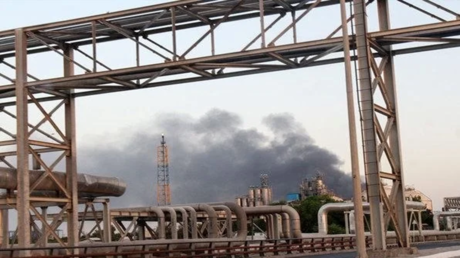
The Israeli military announced on Saturday evening that it had launched a wave of airstrikes targeting Iranian military infrastructure and sites, including a petrochemical complex in southwestern Iran. These operations are part of a continuous escalation between Israel and Iran, as Tel Aviv seeks to undermine Iranian military capabilities in the region.
These airstrikes are considered part of a broader Israeli strategy aimed at preventing Iran from enhancing its military presence in neighboring countries, especially amid increasing tensions in the Middle East. Israeli military sources confirmed that these strikes were precise and targeted vital sites belonging to Iranian forces.
Details of the Event
According to a statement from the Israeli military, the airstrikes targeted a range of sites that Tel Aviv considers a direct threat to its national security. The targets included the petrochemical complex, which is regarded as a vital facility in Iran. These strikes come after a series of mutual threats between the two sides, with Israel asserting that Iran's presence in the region poses a danger to its stability and security.
It is noteworthy that this is not the first time Israel has targeted Iranian sites, having conducted several similar operations in recent years, reflecting Tel Aviv's aggressive policy towards Tehran.
Background & Context
Historically, Israeli-Iranian relations have been severely strained since the Islamic Revolution in Iran in 1979. These tensions have notably escalated in recent years, particularly as Iran continues to develop its nuclear program and increase its influence in the region by supporting armed groups in Iraq, Syria, and Lebanon.
Iran views Israel as a major enemy, while Israel seeks to thwart any Iranian attempts to bolster its military presence near its borders. This ongoing conflict reflects the geopolitical tensions in the Middle East, where the interests of major powers intersect with regional disputes.
Impact & Consequences
These airstrikes raise questions about the potential escalation of conflict between Israel and Iran, as Tehran may respond to these attacks in various ways, either by targeting Israeli interests in the region or by supporting armed groups. Additionally, these developments could affect Iran's relations with Western countries, especially amid ongoing discussions regarding Iran's nuclear program.
Moreover, these operations may lead to increased tensions in the region, negatively impacting security and stability in neighboring countries such as Iraq and Syria. There are also concerns that these escalations could ignite a broader conflict that might draw other countries into the fray.
Regional Significance
Arab countries are directly affected by these developments, as many view Iran as a threat to their national security. The Israeli airstrikes could heighten tensions between Iran and Arab nations, particularly those experiencing internal conflicts or disputes with Iran.
Furthermore, these events may prompt Arab countries to enhance their security and military cooperation to counter Iranian threats, potentially altering the balance of power in the region. Under these circumstances, there remains hope that the international community can find diplomatic solutions to ease tensions.