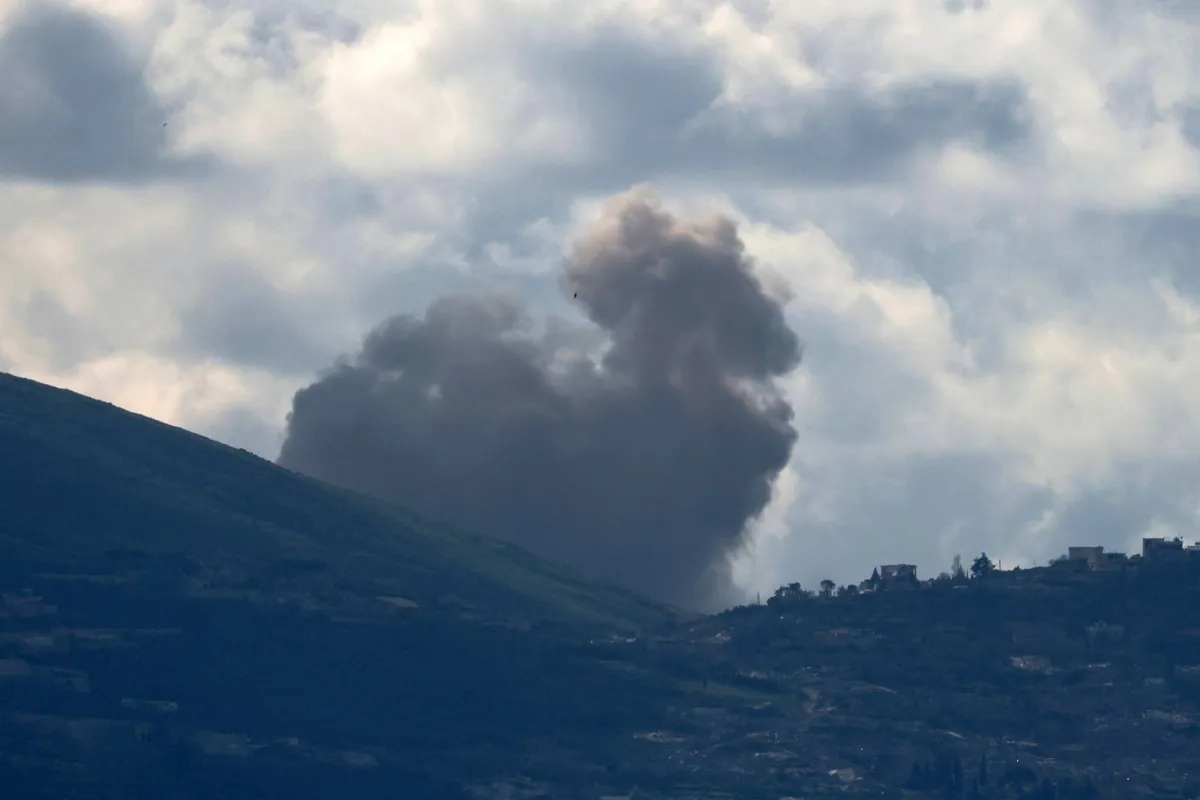
Israeli airstrikes continued in southern and eastern Lebanon on Tuesday morning, leading to the deaths of two individuals and injuries to several others who were transported to hospitals in Tyre, according to the National News Agency.
The Israeli warplanes targeted the towns of Ain Qana, Tayr Debba, Arab Salim, and Ma'areq, causing extensive damage to property. Additionally, the towns of Al-Haniyya and Al-Qulayla were subjected to Israeli artillery shelling, while reconnaissance aircraft flew heavily over the city of Tyre and its surroundings.
Details of the Incident
Early Tuesday morning, Israeli warplanes launched strikes on uninhabited homes in Al-Sultaniyya and Ain Baal. The areas of Al-Sarira and Al-Qatrani in the Jezzine region experienced over 10 airstrikes, resulting in injuries to nine individuals in Al-Qatrani. Israeli aircraft continued to fly at low altitudes over the area, increasing anxiety among the residents.
At midnight on Monday, the airstrikes targeted the town of Ma'areq, injuring three individuals and causing significant destruction to homes. A strike on the town of Tayr Debba resulted in the deaths of three people and injuries to two others. In eastern Lebanon, the town of Sahmar in the western Bekaa was hit by a violent airstrike early Tuesday morning.
Background & Context
These airstrikes are part of an ongoing military escalation by the Israeli army since March 2, targeting the southern suburbs of Beirut and other areas in southern Lebanon and the Bekaa Valley. The strikes have extended to regions in Mount Lebanon and northern Lebanon, reflecting rising tensions in the area.
In mid-March, the Israeli army initiated a ground operation within southern Lebanon, intensifying the conflict. In a related context, the U.S. administration halted Israeli bombardments on the "Masnaa" border crossing between Syria and Lebanon, reflecting efforts to contain the escalation and prevent potential Syrian intervention in the conflict.
Impact & Consequences
Concerns are growing that these airstrikes could lead to a greater escalation in the conflict, as reports indicate that Iranian-backed Iraqi factions have expanded their attacks against U.S. interests in the region. There are also warnings that escalating conflict in Lebanon could adversely affect regional stability as a whole.
On another front, the Ministry of Peshmerga in the Kurdistan region announced that its command headquarters was attacked using explosive drones, reflecting a rise in terrorist assaults in the area. These events indicate that the security situation in the region remains fragile and may deteriorate further in the coming days.
Regional Significance
These events serve as a renewed reminder of the complexities of the conflict in the Middle East, where regional and international interests increasingly intersect. The military escalation in Lebanon could have negative repercussions for neighboring countries, especially amid the tense situations in Syria and Iraq.
In conclusion, the situation in Lebanon remains concerning, with rising fears of exacerbation of the conflict and its impact on security and stability in the region. It requires international and regional efforts to mitigate the escalation and ensure the protection of civilians during these challenging times.