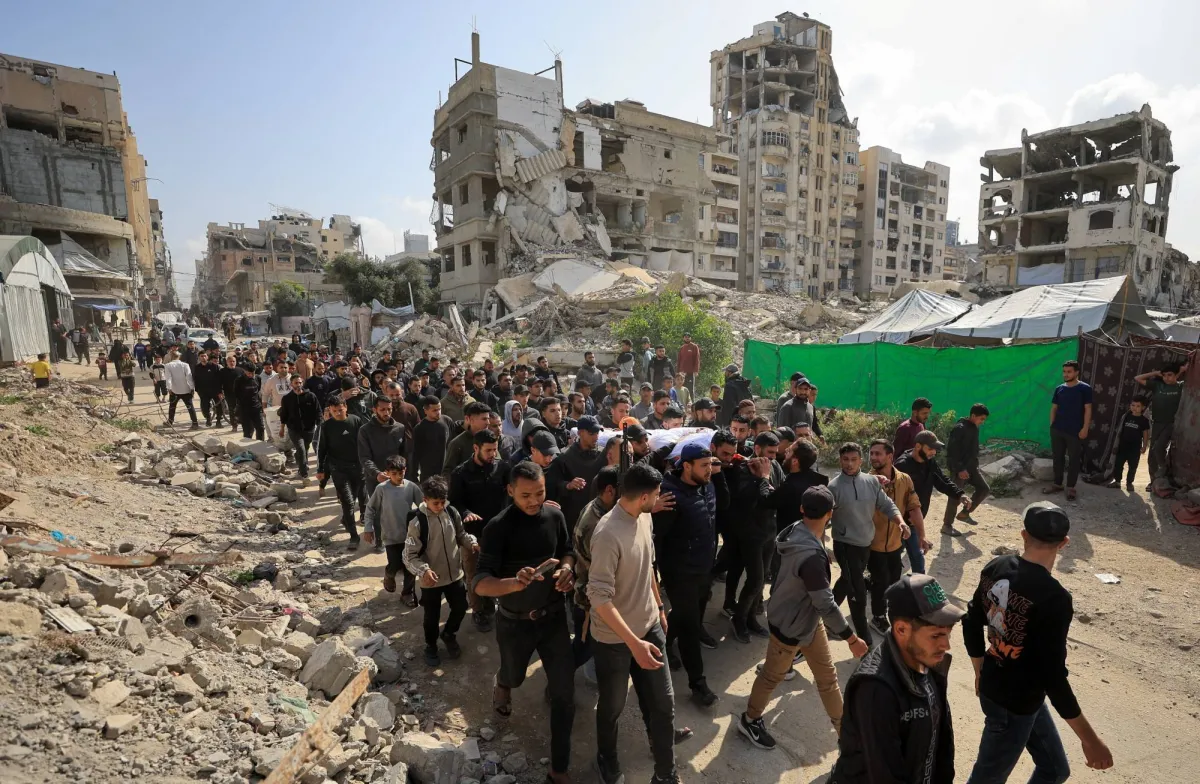
The Israeli army has continued to carry out military operations in the Gaza Strip, targeting activists from the military wings of Hamas and Islamic Jihad, in a clear violation of the ceasefire agreement announced last October.
In less than 24 hours, from Sunday evening to midday Monday Palestine time, the Israeli army assassinated six activists from the two movements, highlighting an escalation in Israeli military operations in the region.
Details of the Incident
In an incident that occurred just before noon on Monday, an Israeli drone targeted a Palestinian who was riding a bicycle in the Sheikh Radwan neighborhood in northern Gaza City, resulting in his death and serious injuries to his child. The victim was Mohammed Dawood, a member of the Izz ad-Din al-Qassam Brigades, the armed wing of Hamas.
An Israeli drone also assassinated Abdul Rahman Al-Khudari, a prominent field leader in the Al-Jadeed Brigade of the Al-Quds Brigades, while he was passing near the Al-Jazeera Club in the Shuja'iyya neighborhood. Al-Khudari was known for his participation in confronting Israeli forces during the war on Gaza, having been injured twice and survived a previous assassination attempt.
The assassinations did not stop with Al-Khudari and Dawood; they also targeted four members of the Al-Qassam Brigades while they were stationed at a security checkpoint in the Al-Shawa Square area, which is a sensitive security zone, located less than a kilometer from the border between Hamas and Israel.
In another incident, an Israeli force killed a Palestinian who was driving a vehicle rented by the World Health Organization while passing through Al-Abara Street on the main Salah al-Din road east of Khan Younis. The incident resulted in three other people being injured.
Background & Context
These operations come at a time when the region is witnessing heightened tensions, with the Israeli army reporting that it targeted a person named Ali Al-Amarin, claiming he was involved in smuggling weapons for Hamas. Al-Amarin was a member of the Hamas police investigation department, highlighting the complexity of the security situation in the sector.
Since the beginning of the war on Iran last February, Israel has assassinated at least 16 activists from the Al-Qassam Brigades and Al-Quds Brigades, reflecting an escalation in Israeli military operations, with attacks focusing on the military targets of the two movements.
Impact & Consequences
Concerns are growing over the worsening humanitarian situation in Gaza as a result of these operations, with Israeli forces continuing to use drones intensively, increasing tensions in the region. Reports have noted an escalation in Israeli attacks on alleged training sites and weapons depots belonging to Hamas.
In this context, the spokesperson for the Al-Qassam Brigades, Abu Ubaida, described calls for disarmament as unacceptable, reflecting the increasing tension between the involved parties. Reports also indicate that Israel is seeking to impose a new reality on the ground, complicating the security and political situation in the region.
Regional Significance
These events directly affect the situation in the Arab region, highlighting the tensions between Israel and Palestinian factions, complicating peace efforts. The military escalation may lead to a worsening of the humanitarian crises in Gaza, increasing civilian suffering.
In conclusion, the situation in Gaza remains under observation, as Israeli forces continue their military operations, raising fears of a larger escalation in the future.