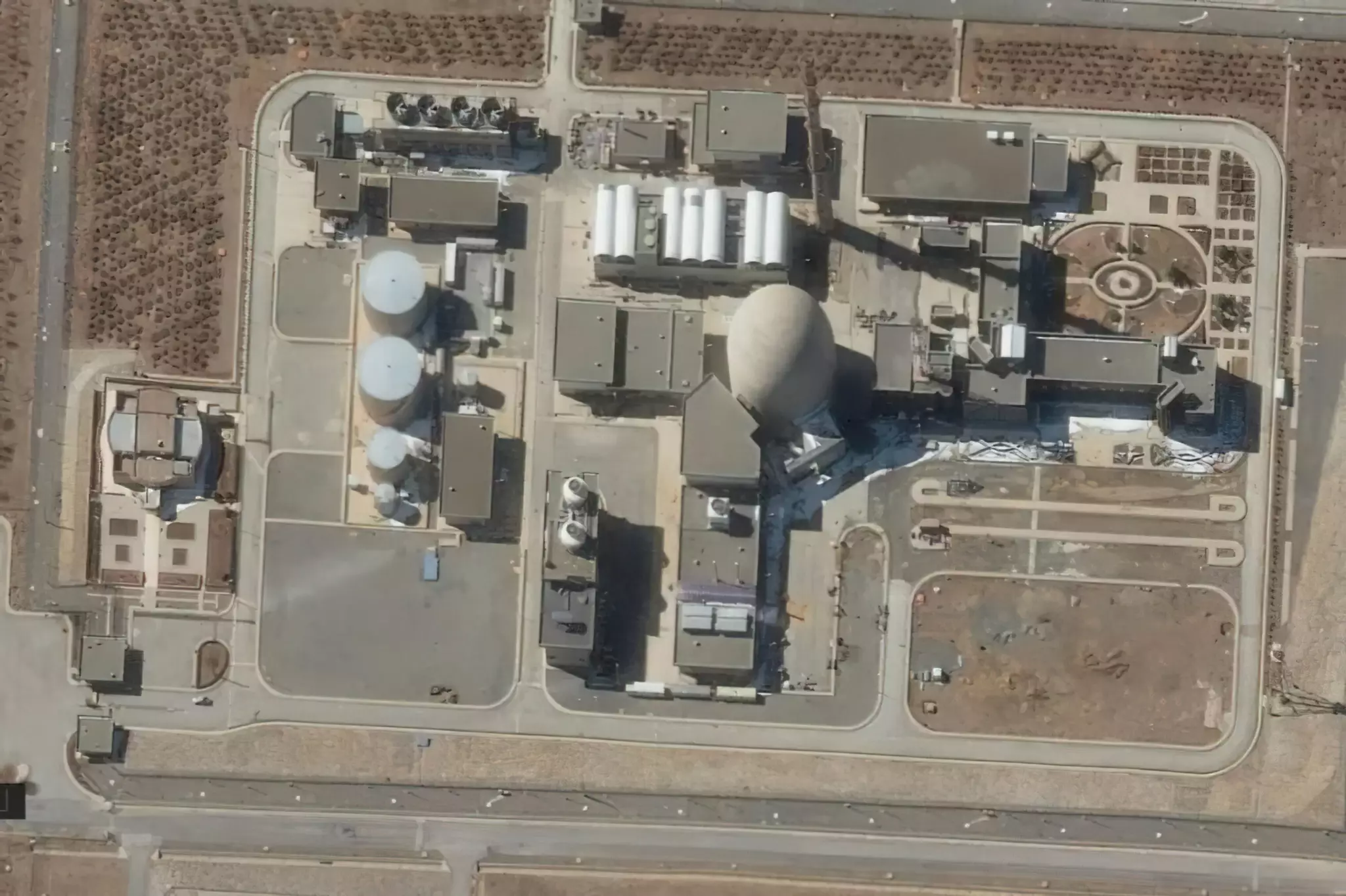
The Israeli army has announced its targeting of the Arak heavy water reactor in central Iran, reflecting a rise in regional tensions. This attack comes at a sensitive time as concerns over Iran's nuclear program escalate.
Arak is considered one of Iran's main nuclear facilities and has raised international concerns due to its capability to produce plutonium, which can be used in the manufacture of nuclear weapons. The Israeli attack is part of Tel Aviv's strategy to prevent Tehran from developing its nuclear capabilities, which Israeli officials view as a threat to national security.
Details of the Attack
According to data from the Israeli army, the attack was carried out using drones and precision missiles, resulting in significant destruction of the reactor. Military sources confirmed that the operation was highly precise, targeting the reactor without causing major collateral damage.
This operation follows a series of Israeli warnings regarding the Iranian nuclear program, with Tel Aviv considering any advancement in this area a direct threat to its security. Israeli officials indicated that the attack was necessary to ensure that Iran could not access nuclear weapons.
Background & Context
Historically, relations between Israel and Iran have seen increasing tensions since the Iranian revolution in 1979. These tensions have particularly escalated following the signing of the Iranian nuclear deal in 2015, which Israel deemed insufficient to deter Tehran from developing its nuclear program.
In recent years, Israel has intensified its operations against Iranian nuclear facilities, targeting several sites in Syria and Lebanon, in addition to cyberattacks on Iran's nuclear programs. These operations reflect a comprehensive Israeli strategy aimed at undermining Iranian military capabilities in the region.
Impact & Consequences
The attack on the Arak reactor may provoke strong reactions from Iran, which could view it as a violation of its sovereignty. Tehran is expected to respond by escalating its rhetoric against Israel and may take military or political steps in retaliation for this attack.
Furthermore, this attack could impact ongoing nuclear talks between Iran and major powers, as Tehran may perceive the attack as a reflection of the international community's lack of seriousness in addressing its security concerns. Consequently, this could complicate efforts to revive the nuclear agreement.
Regional Significance
These events have significant implications for regional security, as they may lead to an escalation of conflicts in the Middle East. Neighboring Arab countries, such as Saudi Arabia and the United Arab Emirates, are closely monitoring the situation, viewing Iran as a threat to their security.
The military escalation between Israel and Iran could also increase tensions among armed factions in the region, threatening stability in countries like Iraq, Syria, and Lebanon. In this context, Arab countries may find themselves compelled to reassess their security and defense strategies.
In conclusion, the targeting of the Arak heavy water reactor represents a new step in the long-standing conflict between Israel and Iran, reflecting the increasing tensions in the Middle East. It is crucial to monitor the developments of this event and its impact on regional and international security.