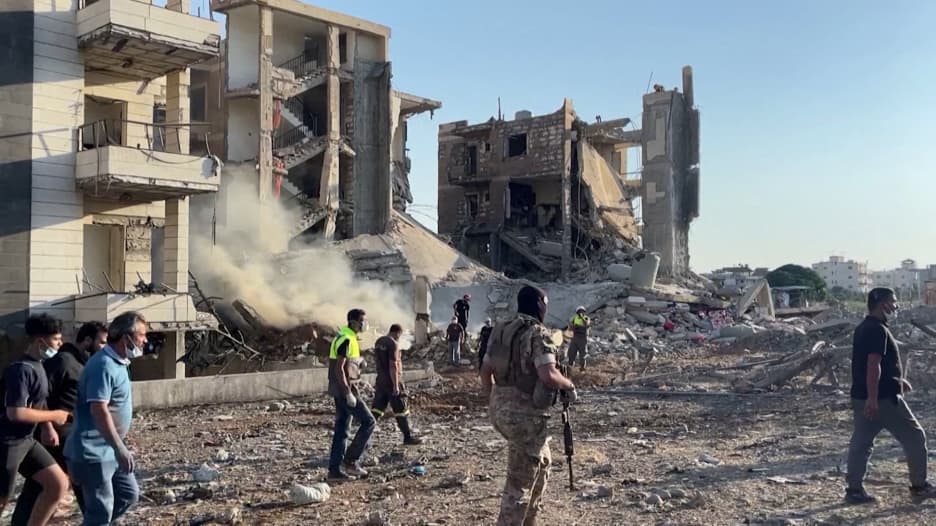
The archaeological sites in Tyre, one of the oldest cities on the Mediterranean coast, are facing increased Israeli bombing amid rising tensions in the region. Located about 20 kilometers from the Israeli border, the attacks follow a missile strike by Hezbollah on Israel on March 2.
Tyre is considered a historic city with a rich cultural heritage, containing artifacts dating back to the Phoenician and Roman eras. However, the ongoing bombardment threatens these artifacts, prompting officials to place signs with blue and white symbols as a form of symbolic protection for the site.
Details of the Incident
Reports indicate that the Israeli bombing has targeted areas near the archaeological sites, raising significant concern among local residents and cultural heritage advocates. Several strikes have been recorded in recent days, reflecting the escalating tensions in the region following increased hostilities between Israel and Hezbollah.
These events come at a sensitive time, as the international community seeks to calm the situation in the Middle East, but the military escalation from both sides threatens to ignite further conflicts. Some experts have expressed concern that the continued bombing could lead to irreparable destruction of the cultural heritage in the region.
Background & Context
Historically, Tyre was an important commercial center in ancient times and has witnessed numerous wars and conflicts. In recent years, the city has garnered attention due to its strategic location and rich history, making it a target for various military attacks. Tyre has experienced numerous assaults during previous conflicts, adversely affecting its cultural heritage.
In 2006, the city faced intense bombing during the Israeli war on Lebanon, resulting in the destruction of many historical landmarks. Today, it appears that history is repeating itself, with tragic scenarios recurring amid escalating military tensions.
Impact & Consequences
Analyses suggest that the continued Israeli bombing of Tyre could have serious repercussions for Lebanon's cultural heritage. The archaeological sites are not just historical landmarks; they are part of the cultural identity of the Lebanese people. The destruction of these sites could lead to a significant loss of Lebanese history, impacting future generations.
Moreover, the military escalation could exacerbate the humanitarian situation in the region, where local populations are already suffering from the effects of ongoing conflict. Economic and social pressures may increase tensions among local communities, threatening stability in Lebanon.
Regional Significance
The events in Tyre are part of a larger picture concerning conflicts in the Middle East. The tensions between Israel and Hezbollah are not merely a local dispute but have far-reaching implications for regional stability. The escalation of violence in Lebanon could have repercussions for neighboring countries, complicating the situation in the region.
In this context, the international community must urgently intervene to protect Lebanon's cultural heritage and work towards calming the situation. History and cultural heritage are integral to Arab identity and must be preserved in the face of current challenges.