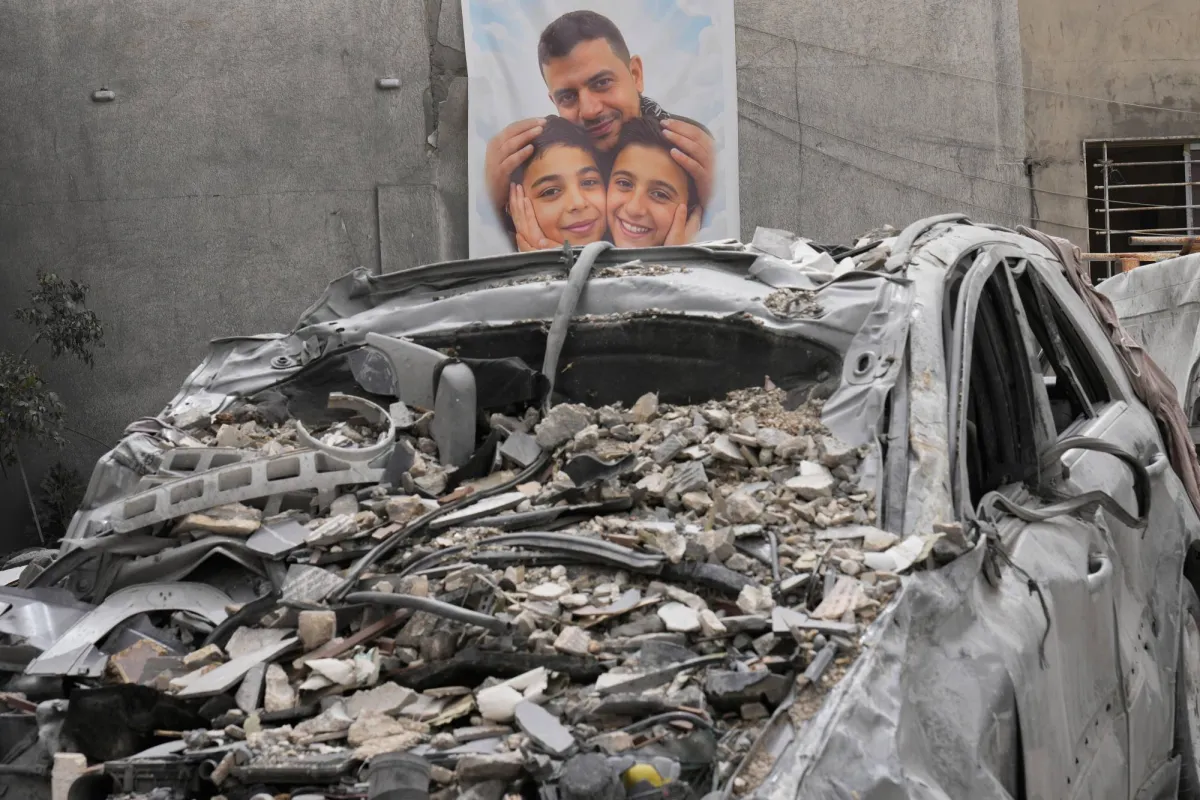
The town of Bint Jbeil in southern Lebanon is experiencing increasing Israeli military escalation, with the Israeli army surrounding the town and issuing warnings and evacuations to residents. This situation raises concerns about a larger escalation in the region.
In a move reflecting a new tactic, the Israeli army issued a warning to residents on the northern outskirts of the town of Ain Ebel, near Bint Jbeil, asking them to move into the town. This measure is part of an attempt to redistribute the population within defined areas, reflecting Israel's intention to isolate the town from its surroundings.
Details of the Incident
All eyes are on Bint Jbeil, where the Israeli army is adopting a different operational pattern, relying on a complete encirclement of the city instead of direct incursions. According to statements from retired Brigadier General Said Qazah, Israeli forces are tightening the encirclement through several simultaneous axes, effectively isolating Bint Jbeil from all four directions.
Qazah also pointed to the evacuation of the Salah Ghandoor Hospital in the Safa al-Hawa area, a vital point connecting Bint Jbeil to its surroundings, indicating Israel's intention to advance towards this strategic point. It appears that the Israeli army is avoiding battles within built-up areas due to their high costs, which may lead them to resort to a scorched earth policy before any incursion.
Background & Context
These developments come at a time when Israeli pressure is expanding to include the southern suburbs of Beirut, where Israeli army spokesperson Avichai Adraee renewed his warnings, calling for the immediate evacuation of residents from several neighborhoods. In the western Bekaa, the Israeli army executed its threats by targeting the bridge connecting Sahmar to Mashghara over the Litani River, resulting in casualties among civilians.
On the ground, airstrikes were recorded in the southern suburbs after two days of calm, while extensive air raids and artillery shelling continued in the south. The strikes targeted several towns, resulting in casualties and injuries, including Syrians, reflecting the widening scope of attacks to include civilian gatherings.
Impact & Consequences
Fears of a larger escalation in the region are increasing, as the Israeli army is expected to continue imposing the encirclement and cutting supply lines, with clashes erupting on the outskirts. The most likely scenario in the near term is the continuation of the current situation, with the potential for worsening conditions if the field circumstances change.
In this context, the mayor of Ain Ebel indicated that several residents had left the town accompanied by the Red Cross, while denying the existence of a warning for the complete evacuation of the town. This situation reflects a state of anxiety among the residents, who live under the weight of ongoing threats.
Regional Significance
These events underscore the ongoing tensions in the region, as Lebanon faces significant challenges amid Israeli escalation. The humanitarian situation in besieged Christian villages is worsening, necessitating international intervention to ensure the safety of residents and secure humanitarian corridors.
Under these circumstances, hope remains pinned on international efforts to pressure Israel to halt the escalation and ensure the rights of civilians in the region. The current situation requires a swift resolution to avoid exacerbating humanitarian and security conditions.