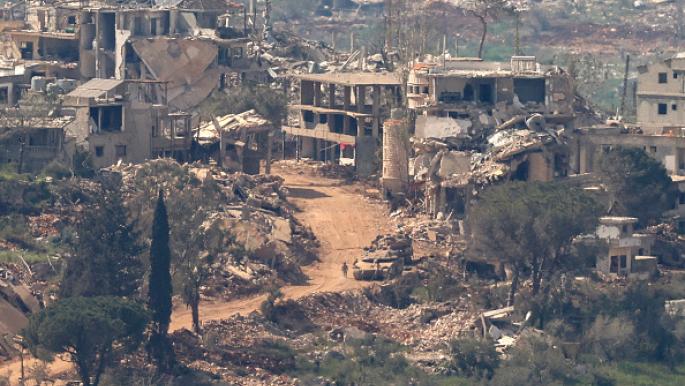
Israeli forces have carried out extensive airstrikes on areas in southern Lebanon, marking a new escalation in Israeli aggression. On Saturday, Prime Minister Benjamin Netanyahu ordered attacks on targets associated with Hezbollah. This escalation occurs at a sensitive time, as ongoing efforts have been made to maintain the ceasefire between the involved parties.
The military operations targeted several towns in southern Lebanon, resulting in the destruction of some facilities and injuries to a number of civilians. This escalation has raised international concern, prompting the global community to call for restraint and to avoid military escalation that could exacerbate the situation in the region.
Details of the Incident
According to local sources, the airstrikes targeted sites believed to be linked to Hezbollah, which Israel viewed as a response to potential threats from the group. The Israeli military confirmed that these operations are part of its efforts to protect its national security, indicating that Hezbollah poses a risk along the northern border.
Conversely, sources within Hezbollah deemed these airstrikes as an unjustified escalation and stated that they would respond appropriately. The group emphasized that such operations would not deter them from continuing their resistance against Israeli occupation.
Background & Context
Historically, the Lebanese-Israeli border has experienced recurring tensions, especially following the 2006 war, which left deep scars on the relations between the two sides. Since then, numerous attempts have been made to reach agreements aimed at achieving stability, yet tensions persist. In recent years, military activities along the border have increased, raising fears of a new war.
These events unfold against a backdrop of a complex political situation in Lebanon, where the country is grappling with severe economic and social crises. These crises may hinder the Lebanese government from taking a strong stance against Israeli aggression, further complicating the situation.
Impact & Consequences
The military escalation in southern Lebanon could lead to serious repercussions, not only for Lebanon but for the entire region. If the airstrikes continue, we may witness military responses from Hezbollah, potentially leading to a larger escalation in the conflict. This escalation could negatively impact the humanitarian situation in Lebanon, where residents are already suffering from difficult economic conditions.
Moreover, the continuation of hostilities may obstruct international efforts aimed at achieving peace in the region. Major powers, such as the United States and Russia, may be compelled to intervene to calm the situation, which could further complicate the political landscape.
Regional Significance
The events in Lebanon are part of the larger picture of the Arab-Israeli conflict, where the Palestinian issue remains at the heart of the dispute. Any escalation in Lebanon could affect neighboring countries, such as Syria and Jordan, and may lead to an influx of refugees and increased tensions in the region.
Additionally, these events could impact relations between Arab countries and Israel, as some nations seek to normalize relations with Israel. The escalation may hinder these efforts and bring the Palestinian issue back to the forefront.
In conclusion, the situation in Lebanon remains complex, and the recent military escalation adds a new layer of tension. It is crucial for the involved parties to remain committed to dialogue and seek peaceful solutions to avoid further escalation.