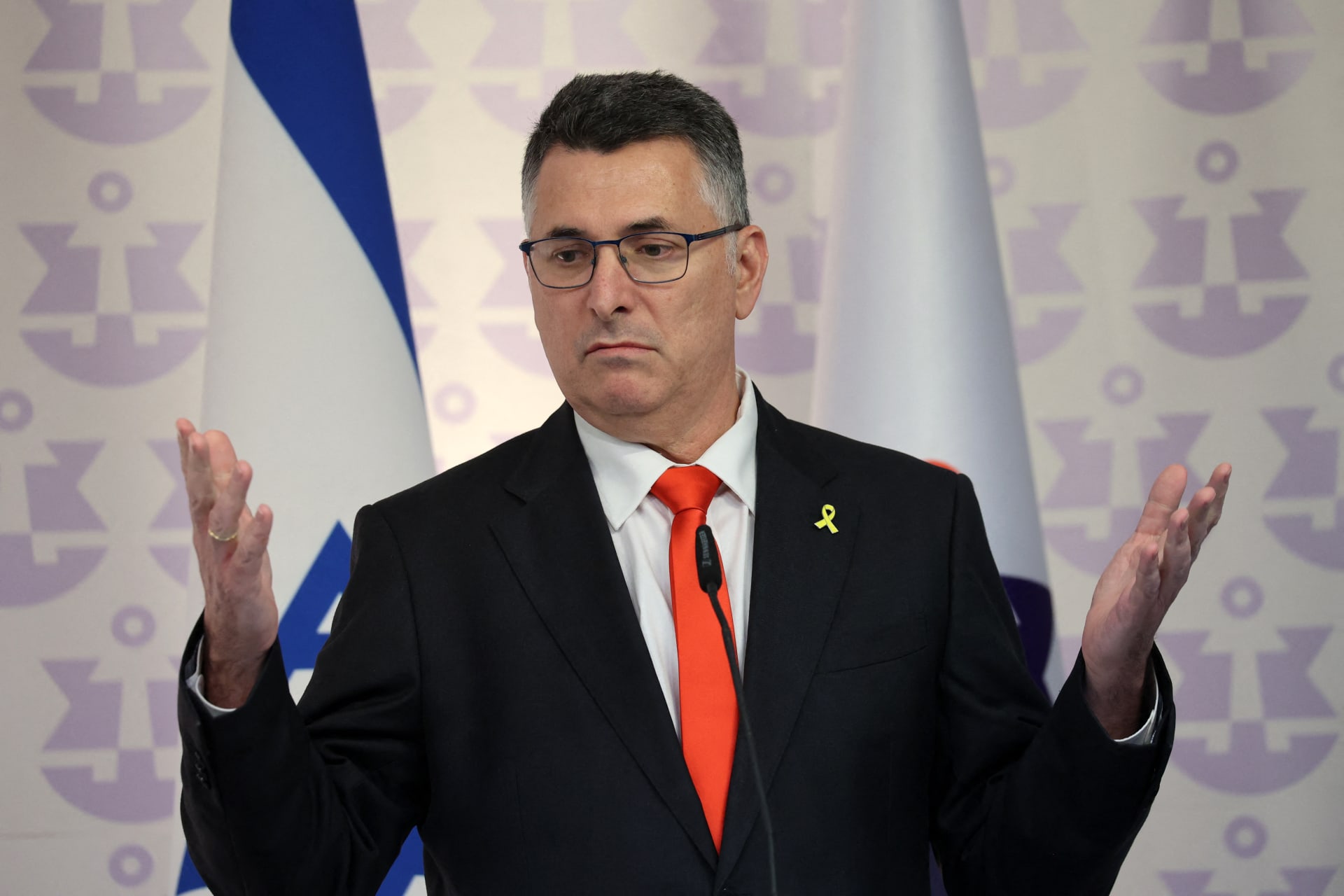
Israeli Foreign Minister Gideon Sa'ar revealed in a press statement on Monday that the Iranian regime has transitioned into a "weak state" on both military and political fronts. Sa'ar noted that the balance of power in the Middle East has undergone significant changes over the past year, adversely affecting Tehran’s position in the regional arena.
In his remarks, Sa'ar emphasized that the challenges facing the Iranian regime were the main factor behind this transformation. He pointed to recent developments, including the expansion of Israeli influence in the region and the strengthening of alliances with other countries, which have led to a decrease in Iran's ability to exert influence.
Details of the Event
Sa'ar added that despite Iran's attempts to bolster its positions and expand its regional influence, the internal situation in Iran reflects increasing weakness. He indicated that the ongoing economic and social crises are compounding the military and political pressures faced by Tehran.
He also cautioned against Iran's continued support for armed groups in the region, asserting that this behavior would not yield positive consequences for its security or military strategy. Tel Aviv seeks to curb Iran's role in regional conflicts such as the Syria crisis.
Background & Context
Iran has been experiencing long-standing internal and external conflicts. Since the United States’ withdrawal from the nuclear agreement in 2018 and the imposition of severe economic sanctions, the crises within the country have intensified. These economic and social pressures have reflected on the regime’s ability to maintain stability in the region, which Sa'ar deems a significant strategic weakness.
Furthermore, the conflicts in Syria, Yemen, and Iraq — which have served as strong points of influence for Iran — face military escalation from Arab and Israeli alliances. This increases Iran's isolation and undermines its capacity to influence events in the region.
Impact & Consequences
The recent statement by the Israeli Foreign Minister may serve as a green light for escalating pressure on Iran from Israel's partners in the region. Many Arab countries, especially those suffering from Iranian influence, may find in these statements a motivation to enhance cooperation and coordination with Tel Aviv against Iranian threats.
These developments also highlight the importance of reassessing Arab countries' security policies, particularly concerning efforts to thwart Iranian plans in the region. Such dynamics could lead to ongoing tension in relations between Iran and Arab nations, reflecting new alliances that may form in the near future.
Regional Significance
Sa'ar’s comments about Iran's political and military weakness represent a significant shift in the regional balance of power. This situation reflects the potential for strengthening Arab-Israeli understandings to confront Iran, and it enhances the prospects for achieving peaceful stability in certain regions.
Moreover, this statement signifies the need for increased coordination among Arab nations regarding common challenges, particularly amid continued concerns over Iran's nuclear programs and its military expansion in the region. This necessitates bolstering collective defense capabilities among Arab states.
In conclusion, the situation in Iran and its ramifications on the region remain a focal point for the world, as questions arise about how major powers will respond to the new regional changes and how these changes will affect security and peace in the Middle East.