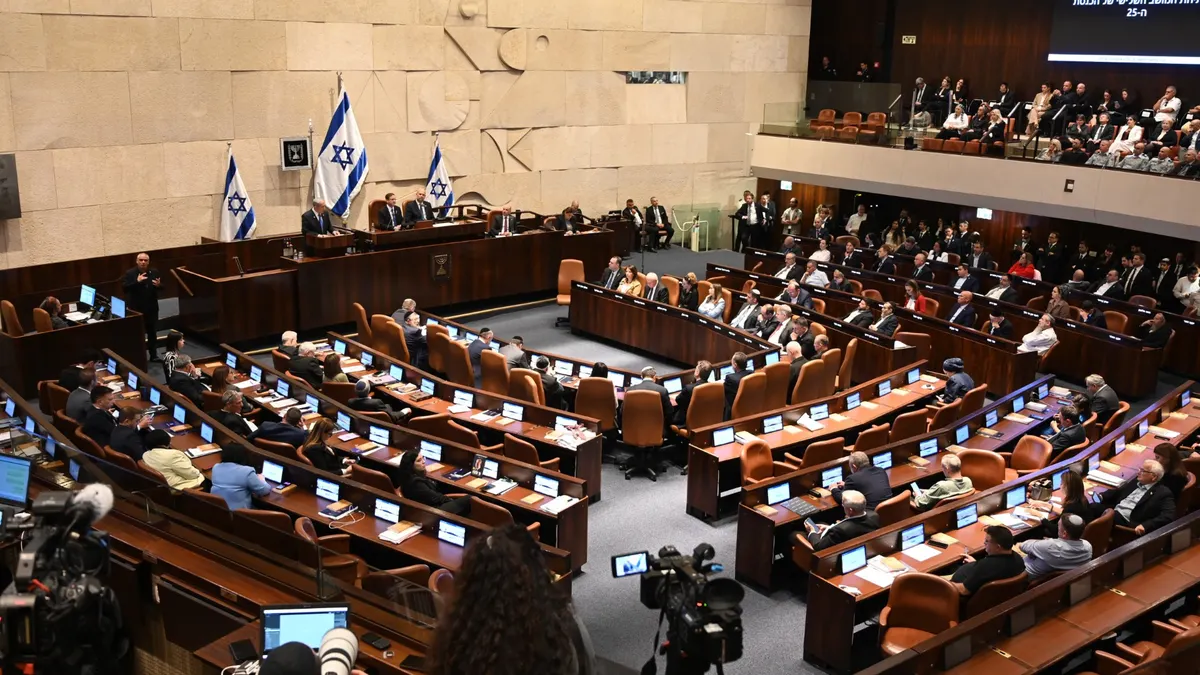
The Israeli Knesset has taken a controversial step by approving a bill that allows for the execution of Palestinian prisoners, receiving support from 62 votes against 47 opposing votes. This vote followed unprecedented cooperation between some opposition parties and the ruling coalition, reflecting a state of political division in Israel regarding human rights issues.
Among those voting in favor of the law were the Prime Minister of the occupation, Benjamin Netanyahu, and the leader of the opposition party Yisrael Beiteinu, Avigdor Lieberman, highlighting an unusual consensus among political factions in the country on this contentious issue. This decision comes at a time when tensions are rising in the West Bank and Gaza Strip, raising concerns about its implications for security and stability in the region.
Details of the Legislation
The new law permits the imposition of the death penalty on prisoners convicted of murder or attempted murder, which many consider a blatant violation of human rights. This legislation has sparked angry reactions from human rights organizations, which argue that such laws reflect a repressive policy towards Palestinians.
This move comes amid an escalation of Israeli military operations in the Palestinian territories, with increased attacks on civilians and homes. Furthermore, this law reflects the current Israeli government's policy, which adopts a more hardline approach towards Palestinians, intensifying tensions in the region.
Background & Context
Historically, the Palestinian issue has witnessed numerous political and military developments, with multiple attempts to reach peaceful solutions. However, the escalation of violence and Israeli military operations in recent years has exacerbated the humanitarian situation in the West Bank and Gaza Strip.
Laws concerning Palestinian prisoners are not new, as similar laws have been enacted in the past. However, this law comes amid complex political changes, with increasing international pressure on Israel regarding human rights.
Impact & Consequences
The approval of this law is expected to escalate tensions in the Palestinian territories, where Palestinians may face violent reactions from Israeli forces. Additionally, this law may increase polarization between Palestinians and Israelis, hindering any future efforts to achieve lasting peace.
Moreover, this decision could affect Israel's relations with Arab countries and the international community, as Israel is likely to face widespread criticism from human rights organizations and countries advocating for the respect of human rights.
Regional Significance
This law may have negative repercussions on stability in the Arab region, potentially leading to increased protests and demonstrations in Arab countries in support of the Palestinian cause. The escalation of violence in the Palestinian territories may also impact regional security overall.
In light of these circumstances, the question remains as to how the international community will respond to these developments and whether there will be tangible steps to pressure the Israeli government to halt its violations of Palestinian rights.