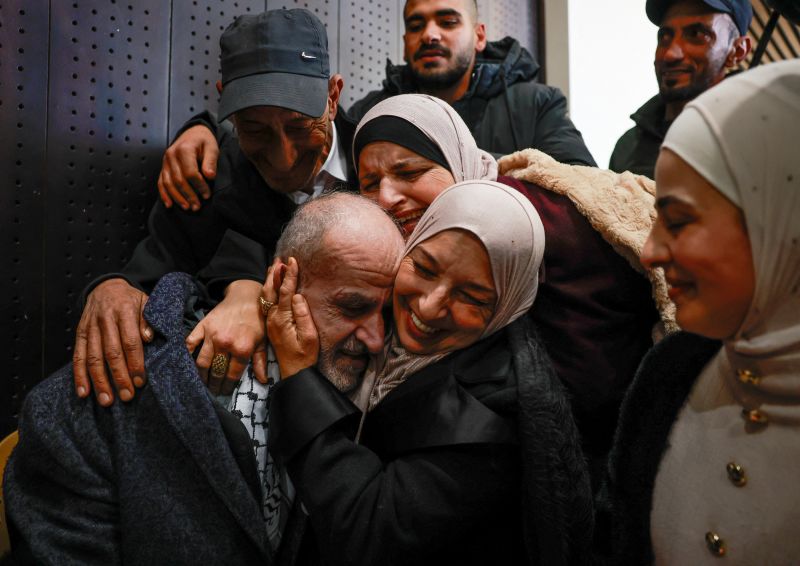
Concerns are mounting among Palestinian families as the Israeli Knesset approaches a vote on a bill that would impose the death penalty on Palestinian prisoners. This law, which has been approved by the Knesset's National Security Committee, specifically targets prisoners accused of killing Israelis, and comes at a time when many families are left in the dark about the fate of their detained loved ones.
In Gaza City, elderly man Abu Ibrahim lives in a state of heightened anxiety regarding the fate of his son Mohammed, who has been imprisoned in Israeli jails for two years. As the vote on the law draws near, fears grow within his family, as they know nothing officially about his charges or the conditions of his detention. The father states, "We live on scraps of news brought to us by released prisoners; we only know that he is still alive."
Details of the Legislative Event
The Israeli Knesset has approved the death penalty bill for Palestinian prisoners after making amendments, and it is set for a final vote this week. The law targets prisoners accused of killing Israelis, while notably excluding Israelis accused of killing Palestinians. The newspaper Haaretz reported that the vote on this law comes just before the Passover holiday, heightening the anxiety among Palestinian families.
Families are speaking out about a growing atmosphere of fear and anxiety, with many refusing to talk to the media out of concern for their loved ones' fates. The family of prisoner Ahmed, for instance, is living in a state of anxious waiting after losing contact regarding his fate. His wife Esraa says, "Our hearts trembled, but we have entrusted the matter to God."
Background & Context
The execution of Palestinian prisoners is not a new practice, but rather a long-standing approach, as confirmed by Thaer Shreiteh, the official spokesperson for the Palestinian Authority for Prisoners' Affairs. He points out that the current attempt to pass the death penalty law is merely an effort to legitimize what is happening in the shadows, especially since the onset of the war on the Gaza Strip.
Data from the Authority indicates that there have been 89 documented executions within Israeli prisons over the past two years, while dozens of other prisoners remain missing. This situation reflects the occupation's policy in dealing with prisoners, characterized by torture and medical neglect.
Impact & Consequences
The approval of the death penalty law for prisoners is viewed as an escalatory step by the Israeli government, as Prime Minister Benjamin Netanyahu seeks to appease the far-right faction within his coalition. This law could lead to an escalation of violence in the region and increase the suffering of prisoners and their families.
Moreover, this law may open the door to further human rights violations and exacerbate the international community's confusion regarding the Palestinian issue. Shreiteh emphasizes that the coming weeks could witness bloody transformations against Palestinians within prisons, necessitating urgent international action to halt this legislative madness.
Regional Significance
The passage of the death penalty law for Palestinian prisoners poses a significant challenge to international efforts aimed at achieving peace in the region. This law could contribute to worsening humanitarian conditions in Gaza and increase tensions between Palestinians and Israelis, ultimately affecting the stability of the region as a whole.
In light of these circumstances, the Palestinian issue remains at the heart of the Arab-Israeli conflict, requiring Arab nations and the international community to take firm stances against Israeli violations.