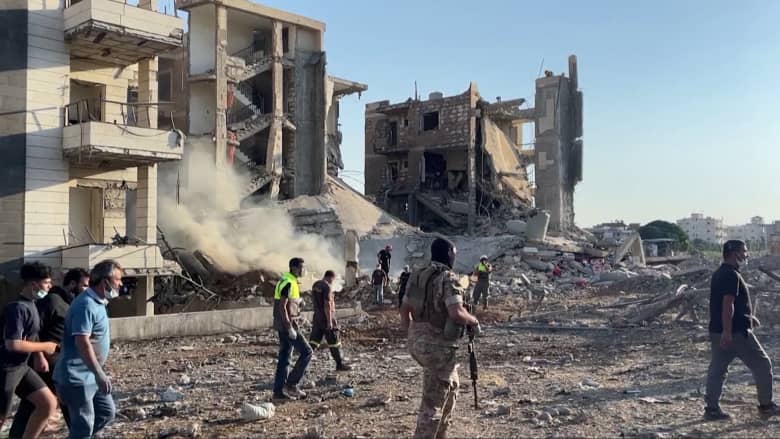
Israeli warplanes have conducted airstrikes in southern Lebanon, targeting the Qasmiyeh Bridge which crosses the Litani River, resulting in its complete destruction. This escalation comes in the context of the Israeli army's announcement of readiness for several weeks of military operations against Hezbollah, signaling rising military tensions in the region.
The events that have unfolded, which have raised concerns among the Lebanese community, prompted General Joseph Aoun, the commander of the Lebanese army, to denounce the attacks and characterize them as a "flagrant violation of Lebanese sovereignty." These statements come at a sensitive time marked by escalating tensions between Israel and Hezbollah, especially with the ongoing escalation along the Lebanese border.
The current escalation is not a new occurrence but rather a continuation of a series of military tensions that have been witnessed in the region over the past years. Lebanon has already experienced multiple battles with Israel, particularly during previous wars. A notable event was the July 2006 War, which arose after Hezbollah's capture of two Israeli soldiers, leading to a continuous escalation that still impacts stability in Lebanon.
In recent years, Israel has adopted an increasingly military-oriented approach in its rhetoric towards Lebanon, accusing Hezbollah of bolstering its military capabilities and proximity to the border, which has heightened fears of a new conflict. Consequently, the recent airstrikes could trigger a series of reactions from Hezbollah, which had previously declared its readiness to respond to any aggression.
The potential consequences of these military operations could be far-reaching for Lebanon's internal and regional situation. In addition to destroying infrastructure, this campaign may lead to increased internal displacement, adding to the burden on the Lebanese state already suffering from economic and political crises. It could also exert pressure on the current Lebanese government, contributing to political instability.
Regionally, the ongoing escalation reflects ongoing conflicts between Israel and its allies in the region. It highlights the challenges faced by neighboring Arab countries, particularly those under political or military siege. These developments may also be influenced by international relations, especially under the current circumstances where conflict and regional upheaval present multiple challenges for major powers.
Internationally, several countries have expressed concerns about deepening conflict in the region, as major powers like the United States and Russia seek to find peaceful solutions. However, the reality on the ground reflects the difficulty of reaching a lasting agreement amid rising hostilities.
In conclusion, the international community must seriously consider the military escalation in Lebanon and strive to de-escalate the situation to help reduce tensions. The conditions in the region are not easy, and effective avenues for communication and dialogue must be sought to transform military crises into peaceful resolutions.